Teac V-1-RX: The Crown Jewel of Open-Reel Analog Recording
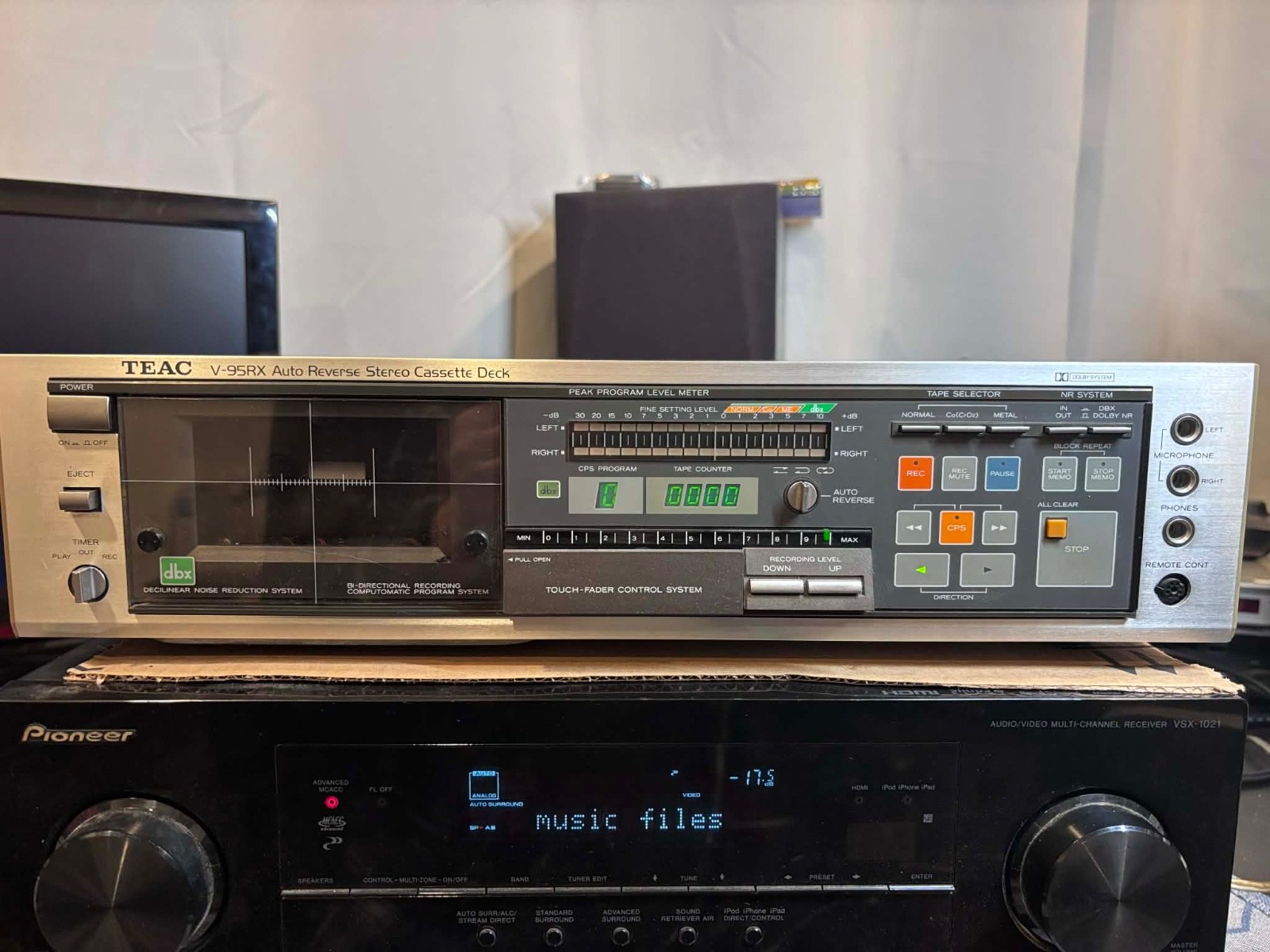
In the late 1970s, when high-fidelity audio reached new heights of refinement, Teac—already renowned for its precision engineering and commitment to audiophile-grade performance—unveiled a machine that would become a legend among analog enthusiasts: the Teac V-1-RX. More than just a reel-to-reel tape recorder, the V-1-RX represented the pinnacle of consumer-oriented open-reel technology, blending studio-grade components with elegant design and meticulous build quality. Though not as widely known as some of its contemporaries from Nakamichi or Studer, the V-1-RX has quietly earned a cult following among tape aficionados, collectors, and mastering engineers who appreciate its rare combination of performance, reliability, and sonic purity.
Historical Context: Teac’s Golden Era
Teac Corporation, founded in Japan in 1953, began as a manufacturer of professional and consumer tape recorders. By the 1970s, the company had established itself as a leader in analog audio innovation, producing machines used in broadcast, studio, and home environments. The V-1-RX emerged during a period when high-end audiophiles were pushing the limits of domestic recording fidelity, and open-reel decks offered unmatched dynamic range and frequency response compared to cassette or vinyl.
The V-1-RX was part of Teac’s elite “V-series,” which included other revered models like the X-10R and A-3340S. These machines were engineered for critical listening and professional-grade recording, often found in semi-pro studios and high-end home setups. The V-1-RX, however, stood out for its refined transport system, advanced electronics, and luxurious finish—features that signaled its position at the top of Teac’s consumer lineup.
Technical Specifications
| Feature | Specification |
| Format | 1/4" open-reel tape |
| Tracks | 4-track, 2-channel stereo (switchable) |
| Tape Speeds | 7.5 ips, 15 ips (with optional 3.75 ips via modification) |
| Head Configuration | 3-head (record, playback, erase) |
| Motors | Dual capstan servo-controlled DC motors |
| Frequency Response | 20Hz – 20kHz ±2dB (at 15 ips, 3% THD) |
| Signal-to-Noise Ratio | >68 dB (Dolby B NR enabled) |
| Total Harmonic Distortion | <1.5% at 0 dB, <3% at +6 dB |
| Input/Output | Line In/Out (RCA), Mic In (XLR & 1/4"), Headphone Out |
| Equalization Settings | 120µs, 180µs (switchable for tape type) |
| Noise Reduction | Dolby B |
| Power Supply | 110–120V AC (50/60 Hz), 80W |
| Dimensions | 440 mm (W) × 145 mm (H) × 380 mm (D) |
| Weight | 14.5 kg (32 lbs) |
The V-1-RX was built around a rigid die-cast chassis with vibration-damping feet, minimizing mechanical noise and ensuring stable tape transport. Its three-head design allowed for true post-recording monitoring, a feature typically reserved for professional studio decks. The capstan and pinch roller assembly were precision-machined and servo-controlled, delivering exceptional speed stability and wow & flutter performance—typically under 0.15% at 15 ips.
Sound Characteristics and Performance
The sonic signature of the Teac V-1-RX is best described as transparent, dynamic, and richly textured. Unlike many consumer tape decks that colored the sound with excessive warmth or compression, the V-1-RX aimed for accuracy, capturing the source material with remarkable fidelity. At 15 ips, the machine delivers a wide frequency response and deep, controlled bass, making it ideal for recording acoustic instruments, orchestral music, and vocal performances.
One of the V-1-RX’s standout qualities is its low noise floor, especially when Dolby B is engaged. While some noise reduction systems of the era introduced artifacts or “breathing” effects, the implementation in the V-1-RX is smooth and unobtrusive. Combined with its high saturation level and excellent headroom, the deck can handle complex, dynamic passages without distortion.
Users often praise the V-1-RX for its natural midrange reproduction—a hallmark of Teac’s attention to detail in head alignment and tape formulation compatibility. Whether playing back vintage recordings or making new analog transfers, the V-1-RX reveals subtle spatial cues and instrument separation that rival modern digital systems.
Notable Features and Innovations
The Teac V-1-RX was packed with features that set it apart from even high-end cassette decks of the era:
- Dual Capstan Servo System: Ensured rock-solid speed accuracy and minimized wow & flutter, critical for professional monitoring and mastering.
- Switchable Track Format: Allowed users to record in full-track mono, half-track stereo, or 4-track stereo (with appropriate tape), offering flexibility for multitrack home recording.
- Precision VU Meters: Large, centrally mounted analog meters provided accurate level monitoring with a classic aesthetic.
- Direct Drive Capstan Motors: Reduced mechanical wear and improved long-term reliability.
- Headphone Monitoring with Source Select: Enabled real-time monitoring of input or playback through high-impedance headphones.
- Professional Connectivity: XLR and balanced line inputs/outputs (on some variants) made it suitable for integration into semi-pro studios.
The front panel, finished in brushed aluminum with intuitive controls and a minimalist layout, exudes the kind of understated elegance that defined high-end Japanese audio gear of the period. The tape counter, while non-defeatable, is highly accurate and useful for locating passages during editing.
Common Issues and Maintenance
As with any vintage reel-to-reel machine, the Teac V-1-RX requires regular maintenance to perform at its best. Common issues include:
- Deteriorated Rubber Components: Pinch rollers, idler tires, and drive belts can harden or crack over time. Replacement with modern equivalents is essential.
- Dirty or Worn Tape Heads: Heads should be cleaned with isopropyl alcohol and demagnetized regularly. Over time, head wear may require resurfacing or replacement.
- Capstan Shaft Oxidation: Can cause speed instability. Light polishing and lubrication can restore smooth operation.
- Capacitor Aging: The internal power supply and audio circuits use electrolytic capacitors that may dry out after decades. A full recapping is recommended for long-term reliability.
- Tension Arm Malfunction: The auto-reverse tension system (in later variants) may need calibration or cleaning.
Fortunately, the V-1-RX’s modular design makes servicing relatively straightforward for experienced technicians. Parts, while not abundant, can often be sourced from other Teac models or specialized vintage audio suppliers.
Current Market Value and Collectibility
The Teac V-1-RX is a rare find today. Fewer units were produced compared to Teac’s more mainstream models, and many have been lost to neglect or obsolescence. On the secondary market, a fully functional V-1-RX in good cosmetic condition typically sells for $800 to $1,500, with pristine, museum-grade examples commanding even higher prices.
Collectors value the V-1-RX not only for its performance but also as a symbol of analog audio’s golden age. Its blend of professional features, elegant design, and Teac’s engineering pedigree makes it a centerpiece in any vintage audio collection. It’s also popular among modern analog enthusiasts who use it for transferring vinyl to tape, creating master recordings, or simply enjoying the tactile experience of reel-to-reel playback.
Conclusion: A Legacy of Analog Excellence
The Teac V-1-RX is more than a relic of the past—it’s a testament to a time when audio engineering prioritized craftsmanship, accuracy, and musicality. In an era dominated by digital perfection, the V-1-RX reminds us of the warmth, depth, and soul that analog tape can bring to music.
While it may never achieve the mainstream fame of a Nakamichi Dragon, the V-1-RX holds a special place in the hearts of those who’ve experienced its magic. For the discerning collector, the serious audiophile, or the analog purist, the Teac V-1-RX remains one of the finest open-reel recorders ever made for the consumer market—a true masterpiece of vintage audio engineering.
eBay Listings


As an eBay Partner, we earn from qualifying purchases. This helps support our independent vintage technology research.
Related Models
- Teac A-2340R (1975)
- Teac V-30 (1975)
- Teac W-416 (1975)
- Teac A-108-SYNC (1978)
- Teac A-110 (1978)
- Akai AM-2850 (1975)
- Akai AP-206 (1975)
- Nakamichi BX-1 (1985)
- Acoustic Research research-ar-17 (1978)
- Acoustic Research AR-19 (1994)