Teac C-3-RX: The Quiet Master of the Cassette Era
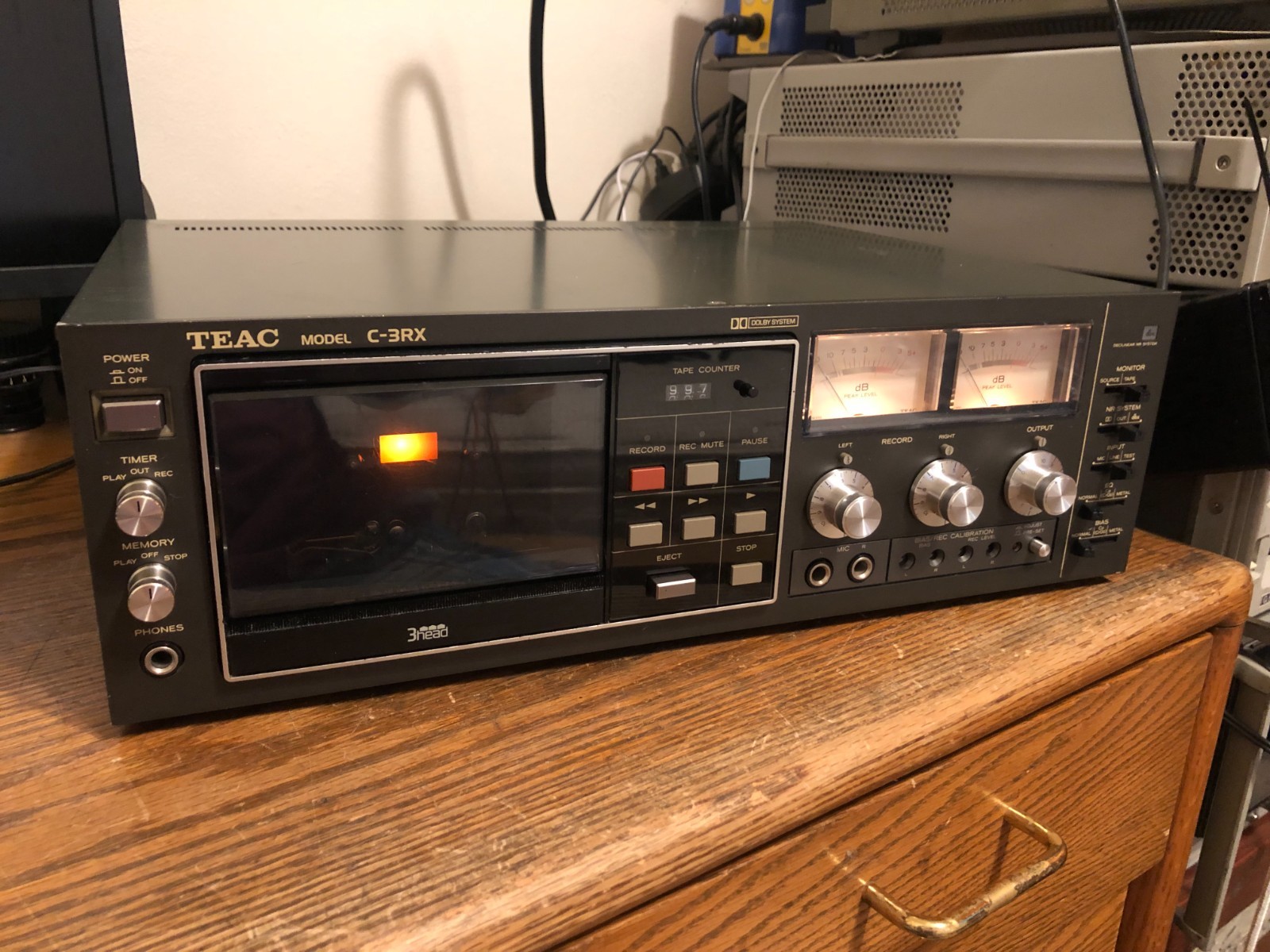
In the late 1970s, when high-fidelity audio was undergoing a quiet revolution, cassette decks evolved from portable convenience machines into serious contenders in the audiophile world. At the forefront of this transformation stood Teac, a Japanese company renowned for its meticulous engineering and commitment to sonic excellence. Among their most respected offerings was the Teac C-3-RX, a cassette deck that quietly redefined what was possible with compact tape technology.
Released in 1979, the C-3-RX was part of Teac’s elite Reference Series, a lineup designed for critical listening and professional-grade performance. While not as widely recognized today as some of its contemporaries from Nakamichi or Sony, the C-3-RX earned a loyal following among discerning listeners and studio engineers who valued precision, durability, and a neutral, transparent sound signature.
Technical Specifications
The C-3-RX was engineered to meet the highest standards of tape reproduction. It featured a full three-head configuration, quartz-controlled dual-capstan transport, and advanced Dolby circuitry—hallmarks of a top-tier deck in its era.
| Specification | Detail |
| Model | C-3-RX |
| Manufacturer | TEAC Corporation, Japan |
| Year Introduced | 1979 |
| Category | 3-Head Stereo Cassette Deck |
| Transport System | Dual Capstan with Quartz Lock |
| Head Configuration | Three Heads (Separate Record, Playback, Erase) |
| Tape Speed | 1⅞ ips (4.76 cm/s) |
| Wow and Flutter | < 0.055% (weighted) |
| Frequency Response (Normal) | 30 Hz – 15 kHz |
| Frequency Response (CrO₂) | 30 Hz – 17 kHz |
| Frequency Response (Metal) | 30 Hz – 18 kHz |
| Signal-to-Noise Ratio | 66 dB (Dolby B), 72 dB (Dolby C) |
| Total Harmonic Distortion | < 1.5% |
| Input Level (Line) | 150 mV |
| Output Level (Line) | 150 mV |
| Output Impedance | 10 kΩ |
| Power Requirement | 120V AC, 60 Hz |
| Power Consumption | 18 watts |
| Dimensions (W×H×D) | 435 × 140 × 325 mm (17-1/8" × 5-1/2" × 12-3/4") |
| Weight | 10.5 kg (23.1 lbs) |
The C-3-RX supported all major tape types—Normal (Fe), Chrome (CrO₂), and Metal, automatically adjusting bias and equalization via a four-position tape selector. This flexibility allowed users to extract the best performance from every tape formulation, a feature that placed it among the more advanced decks of its time.
Sound Characteristics and Performance
The Teac C-3-RX was not designed to impress with warmth or coloration. Instead, it aimed for accuracy and neutrality, delivering a clean, detailed, and well-balanced sound that let the music speak for itself. Its three-head design ensured that playback was independent of the record head, allowing real-time monitoring without compromise in fidelity.
The quartz-locked dual capstan system was a standout feature, virtually eliminating speed fluctuations and ensuring rock-solid pitch stability. This made the C-3-RX a favorite for musicians and producers who used it for mastering demos or transferring reel-to-reel recordings to cassette. The wow and flutter rating of under 0.055% was exceptional—even by today’s standards—and placed it in the same league as Nakamichi’s early high-end models.
Treble response was crisp and extended, especially with CrO₂ and metal tapes, while the bass remained tight and controlled. The deck’s low distortion and wide dynamic range made it capable of handling complex passages with ease, from orchestral swells to fast-paced rock.
Notable Features and Innovations
The C-3-RX was packed with features that reflected Teac’s engineering philosophy: precision, reliability, and user control.
- Three-Head System: Enabled separate optimization of record and playback, with real-time monitoring.
- Dual Capstan with Quartz Servo: Ensured precise tape-to-head contact and eliminated tape slippage.
- Auto Reverse (Full Logic): Allowed seamless playback in both directions with end-of-tape sensing and automatic stop/reverse.
- Dolby B and C Noise Reduction: Provided excellent hiss suppression, especially with metal tapes.
- Front-Panel Level Meters: Large VU-style meters with peak hold function for accurate level setting.
- Direct Drive Capstans: Eliminated belt wear and ensured long-term speed accuracy.
- Microprocessor Control: Advanced for its time, enabling precise transport logic and smooth operation.
The build quality was exceptional. The chassis was heavily shielded and constructed from thick steel to minimize vibration and electromagnetic interference. The front panel featured a sleek, minimalist design with a brushed aluminum faceplate, tactile buttons, and a clear display window showing tape type, mode, and counter.
Common Issues and Maintenance
Like all high-performance cassette decks from the era, the Teac C-3-RX requires careful maintenance to perform at its best. While robustly built, aging components can affect performance over time.
- Pinch Roller Hardening: The rubber pinch roller can harden or glaze over decades, causing speed instability. Replacement or rejuvenation with rubber restorer is recommended.
- Capstan Shaft Oxidation: The stainless steel capstans may develop slight oxidation, leading to increased wow or tape drag. Light cleaning with isopropyl alcohol restores smooth operation.
- Worn Belts (if applicable): While the capstans are direct-drive, some internal mechanisms may use small rubber belts that degrade over time.
- Head Alignment: Misalignment can occur from heavy use or transport. Professional demagnetization and alignment are advised every few years.
- Dust Accumulation: The tape path and heads should be cleaned regularly with isopropyl alcohol and a cleaning cassette (used sparingly).
Given its complexity, the C-3-RX benefits from servicing by a technician experienced with vintage cassette decks. When properly maintained, however, it remains remarkably reliable.
Current Market Value and Collectibility
The Teac C-3-RX is not as widely collected as the Nakamichi Dragon or Revox B77, but it has developed a cult following among cassette enthusiasts and vintage audio purists. Its understated design and exceptional engineering make it a hidden gem.
On the secondhand market, a fully functional C-3-RX in good cosmetic condition typically sells for $300–$500, with pristine, boxed units occasionally fetching higher prices. Its value has been slowly rising as interest in analog tape formats resurges.
Collectors appreciate the C-3-RX not just for its sound, but as a testament to Japanese engineering excellence during the golden age of high-fidelity audio. It represents a time when manufacturers competed fiercely on technical merit, pushing the limits of what compact audio formats could achieve.
Conclusion and Legacy
The Teac C-3-RX may not have the name recognition of some of its peers, but it stands as one of the most technically accomplished cassette decks of the late 1970s. It combined precision engineering, advanced features, and audiophile-grade performance in a package that was both elegant and functional.
While the cassette format eventually gave way to CDs and digital audio, the C-3-RX remains a symbol of what was possible when analog engineering met passionate craftsmanship. For those rediscovering the warmth and tactility of tape, the C-3-RX offers a window into a golden era of audio—where every detail mattered, and sound quality was paramount.
If you're lucky enough to find one in good condition, treat it with care. The Teac C-3-RX isn’t just a cassette deck—it’s a quiet masterpiece.
eBay Listings


As an eBay Partner, we earn from qualifying purchases. This helps support our independent vintage technology research.
Related Models
- Teac A-6700DX (1980)
- Teac A-105 (1975)
- Teac A-106 (1975)
- Teac A-170 (1976)
- Teac A-2300 (1978)
- Sony TC-2050SD (1978)
- Aiwa AD-F990 (1993)
- Kenwood KX-3060 (1982)
- Polk AUDIO-SRS-1.2TL (1991)
- Sony TC-2130A (1974)