Teac C-2-X: The Precision-Built Cassette Deck from Teac’s Golden Era
In the late 1970s and early 1980s, Japanese electronics manufacturer TEAC (Tokyo Electro-Acoustic Company) emerged as a dominant force in high-fidelity audio, particularly in the realm of cassette decks. At the pinnacle of their cassette engineering stood the C-2-X, a reference-grade tape deck introduced around 1980 as part of TEAC’s elite “Reference Series.” Though less widely documented than some of its contemporaries, the C-2-X represents a critical moment in the evolution of analog cassette technology—when compact tape formats finally began rivaling reel-to-reel in fidelity, thanks to precision engineering and advanced electronics.
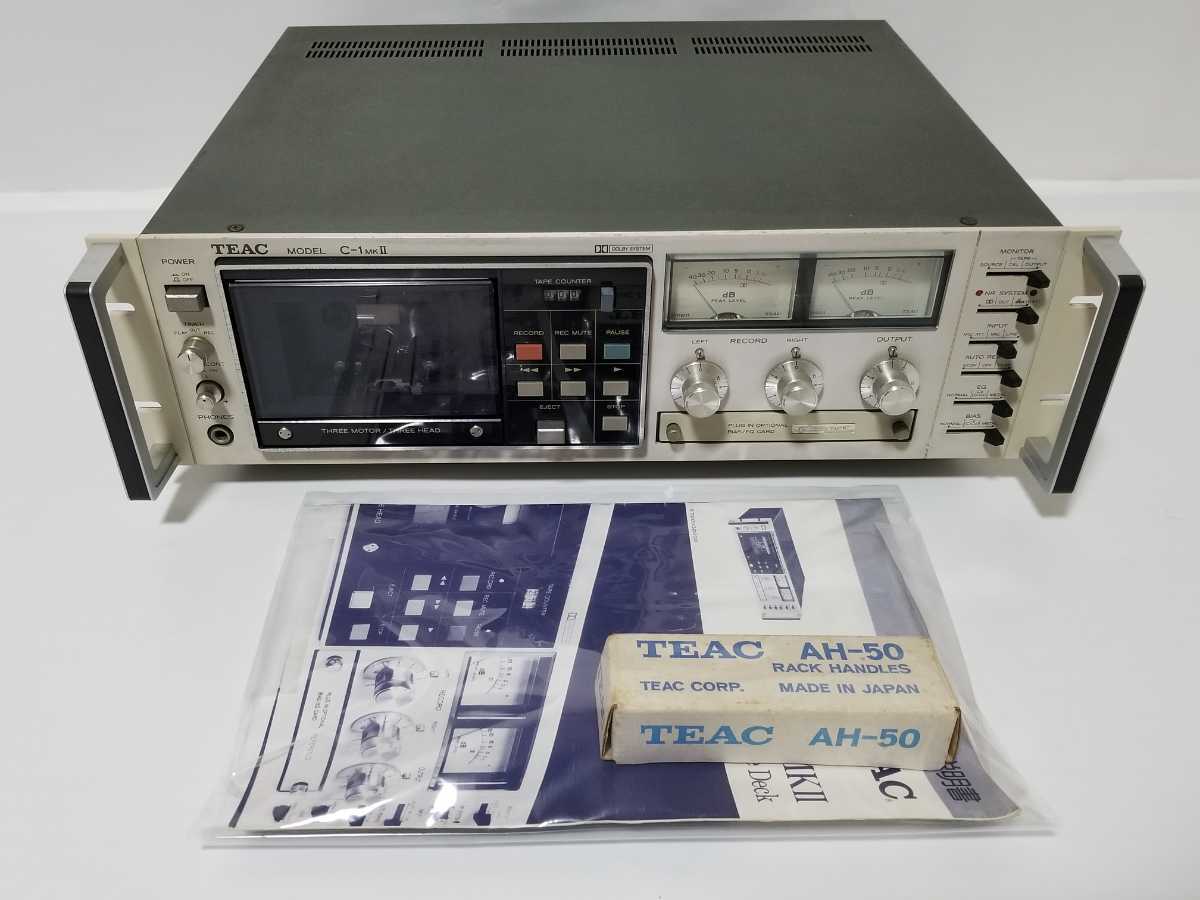
The C-2-X was not just another cassette player. It was a statement of intent: TEAC aimed to prove that the compact cassette, often dismissed as a portable convenience format, could deliver true audiophile-grade sound when treated with the right level of care and innovation. With its robust dual-capstan transport, three-head configuration, and meticulous attention to mechanical isolation, the C-2-X stood shoulder-to-shoulder with other high-end decks from Nakamichi, Denon, and Sony.
Technical Specifications
| Specification | Detail |
| Year Introduced | 1980 |
| Manufacturer | TEAC Corporation, Japan |
| Format | Compact Cassette |
| Head Configuration | 3-head (record, playback, erase) |
| Tape Speed | 1⅞ ips (4.76 cm/s) |
| Transport System | Dual capstan, direct-drive |
| Motors | Three direct-drive motors |
| Frequency Response | 20Hz – 20kHz (Type IV metal tape) |
| Wow and Flutter | < 0.055% (Dolby on) |
| Signal-to-Noise Ratio | > 70dB (Dolby B/C), > 72dB (Dolby S) |
| Total Harmonic Distortion | < 1.5% |
| Input/Output | Line in/out (RCA), mic in (optional) |
| Recording Bias | Adjustable (manual) |
| Equalization | Switchable (120μs/70μs for Type I/IV) |
| Noise Reduction | Dolby B, C, and optional Dolby S |
| Display | Analog VU meters, LED indicators |
| Dimensions | 440 mm × 145 mm × 335 mm |
| Weight | 12.5 kg (approx.) |
Sound Characteristics and Performance
The Teac C-2-X was engineered for transparency and neutrality. Unlike many cassette decks of the era that colored the sound with excessive brightness or sluggish bass, the C-2-X delivered a remarkably balanced and detailed presentation. Its three-head design allowed for true monitoring of the recorded signal—meaning what you heard during recording was exactly what was being laid to tape.
With Dolby C or optional Dolby S noise reduction, the C-2-X achieved a signal-to-noise ratio that rivaled early digital formats. On Type IV metal tapes, it could reproduce frequencies across the full 20Hz–20kHz range with impressive linearity. Bass was tight and well-controlled, while the midrange remained natural and uncolored—ideal for vocal recordings and acoustic instruments.
The dual-capstan transport played a crucial role in this performance. By using two precision capstans (one at the supply side, one at the take-up), TEAC minimized tape flutter and ensured consistent tape-to-head contact. This design reduced speed variations and improved high-frequency response, contributing to the deck’s reputation for low wow and flutter—specs that were among the best in class at the time.
Notable Features and Innovations
The C-2-X was packed with audiophile-oriented features that set it apart from consumer-grade cassette decks:
- Three Direct-Drive Motors: One for the capstans, one for the supply reel, and one for the take-up reel. This eliminated belts (which degrade over time) and ensured precise, long-term speed stability.
- Adjustable Recording Bias and Level: A rare feature outside of professional decks, allowing users to fine-tune recording performance for different tape formulations (Type I, II, IV).
- Switchable Equalization: The ability to toggle between 120μs (for normal ferric tapes) and 70μs (for chrome and metal tapes) ensured optimal high-frequency response across tape types.
- Full Manual Operation: Unlike auto-reverse or push-button decks, the C-2-X used dedicated mechanical controls for each function, appealing to purists who valued tactile precision.
- Heavy-Duty Chassis and Damping: The massive steel and aluminum construction minimized vibration and external resonance, contributing to a clean, focused sound.
- Dolby S Compatibility (Optional): While not standard on all units, later versions or upgrades supported Dolby S, the most advanced consumer noise reduction system ever developed.
Common Issues and Maintenance
Like all high-performance analog gear from the 1980s, the Teac C-2-X requires careful maintenance to perform at its best. Common issues include:
- Deterioration of Rubber Components: Although the capstan and pinch rollers are metal-to-metal in design, some internal idler wheels or dampers may contain rubber that can harden or crumble over time. These should be inspected and replaced if necessary.
- Head Alignment and Wear: The heads are durable, but after decades of use, they may require demagnetization, cleaning, or realignment—especially if the deck has been used with worn or dirty tapes.
- Capstan Bearing Lubrication: The direct-drive capstans rely on precision bearings that may need servicing after 40+ years to prevent increased wow and flutter.
- Capacitor Aging: The power supply and audio circuits contain electrolytic capacitors that degrade over time. A full recapping is often recommended for units that haven’t been serviced in decades.
Regular cleaning with isopropyl alcohol and demagnetization using a quality tape head demagnetizer are essential for maintaining peak performance. Due to its complexity, the C-2-X is best serviced by a technician experienced with high-end cassette decks.
Current Market Value and Collectibility
The Teac C-2-X remains a rare and sought-after deck among cassette enthusiasts and analog purists. While not as widely recognized as the Nakamichi Dragon or even TEAC’s own C-7000, the C-2-X has developed a cult following for its understated elegance and exceptional engineering.
In today’s vintage audio market, a fully functional, well-maintained C-2-X typically sells for $600–$1,000, depending on condition, included accessories, and provenance. Units with original packaging, manuals, or Dolby S upgrades command premium prices. Its value has been steadily rising as interest in analog tape formats resurges, particularly among musicians and home recordists seeking warm, authentic tape saturation.
Collectibility is enhanced by its limited production numbers and the fact that many units were used heavily in semi-professional studios or by serious hobbyists—meaning fewer have survived in good condition.
Conclusion and Legacy
The Teac C-2-X stands as a testament to the peak of cassette deck engineering. At a time when digital formats like CD were on the horizon, TEAC doubled down on analog tape, proving that with the right design, the humble cassette could deliver reference-quality sound.
Though overshadowed by flashier competitors, the C-2-X embodies the quiet excellence of TEAC’s Reference Series: no gimmicks, just precision, durability, and musicality. For collectors and audiophiles who appreciate the tactile joy of analog media, the C-2-X offers a rare combination of performance, build quality, and historical significance.
Today, as vinyl enjoys a renaissance and tape loops make a comeback in indie and electronic music, the Teac C-2-X is more than a relic—it’s a functional piece of audio history. Whether used for archiving vintage recordings, creating new music with analog warmth, or simply enjoying high-fidelity cassettes as they were meant to be heard, the C-2-X remains a worthy centerpiece in any vintage audio setup.
For those who believe that the soul of music lives in the details, the Teac C-2-X is not just a cassette deck—it’s a masterpiece of analog craftsmanship.
eBay Listings


As an eBay Partner, we earn from qualifying purchases. This helps support our independent vintage technology research.
Related Models
- Teac A-6700DX (1980)
- Teac A-105 (1975)
- Teac A-106 (1975)
- Teac A-170 (1976)
- Teac A-2300 (1978)
- Sony TC-2050SD (1978)
- Aiwa AD-F990 (1993)
- Kenwood KX-3060 (1982)
- Sony TC-2130A (1974)
- Sony TC-2220 (1972)