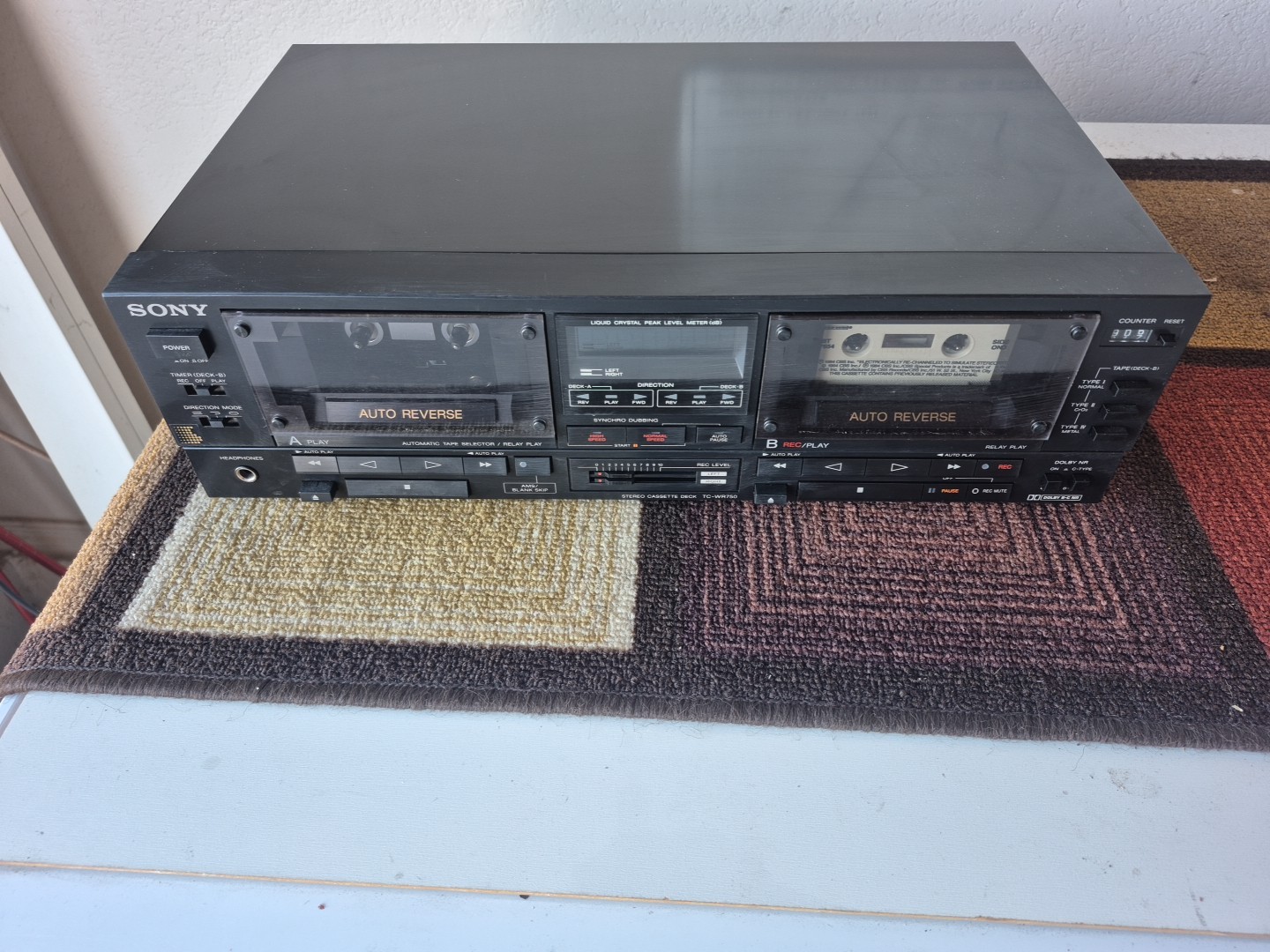
Sony TC-WR750 Dual Cassette Deck
The Sony TC-WR750 is a mid-range dual cassette deck produced from 1998 to 2002, representing one of the final generations of consumer cassette technology before digital formats like CDs and MP3 players began to dominate the market. Designed for convenience and everyday use, the TC-WR750 offered a blend of automation, reliability, and solid audio performance typical of late-1990s Sony engineering.
With features like auto reverse, dual playback, and advanced tape calibration, the TC-WR750 was aimed at users who wanted to copy tapes, record from external sources, or enjoy pre-recorded cassettes with minimal hassle. Though not a high-end audiophile machine, it delivers clean, neutral sound and remains a functional piece of late-analog era home audio equipment.
Specifications
| Feature | Specification |
| Model | TC-WR750 |
| Brand | Sony |
| Year of Release | 1998 |
| Production Period | 1998–2002 |
| Category | Dual Cassette Deck |
| Recording Heads | Dual (one per deck) |
| Playback Heads | Dual (one per deck) |
| Motor Type | Direct Drive (capstan) |
| Tape Speed | 4.76 cm/s (standard) |
| Wow and Flutter | ≤ 0.08% (weighted, RMS) |
| Frequency Response | 20 Hz – 20 kHz (Type IV tape, Dolby C ON) |
| Signal-to-Noise Ratio | 68 dB (Dolby C ON) |
| Harmonic Distortion | < 1.5% |
| Input Impedance | 50k ohms (line) |
| Output Impedance | 2.2k ohms (line) |
| Input Sensitivity | 200 mV (line, for 0 dB output) |
| Output Level | 0.5 V (line) |
| Power Consumption | 19W |
| Dimensions (W×H×D) | 430 × 145 × 323 mm |
| Weight | 7.5 kg |
| Key Features | Dual cassette deck, auto reverse, Dolby B/C noise reduction, tape selector (Type I/II/IV), auto tape calibration, music search, soft-touch controls, timer recording and playback |
Key Features
- Dual Cassette Operation: Enables direct high-speed dubbing between tapes with minimal generational loss.
- Auto Reverse: Plays or records on both sides of a cassette without manual flipping.
- Dolby B/C Noise Reduction: Improves signal-to-noise ratio during playback and recording.
- Tape Selector (Type I/II/IV): Automatically adjusts bias and equalization for normal (Type I), chrome (Type II), and metal (Type IV) tapes.
- Auto Tape Calibration: Optimizes recording levels for best results based on tape type.
- Music Search: Fast forward or rewind with audible playback to quickly locate tracks.
- Soft-Touch Controls: Responsive front-panel buttons with a premium tactile feel.
- Timer Recording/Playback: Schedule recordings or playback sessions up to 7 days in advance.
Historical Context
The Sony TC-WR750 arrived at a pivotal moment in audio history—the twilight of the cassette era. By the late 1990s, compact discs had become the dominant music format, and MP3 players were beginning to emerge. Despite this, cassettes remained popular for their portability, affordability, and widespread use in car audio and home recording.
Sony positioned the TC-WR750 as a user-friendly, feature-rich option for consumers who still relied on tapes for mixtapes, radio recordings, or archiving vinyl collections. It reflects the industry’s shift toward automation and ease of use, with minimal manual adjustments required. As one of Sony’s last mass-market dual cassette decks, the TC-WR750 symbolizes the end of an analog chapter in home audio.
Sound Signature
The TC-WR750 delivers a clean, neutral sound profile with accurate tonal balance and low distortion. Its Dolby decoding is precise, and the frequency response—especially with Type IV (metal) tapes and Dolby C engaged—is impressively wide for a consumer-grade deck. Wow and flutter are well-controlled, contributing to stable pitch and minimal speed variation. While not matching the performance of high-end studio or audiophile decks, it offers more than adequate fidelity for casual listening and tape duplication.
Maintenance and Tips
Like all vintage cassette decks, the TC-WR750 requires periodic maintenance to perform optimally, especially given its age. Common issues stem from rubber and mechanical wear:
Common Issues
- Belt Degradation: Internal rubber belts can dry out and crack, leading to transport malfunctions.
- Idler Tire Wear: The idler wheel can harden or lose grip, causing slow or uneven tape movement.
- Capstan Motor Failure: Though generally reliable, older motors may lose torque or fail.
- Dirty Heads and Guides: Oxide buildup degrades sound quality and tracking; clean regularly with isopropyl alcohol and a swab.
- Worn Pinch Roller: Can cause speed instability or tape slippage; inspect and replace if hardened or glazed.
Maintenance Tips
1. Clean the Tape Path: After every 20–30 hours of use, clean the heads, capstan, and pinch roller with 99% isopropyl alcohol.
2. Demagnetize Regularly: Use a cassette demagnetizer every few months to prevent high-frequency loss.
3. Replace Worn Parts: Rebuild kits with new belts, idler tires, and pinch rollers are available from specialty audio vendors.
4. Use Quality Tapes: Avoid cheap or old tapes that can shed oxide or jam the mechanism.
5. Store Properly: Keep the unit dust-free and in a dry, temperature-stable environment.
Market Value and Collectibility
The Sony TC-WR750 typically sells for $30 to $80 USD, depending on condition, functionality, and completeness. Fully operational units with clean heads and responsive controls command higher prices. Cosmetic condition also affects value, though minor scratches are expected given the age.
Collectibility: 3/10
While not a sought-after collector’s item, the TC-WR750 holds nostalgic value for enthusiasts preserving analog workflows or restoring vintage audio setups. Its practicality for tape digitization projects gives it modest utility in today’s market.
Conclusion
The Sony TC-WR750 is a reliable, feature-packed dual cassette deck from the final wave of consumer tape technology. It exemplifies Sony’s commitment to usability and quality during the format’s decline. While no longer cutting-edge, it remains a functional and accessible option for cassette enthusiasts, archivists, and retro audio lovers. With proper care, the TC-WR750 can continue to deliver solid performance for years to come.
eBay Listings



As an eBay Partner, we earn from qualifying purchases. This helps support our independent vintage technology research.
Related Models
- Sony TC-2050SD (1978)
- Sony TC-2130A (1974)
- Sony TC-2220 (1972)
- Sony TC-FX6 (1982)
- Sony TC-K96R (1986)
- Aiwa AD-F990 (1993)
- Kenwood KX-3060 (1982)
- Stromberg-Carlson RS-404 (1975)
- Akai CS-F33R (1985)
- Akai DX-59 (1983)