Sony TC-WR545 Dual Cassette Deck (1990)
The Sony TC-WR545 is a mid-range dual cassette deck released in 1990 as part of Sony's consumer-focused lineup during the final peak years of cassette tape popularity. Designed for everyday users and tape enthusiasts alike, the TC-WR545 emphasizes convenience, reliable performance, and straightforward operation. With features like high-speed dubbing, auto-reverse playback, and automatic tape calibration, it reflects the era's emphasis on ease of use and home recording functionality.
Key Features
- Dual Cassette Design: Enables seamless copying from one tape to another.
- High-Speed Dubbing: Copies tapes at up to 2x or 4x normal speed, significantly reducing duplication time.
- Auto-Reverse Playback: Plays both sides of a cassette without manual flipping.
- Dolby Noise Reduction: Dolby B and C systems reduce tape hiss for cleaner audio.
- Tape Selector: Supports Normal (Type I), CrO2 (Type II), and Metal (Type IV) tapes with optimized bias and equalization.
- Auto Tape Calibration: Automatically adjusts recording levels for optimal sound quality.
- Soft-Touch Controls: Gentle button operation for transport functions.
- Continuous Playback: Automatically switches to the second cassette when the first ends.
Specifications
| Specification | Detail |
| Model | TC-WR545 |
| Brand | Sony |
| Year of Release | 1990 |
| Production Period | 1990–1993 |
| Category | Dual Cassette Deck |
| Recording/Playback | Both |
| Tape Speed | 4.76 cm/s (1⅞ ips) |
| Wow and Flutter | ≤ 0.25% (WRMS) |
| Frequency Response | 40 Hz – 15 kHz (Metal tape, Dolby ON) |
| Signal-to-Noise Ratio | 68 dB (Dolby C ON, Metal tape) |
| Harmonic Distortion | < 1.5% |
| Noise Reduction | Dolby B, Dolby C |
| Tape Types Supported | Type I (Normal), Type II (CrO2), Type IV (Metal) |
| Dubbing Speeds | 2x and 4x high-speed dubbing |
| Auto-Reverse | Yes (playback only) |
| Auto Calibration | Yes |
| Head Configuration | Three-head system (separate record, playback, and erase heads) |
| Inputs | Line In (RCA) |
| Outputs | Line Out (RCA), Headphone (3.5mm) |
| Power Requirements | Unknown (likely AC adapter or internal transformer) |
| Dimensions (W×H×D) | 430 × 140 × 300 mm (approx) |
| Weight | 6.5 kg (approx) |
Historical Context
The Sony TC-WR545 arrived at a time when cassette tapes were a dominant medium for personal music consumption and home recording. Released in 1990, it occupied a mid-tier position in Sony’s cassette deck range, offering advanced features without the premium price of professional or high-fidelity models. The early 1990s saw a strong consumer demand for convenience—auto-reverse, easy dubbing, and noise reduction—features that the TC-WR545 delivers in full.
As compact discs gained traction, cassette decks like the TC-WR545 bridged the gap between analog reliability and digital-era expectations. Its high-speed dubbing function catered to users transferring LPs and CDs to tape, while Dolby C noise reduction helped maintain acceptable audio quality. Though not a high-end audiophile machine, the TC-WR545 exemplifies the practical, user-friendly design philosophy of Sony’s consumer electronics during this transitional period.
Sound Signature
The TC-WR545 delivers a clean, balanced mid-fi sound typical of well-engineered consumer cassette decks of the era. With proper tape selection and Dolby engagement, recordings exhibit minimal distortion and reduced background hiss. Metal tape support allows for extended high-frequency response and improved dynamic range, making it suitable for copying modern recordings with decent fidelity. While not matching the performance of high-end three-head decks, it performs admirably for casual listening and archival dubbing.
Maintenance and Tips
Like all vintage cassette decks, the TC-WR545 requires periodic maintenance to ensure reliable operation:
- Clean Heads and Rollers: Use isopropyl alcohol and cotton swabs to clean the tape heads, capstan, and pinch rollers every 20–30 hours of use.
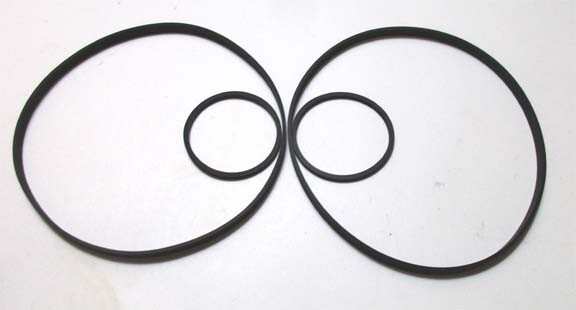
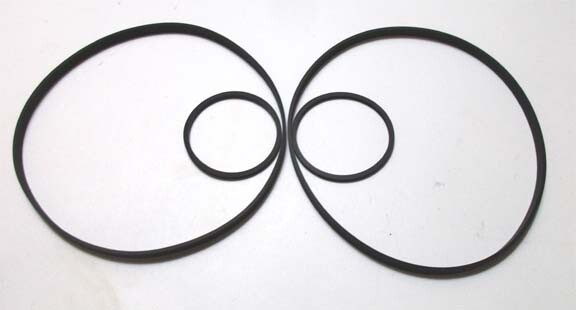
- Inspect Belts and Idler Tires: Rubber components degrade over time. If the tape transport is sluggish or non-functional, replace worn belts or idler tires.
- Demagnetize Regularly: Use a tape head demagnetizer every few months to prevent dull sound and dropouts.
- Check Tape Path Alignment: Misaligned guides can cause poor tracking and uneven wear on tapes.
- Use Quality Tapes: Pair the deck with reputable brands (e.g., TDK, Maxell, Sony) for best results, especially when using Metal or CrO2 tapes.
- Store Properly: Keep in a dry, dust-free environment to prevent corrosion and mechanical sticking.
Market Value and Collectibility
The Sony TC-WR545 is moderately available on the secondhand market, with working units typically priced between $30 and $80 USD, depending on condition, functionality, and included accessories. Units with verified high-speed dubbing and auto-reverse operation command higher prices.
Collectibility Rating: 3/10
While not a rare or highly sought-after model among audiophiles, the TC-WR545 holds nostalgic value for collectors of 1990s consumer electronics and those preserving analog duplication workflows. Its practical features and solid build make it a functional piece rather than a premium collectible.
Conclusion
The Sony TC-WR545 stands as a reliable and feature-rich representative of early 1990s cassette technology. With its dual-deck convenience, noise reduction, and high-speed dubbing, it remains a practical choice for tape archiving, duplication, or nostalgic listening. While it requires maintenance like any aging mechanical device, a well-cared-for TC-WR545 continues to offer a satisfying analog experience in today’s digital world.
eBay Listings

As an eBay Partner, we earn from qualifying purchases. This helps support our independent vintage technology research.
Related Models
- Sony TC-2050SD (1978)
- Sony TC-2130A (1974)
- Sony TC-2220 (1972)
- Sony TC-FX6 (1982)
- Sony TC-K96R (1986)
- Aiwa AD-F990 (1993)
- Kenwood KX-3060 (1982)
- Stromberg-Carlson RS-404 (1975)
- Akai CS-F33R (1985)
- Akai DX-59 (1983)