Sony TC-WE825S Dual Cassette Deck
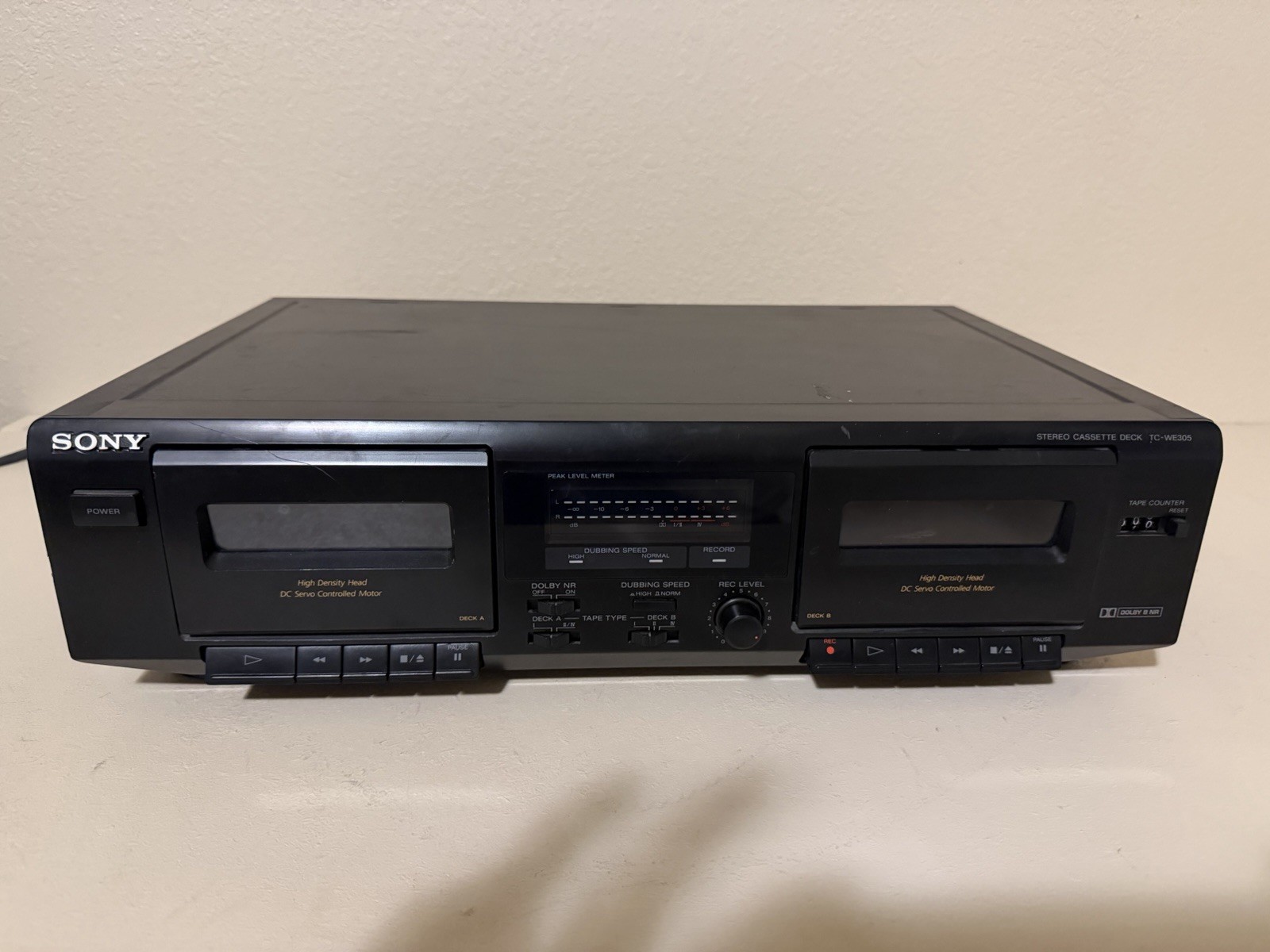
The Sony TC-WE825S is a mid-range dual cassette deck released in 1998, representing one of the final generations of consumer-grade cassette recorders before the format began its steep decline in the early 2000s. Designed for convenient music duplication and timer-based recording, the TC-WE825S combines practical features with solid audio performance, making it a reliable choice for home audio enthusiasts during the late cassette era.
Key Features
- Dual cassette transport with auto-reverse on both decks
- Dolby B and C noise reduction for improved audio clarity
- Automatic tape calibration (AZ-AM) for optimal recording levels
- Synchro dubbing function for seamless tape-to-tape copying
- Quick charge mechanism for faster dubbing between tapes
- Timer recording and playback functionality
- Tape type selector (Type I, II, IV) with automatic bias and equalization
- Line input: 50k ohms, Line output: 2.2k ohms
Specifications
| Specification | Detail |
| Model | TC-WE825S |
| Brand | Sony |
| Year of Release | 1998 |
| Production Period | 1998–2000 |
| Category | Dual Cassette Deck |
| Auto-Reverse | Yes (both decks) |
| Noise Reduction | Dolby B, Dolby C |
| Tape Types Supported | Type I (Normal), Type II (Chrome), Type IV (Metal) |
| Recording Bias | Automatic selection by tape type |
| Playback Equalization | 120 μs (Type I), 70 μs (Type II/IV) |
| Line Input Sensitivity | 200 mV |
| Line Input Impedance | 50 kΩ |
| Line Output Impedance | 2.2 kΩ |
| Power Consumption | 22 W |
| Dimensions (W×H×D) | 430 × 145 × 323 mm |
| Weight | 7.5 kg |
| Special Features | Synchro dubbing, quick charge, timer recording, auto calibration |
Historical Context
The TC-WE825S was part of Sony's final wave of cassette deck development, released at a time when CD players and early digital audio formats were rapidly replacing analog tape in consumer electronics. Despite the shifting landscape, Sony continued to refine cassette technology, and models like the TC-WE825S showcased the peak of mass-market cassette engineering.
With features like automatic tape calibration and synchro dubbing, the TC-WE825S was aimed at users who valued convenience and audio fidelity in tape duplication—such as creating mixtapes or backing up music collections. Its inclusion of Dolby C noise reduction and support for metal tapes ensured competitive sound quality, especially when paired with high-grade cassettes.
As a mid-tier model, it lacked the premium build and discrete components of Sony's high-end decks like the TC-K665ES, but it delivered excellent functionality for its class and price point.
Sound Signature
The TC-WE825S delivers a clean, accurate sound profile typical of late-era Sony cassette decks. With well-implemented Dolby B and C noise reduction, background hiss is minimized, especially on chrome and metal tapes. Frequency response is strong for the format, with tight bass, clear mids, and detailed highs when properly maintained.
The automatic calibration system helps maintain consistent recording levels across tapes, reducing user error and improving overall playback quality. While not audiophile-grade, the TC-WE825S performs admirably for casual listening and tape archiving.
Maintenance and Tips
Like all vintage cassette decks, the TC-WE825S requires regular maintenance to perform optimally:
- Cleaning: Clean the tape heads, capstan, and pinch roller regularly with isopropyl alcohol and a lint-free swab. Dust and oxide buildup degrade sound quality and can damage tapes.
- Demagnetizing: Use a non-contact tape head demagnetizer every 50–100 hours of use to prevent muffled sound and high-frequency loss.
- Belt and Idler Tire Inspection: The rubber belts and idler tire are prone to drying, cracking, or slipping after decades of storage. Replacement with fresh parts is often necessary for full functionality.
- Capstan Motor: Listen for inconsistent tape speed or wobbling playback, which may indicate motor wear or lubrication issues.
- Head Alignment: If stereo imaging is off or one channel is weaker, a professional head alignment may be required.
Using high-quality tapes (e.g., Sony HF, Maxell XLI-S, TDK SA) will yield the best results and reduce head wear.
Collectibility and Market Value
The TC-WE825S holds moderate collectible value, rated at 4/10. While not a rare or high-end model, it is appreciated for its reliability, feature set, and role in the final chapter of cassette technology. Units in working condition with clean mechanics typically sell for $30–$80, depending on cosmetic state and included accessories.
It appeals most to users looking for a functional dual cassette deck for tape digitization or nostalgic use, rather than as a display-only collector’s item.
Conclusion
The Sony TC-WE825S stands as a competent and well-rounded dual cassette deck from the end of the analog era. While overshadowed by the rise of digital media, it exemplifies the maturity of cassette technology with thoughtful features and solid engineering. For enthusiasts and casual users alike, it remains a practical and nostalgic piece of audio history.
eBay Listings


As an eBay Partner, we earn from qualifying purchases. This helps support our independent vintage technology research.
Service Manuals & Schematics
- Service Manual — archive.org
Related Models
- Sony TC-2050SD (1978)
- Sony TC-2130A (1974)
- Sony TC-2220 (1972)
- Sony TC-FX6 (1982)
- Sony TC-K96R (1986)
- Aiwa AD-F990 (1993)
- Kenwood KX-3060 (1982)
- Stromberg-Carlson RS-404 (1975)
- Akai CS-F33R (1985)
- Akai DX-59 (1983)