Sony TC-WE725 Dual Cassette Deck
The Sony TC-WE725 is a dual cassette deck produced from 1999 to 2002, representing one of the final generations of consumer-oriented cassette technology. Designed for convenience and ease of use, the TC-WE725 was aimed at users who wanted reliable tape dubbing, music archiving, and playback without the complexity of high-end audiophile decks. With a full suite of automation features and solid build quality, it stands as a testament to the maturity of cassette deck engineering before the format's decline in the early 2000s.
Key Features
- Dual cassette wells with auto-reverse on both sides
- Dolby B and C noise reduction for improved audio fidelity
- Tape type selector (Type I, II, IV) with auto calibration
- Synchronous recording (synchro dub) between tapes
- Music search and auto rewind/fast-forward
- Programmable timer recording and playback functions
- Line input/output for connection to external audio sources
Specifications
| Specification | Detail |
| Model | TC-WE725 |
| Brand | Sony |
| Year of Release | 1999 |
| Production Period | 1999–2002 |
| Cassette Function | Dual deck, auto-reverse (both sides) |
| Tape Speed | 4.76 cm/s (standard) |
| Wow and Flutter | Less than 0.08% (weighted, typical) |
| Frequency Response | 40Hz–14kHz (Type IV, Dolby C) |
| Signal-to-Noise Ratio | 68 dB (Dolby C, Type IV) |
| Harmonic Distortion | <0.8% (1 kHz, 0 dB) |
| Input Impedance | 50k ohms (line) |
| Output Impedance | 2.2k ohms (line, typical) |
| Input Sensitivity | ~200 mV (line, typical) |
| Output Level | ~1 V (line, typical) |
| Noise Reduction | Dolby B, C |
| Tape Types Supported | Type I (Normal), Type II (Chrome), Type IV (Metal) |
| Calibration | Auto tape calibration |
| Recording Features | Synchro dub, music search, timer record/play |
| Power Consumption | 24W |
| Dimensions | 430 × 145 × 305 mm (W×H×D) |
| Weight | 6.5 kg |
Historical Context
The Sony TC-WE725 arrived at the twilight of the cassette era. By 1999, digital formats like CD-R and MP3 players were gaining momentum, yet cassettes remained popular for their portability, affordability, and widespread use in car audio and home systems. Sony, a pioneer in cassette technology since the 1970s, continued refining consumer decks to offer maximum convenience.
The TC-WE725 exemplifies this philosophy. Its dual auto-reverse design allowed users to dub tapes seamlessly—flipping both tapes automatically without manual intervention. Features like music search, timer programming, and synchro recording made it a practical tool for recording radio broadcasts or creating mixtapes. While not aimed at audiophiles, it delivered clean, consistent performance suitable for everyday listening.
As one of Sony’s last dual cassette models, the TC-WE725 marks the end of an era where magnetic tape was a dominant medium for personal audio.
Sound Signature
The TC-WE725 delivers a clean, neutral sound typical of late-model solid-state consumer cassette decks. With Dolby C noise reduction engaged and Type IV (metal) tapes, it achieves a wide frequency response and low background hiss. The auto-calibration system ensures optimal bias and equalization settings for each tape type, enhancing recording accuracy.
While not as dynamically rich or detailed as high-end decks from the 1980s, the TC-WE725 provides reliable, low-distortion playback suitable for casual listeners and archivists. Its strength lies in consistency and ease of use rather than sonic extravagance.
Maintenance and Common Issues
Despite its robust design, the TC-WE725 is subject to age-related wear. Regular maintenance can extend its life and preserve performance:
Common Issues:
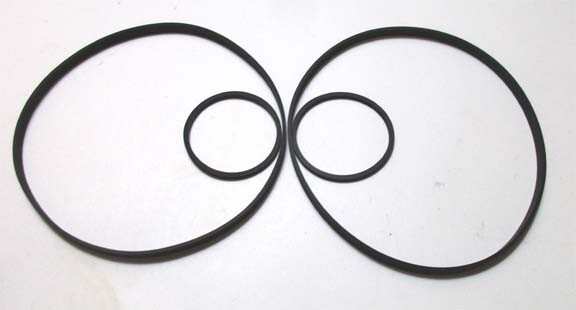
- Belt degradation: Rubber belts can harden or snap after 20+ years. Replacement with fresh belts is essential for proper operation.
- Idler tire wear: The idler wheel can lose traction, causing slow or uneven tape movement. Cleaning or replacement restores function.
- Mode switch oxidation: The tape mode selector switch (Type I/II/IV) may develop oxidation, leading to incorrect bias settings. Contact cleaner can resolve this.
- Capacitor aging: Electrolytic capacitors in the power supply may dry out, risking voltage instability. Replacing them prevents future failures.
- Head wear and alignment: While less common, head misalignment can affect stereo imaging. Professional demagnetization and alignment are recommended periodically.
Maintenance Tips:
- Clean tape heads and capstan with isopropyl alcohol after every 20–30 hours of use.
- Demagnetize the heads and tape path every 50 hours using a non-contact tape demagnetizer.
- Store in a dry, dust-free environment to prevent internal contamination.
- Use high-quality tapes to reduce head wear and improve recording results.
- Power on periodically (every few months) to keep capacitors conditioned.
Collectibility and Market Value
The TC-WE725 is not a high-collectibility item but holds nostalgic and practical value. Rated 4/10 for collectibility, it appeals primarily to users seeking a functional dubbing deck or retro audio enthusiasts.
- Market Value: $50–$150, depending on condition and functionality
- Restoration Potential: High—mechanically serviceable with common replacement parts
- Best Use Cases: Tape digitization, cassette dubbing, retro home audio setups
While not a showpiece, the TC-WE725 remains a capable and convenient machine for those keeping cassette culture alive.
eBay Listings



As an eBay Partner, we earn from qualifying purchases. This helps support our independent vintage technology research.
Service Manuals & Schematics
- Service Manual — archive.org
Related Models
- Sony TC-2050SD (1978)
- Sony TC-2130A (1974)
- Sony TC-2220 (1972)
- Sony TC-FX6 (1982)
- Sony TC-K96R (1986)
- Aiwa AD-F990 (1993)
- Kenwood KX-3060 (1982)
- Stromberg-Carlson RS-404 (1975)
- Akai CS-F33R (1985)
- Akai DX-59 (1983)