Sony TC-WE435 Double Cassette Deck
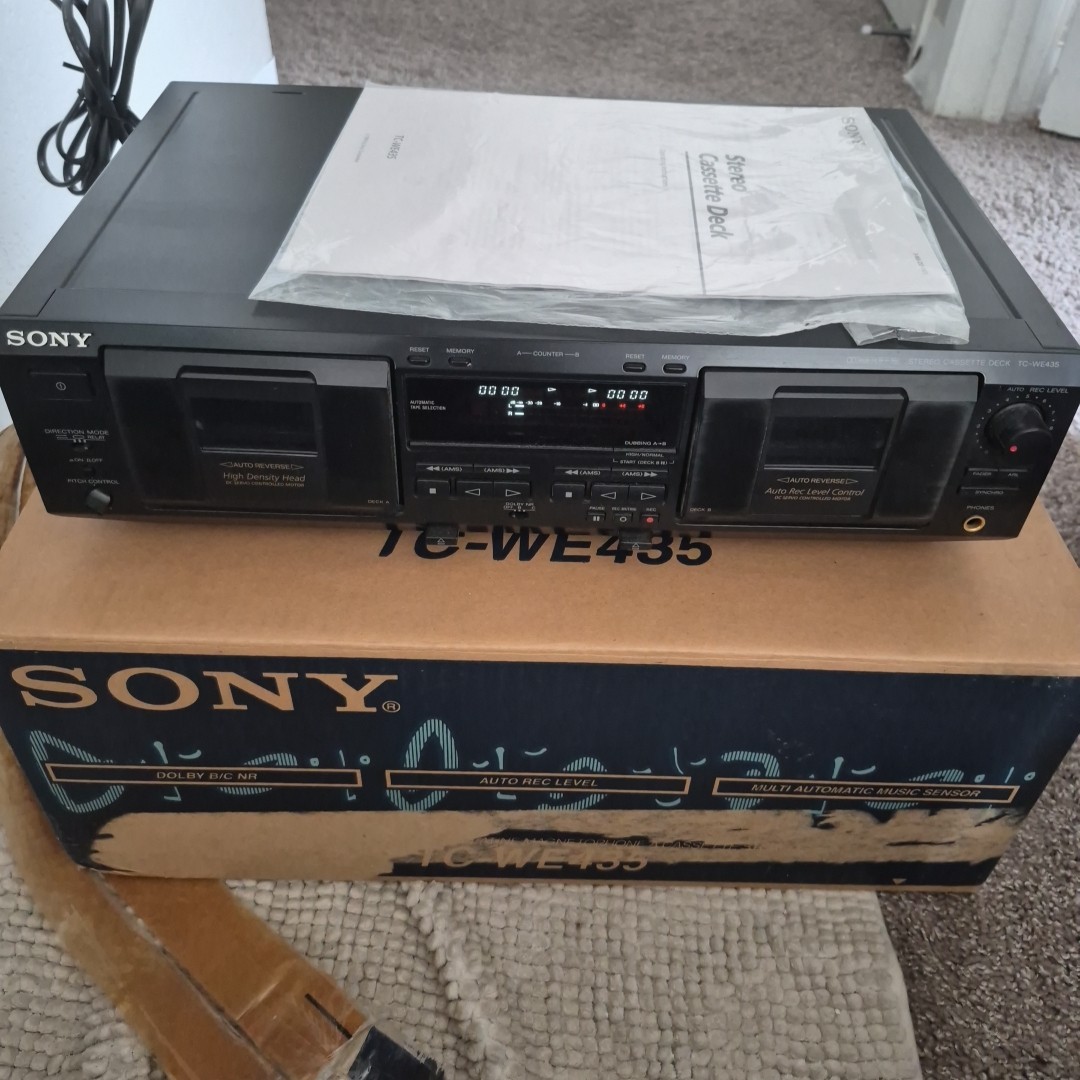
The Sony TC-WE435 is a double cassette deck produced from 1999 to 2002, representing one of the last mainstream consumer models released during the twilight years of the compact cassette format. Designed for convenience and reliable performance, the TC-WE435 was positioned as a mid-tier home audio component, ideal for tape duplication, time-shift recording, and music library management.
With its comprehensive feature set and solid build quality, the TC-WE435 remains a functional and nostalgic piece for cassette enthusiasts and retro audio collectors.
Key Features
- Double cassette deck with independent playback and recording capability
- Auto-reverse on both decks for uninterrupted playback
- High-speed dubbing (2x or 4x speed depending on tape length)
- Dolby B and C noise reduction for improved signal-to-noise ratio
- Tape selector for Normal, CrO2, and Metal tape types
- Auto tape calibration for optimal recording levels
- Timer recording and playback with programmable schedules
- Soft-touch control panel with illuminated display
- Low wow and flutter (0.09% WRMS) for stable pitch and speed accuracy
Specifications
| Specification | Detail |
| Model | TC-WE435 |
| Brand | Sony |
| Year of Release | 1999 |
| Production Period | 1999–2002 |
| Cassette Function | Dual-deck with auto-reverse (both sides) |
| Noise Reduction | Dolby B, Dolby C |
| Tape Types Supported | Normal, CrO2, Metal |
| Recording Speed | 4.76 cm/s (standard) |
| Wow and Flutter | 0.09% WRMS |
| Frequency Response | 20 Hz – 20 kHz (with Dolby C, Metal tape) |
| Signal-to-Noise Ratio | >68 dB (Dolby C on Metal tape) |
| Dubbing Speed | Up to 4x normal speed |
| Timer Function | Yes (record and playback scheduling) |
| Output Level | Line-level (approx. 0.3 V) |
| Input Level | Line-level (recording input) |
| Power Requirements | AC 120V, 60Hz (North American version) |
| Dimensions (W×H×D) | 430 × 145 × 320 mm |
| Weight | 7.2 kg (15.9 lbs) |
Historical Context
The Sony TC-WE435 emerged at a pivotal moment in audio history—the late 1990s—when digital formats like the CD and MP3 were rapidly displacing analog tape. Despite the shifting landscape, cassette decks remained popular in households for their affordability, portability, and ease of use, particularly for recording from radios, creating mixtapes, and dubbing music.
As part of Sony’s final wave of mass-market cassette decks, the TC-WE435 exemplifies the maturity of analog tape technology. It integrates decades of refinement in tape transport design, noise reduction, and user interface. While not a high-end audiophile model, it offered reliable performance and advanced features like high-speed dubbing and auto-calibration, making it a practical choice for everyday users.
Its production run (1999–2002) coincided with the decline of cassette manufacturing in consumer electronics, making it a symbolic endpoint for an era that began in the 1960s.
Sound Signature
The TC-WE435 delivers a clean, neutral sound profile typical of late-generation solid-state cassette decks. With precise azimuth alignment and stable tape speed, it provides accurate playback with minimal coloration. Dolby C noise reduction works effectively to suppress tape hiss, especially on CrO2 and Metal tapes.
The low wow and flutter rating (0.09% WRMS) ensures consistent pitch stability, making it suitable for both music and voice recording. While not matching the warmth or character sought by some analog purists, the TC-WE435 excels in transparency and reliability.
Maintenance and Common Issues
Like all mechanical tape decks from this era, the TC-WE435 requires periodic maintenance to remain functional:
Common Issues:
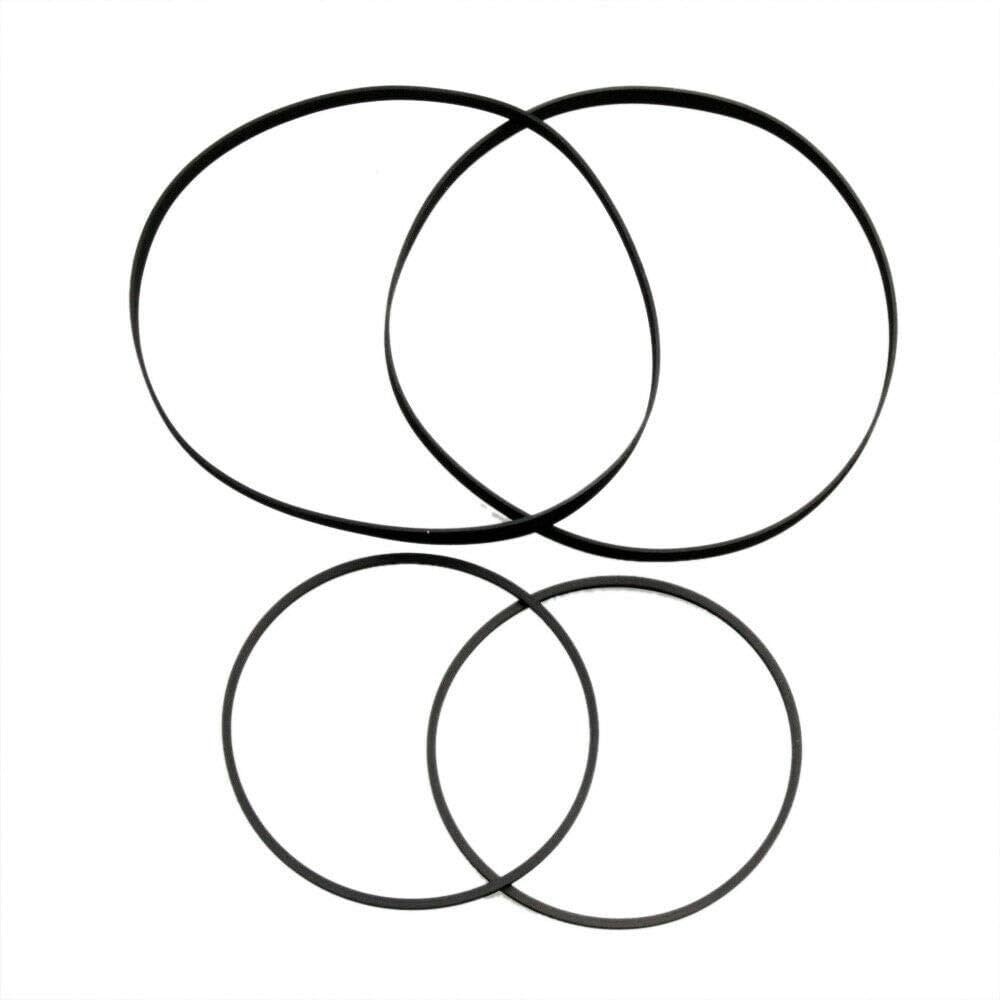
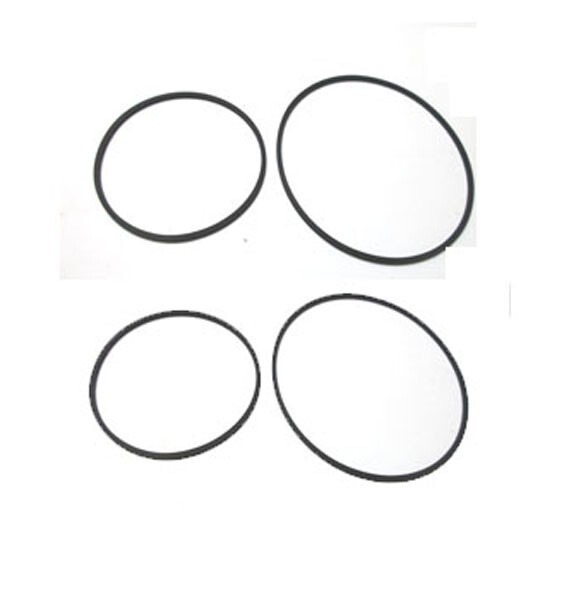
- Belt degradation: Rubber belts dry out and crack over time, leading to transport failure. Replacement with fresh belts is essential.
- Idler tire wear: The idler wheel can harden or lose grip, causing slow or uneven tape movement.
- Capstan motor failure: Motors may weaken or seize after decades of inactivity.
- Mode switch oxidation: The tape mode selector switch (Normal/CrO2/Metal) can develop oxidation; contact cleaner may restore function.
- Mechanical jamming: Dust and dried lubricant can cause the cassette mechanism to stick or fail to eject.
Maintenance Tips:
1. Clean the tape heads and capstan regularly with isopropyl alcohol and a lint-free swab.
2. Demagnetize the heads every few months using a tape demagnetizer to preserve high-frequency response.
3. Replace worn belts and idler tires—kits are available from specialty audio restoration suppliers.
4. Lubricate sparingly—only use synthetic lubricants designed for audio equipment; over-lubrication attracts dust.
5. Store tapes properly—avoid heat and humidity to prevent tape shedding and head clogging.
Collectibility and Market Value
The TC-WE435 is not considered a high-collectibility item, rated 3/10 due to its mid-range positioning and widespread availability during its time. However, it holds nostalgic value and practical utility for those preserving or using cassette media.
- Market Value: $30–80 USD, depending on condition, functionality, and completeness (remote, manual, packaging).
- Restoration Potential: High—many units can be brought back to full working order with basic servicing.
- Best Use Today: Tape digitization, home dubbing, or as a retro component in vintage audio setups.
Conclusion
The Sony TC-WE435 stands as a capable and well-rounded double cassette deck from the final chapter of the cassette era. While overshadowed by digital formats, it remains a testament to the refinement of analog tape technology. With proper care, it continues to serve as a reliable tool for cassette enthusiasts and a nostalgic centerpiece in vintage audio collections.
eBay Listings

As an eBay Partner, we earn from qualifying purchases. This helps support our independent vintage technology research.
Service Manuals & Schematics
- Service Manual — archive.org
Related Models
- Sony TC-2050SD (1978)
- Sony TC-2130A (1974)
- Sony TC-2220 (1972)
- Sony TC-FX6 (1982)
- Sony TC-K96R (1986)
- Aiwa AD-F990 (1993)
- Kenwood KX-3060 (1982)
- Stromberg-Carlson RS-404 (1975)
- Akai CS-F33R (1985)
- Akai DX-59 (1983)