Sony TC-V910WR Dual Cassette Deck (1985)
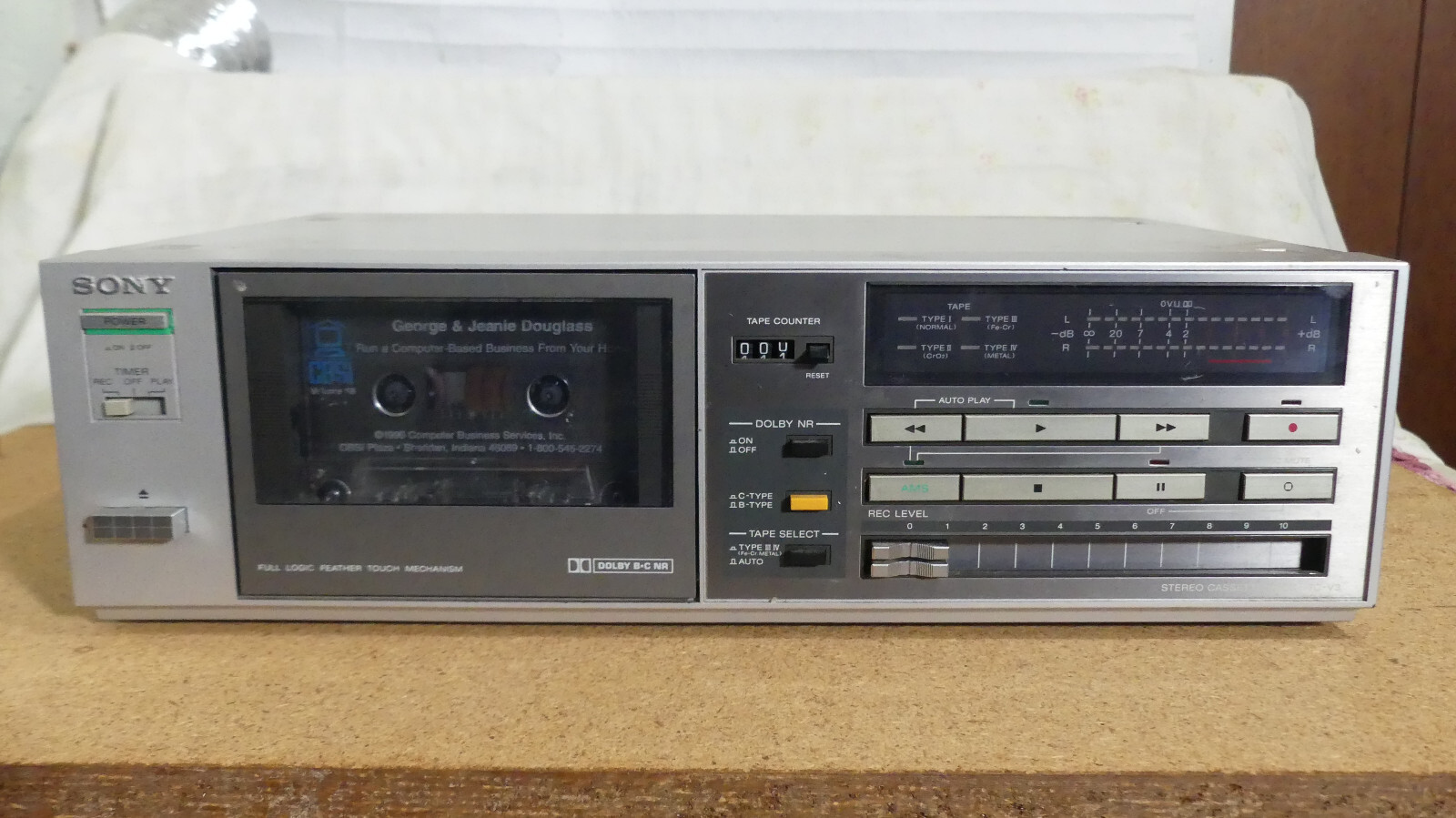
The Sony TC-V910WR is a double cassette deck released in 1985 as part of Sony's mid-range Hi-Fi component lineup. Designed for home audio enthusiasts, this unit offered convenient dual-cassette functionality with advanced features for its time, including auto-reverse playback, Dolby noise reduction, and music search. With its sleek design and soft-touch controls, the TC-V910WR was a popular choice for tape dubbing, music recording from radio or turntables, and personal mixtape creation during the mid-1980s.
Key Features
- Dual Cassette Decks: Enables direct high-speed copying from one cassette to another.
- Auto-Reverse Playback: Plays both sides of a cassette without manual flipping.
- Dolby B and C Noise Reduction: Reduces tape hiss for cleaner audio playback and recording.
- Music Search: Fast forward or rewind with audible playback to quickly locate tracks.
- Tape Selector: Automatically optimizes bias and equalization for Type I, II, and IV tapes.
- Auto Tape Bias: Ensures optimal recording levels based on tape type.
- Mic Mixing Input: Allows voice commentary or singing to be recorded over music.
- Headphone Output: 3.5mm jack for private listening.
- Soft-Touch Controls: Elegant and responsive button interface.
Technical Specifications
| Specification | Detail |
| Year of Production | 1985–1987 |
| Cassette Function | Dual deck with auto-reverse |
| Noise Reduction | Dolby B, Dolby C |
| Tape Types Supported | Type I (Normal), Type II (Chrome), Type IV (Metal) |
| Bias & EQ System | Automatic tape selector |
| Frequency Response | 20Hz – 20kHz (Type IV, Dolby ON) |
| Wow and Flutter | < 0.08% (WRMS) |
| Total Harmonic Distortion | < 1.5% |
| Signal-to-Noise Ratio | > 68dB (Dolby C ON) |
| Input Impedance | 50k ohms (line) |
| Output Impedance | 2.2k ohms (line) |
| Input Sensitivity | 70mV (line) |
| Output Level | 0.5V (line) |
| Microphone Input | Yes (mixing capability) |
| Headphone Output | 3.5mm stereo jack |
| Power Consumption | 25W |
| Dimensions (W×H×D) | 430 × 142 × 330 mm |
| Weight | 7.8 kg |
Historical Context
The Sony TC-V910WR was introduced during the golden era of cassette-based home audio, when dual cassette decks were a staple in many living rooms. As part of Sony’s broader Hi-Fi component system strategy, the TC-V910WR bridged the gap between entry-level and high-end decks, offering a compelling mix of convenience and performance. Its auto-reverse function and Dolby C noise reduction placed it above basic models, while its dual-deck design made it ideal for users who wanted to create mixtapes or archive vinyl records.
During the mid-1980s, cassette duplication became a cultural phenomenon, and decks like the TC-V910WR empowered users to curate personalized music collections. Though not positioned as a professional-grade recorder, its accurate sound reproduction and reliable mechanics made it a trusted companion in many home stereo setups.
Sound Signature
The TC-V910WR delivers a clean and balanced audio performance typical of mid-tier Sony cassette decks of the era. With Dolby B and C noise reduction engaged, tape hiss is significantly reduced, especially on chrome and metal tapes. The frequency response is wide and even, with tight bass and clear highs. Distortion is low under normal conditions, and the auto-bias system ensures consistent recording quality across different tape types. While not matching the precision of high-end decks, its sound remains faithful and enjoyable for casual listening and archival use.
Maintenance and Restoration Tips
Like all vintage cassette decks, the TC-V910WR requires periodic maintenance to perform reliably after decades of storage or use.
Common Issues
- Belt Degradation: Rubber belts dry out and crack over time, leading to transport failure. Replace with high-quality silicone belts.
- Idler Tire Wear: The idler wheel can harden or become glazed, causing sluggish operation or failure to engage. Clean or replace as needed.
- Capacitor Aging: Electrolytic capacitors in the power supply and audio circuits may leak or lose capacitance. Replacing them prevents damage and restores performance.
- Potentiometer Noise: Volume and tone controls may develop crackling. Clean with contact cleaner or replace if worn.
- Mechanical Misalignment: Tape heads and guides may shift over time, affecting tracking and azimuth. Professional realignment ensures optimal playback.
Recommended Maintenance Steps
1. Clean the Tape Path: Use isopropyl alcohol and lint-free swabs to clean the heads, capstan, and pinch roller.
2. Demagnetize: Use a cassette demagnetizer to remove residual magnetism from heads and guides.
3. Inspect Belts and Idler: Check for cracks, stretching, or stickiness. Replace if in doubt.
4. Test All Functions: Verify auto-reverse, music search, and recording on all tape types.
5. Service the Electronics: Consider a recapping service for long-term reliability.
Collectibility and Market Value
The Sony TC-V910WR holds moderate collectible appeal, rated 4/10. While not a rare or high-end model, it is appreciated for its practicality, solid build quality, and nostalgic value. Units in excellent working condition with clean cosmetics typically sell for $50–$150, depending on region and included accessories.
It is most sought after by cassette enthusiasts, retro audio hobbyists, and those restoring vintage Sony component systems. Its dual-deck functionality and mic mixing feature add to its charm for users interested in analog creativity.
Conclusion
The Sony TC-V910WR stands as a capable and user-friendly dual cassette deck from the mid-1980s. While not a flagship model, it exemplifies Sony’s commitment to accessible Hi-Fi technology during the cassette era. With proper care and maintenance, it remains a functional and nostalgic addition to any vintage audio setup, ideal for tape preservation, dubbing, or simply enjoying music the analog way.
eBay Listings



As an eBay Partner, we earn from qualifying purchases. This helps support our independent vintage technology research.
Related Models
- Sony TC-2050SD (1978)
- Sony TC-2130A (1974)
- Sony TC-2220 (1972)
- Sony TC-FX6 (1982)
- Sony TC-K96R (1986)
- Aiwa AD-F990 (1993)
- Kenwood KX-3060 (1982)
- Stromberg-Carlson RS-404 (1975)
- Akai CS-F33R (1985)
- Akai DX-59 (1983)