Sony TC-U4 Cassette Deck
The Sony TC-U4 is a high-fidelity cassette deck introduced in 1980 as part of Sony's premium lineup of audio equipment during the early 1980s. Known for its advanced engineering and precise tape handling, the TC-U4 was designed for audiophiles and recording enthusiasts who demanded accurate playback and reliable recording performance. With its 3-head design, dual capstan transport, and support for Dolby B and C noise reduction, the TC-U4 represented the pinnacle of cassette technology at the time.
Key Features
- 3-Head Design: Separate record, playback, and erase heads for optimal signal fidelity
- Dual Capstan Transport: Ensures stable tape speed and reduced wow/flutter
- Dolby B and C Noise Reduction: Delivers cleaner recordings with reduced tape hiss
- Manual Tape Calibration: Allows users to fine-tune bias and level settings for different tape types
- Pitch Control: Adjustable ±6% for tempo correction or DJ-style manipulation
- Memory Rewind: Fast rewind with automatic stop at the beginning of the tape
- Soft-Touch Mechanical Controls: Smooth, responsive button operation with tactile feedback
- Line and Mic Inputs: Flexible connectivity for various audio sources
Specifications
| Parameter | Specification |
| Year of Production | 1980–1982 |
| Head Configuration | 3-head (separate record, playback, erase) |
| Tape Transport | Dual capstan, direct drive |
| Noise Reduction | Dolby B, Dolby C |
| Wow and Flutter | < 0.065% (weighted, RMS) |
| Frequency Response | 20Hz – 20kHz (with CrO₂ tape, Dolby C) |
| Signal-to-Noise Ratio | > 68 dB (Dolby C) |
| Total Harmonic Distortion | < 1.5% |
| Input Sensitivity | Line: 70mV (for -10dB VU), Mic: 0.25mV (for -10dB VU) |
| Input Impedance | 50k ohms (line), 10k ohms (mic) |
| Output Impedance | 1k ohms (line) |
| Output Level | 150mV (at 3% THD, 400Hz) |
| Tape Types Supported | Type I (Normal), Type II (CrO₂), Type IV (Metal) |
| Calibration Controls | Manual bias, level, and equalization adjustment |
| Pitch Control | ±6% variable |
| Power Requirements | Not specified (line-powered, no internal amplifier) |
| Dimensions (W×H×D) | 430 × 142 × 335 mm |
| Weight | 9.8 kg |
Historical Context
The Sony TC-U4 was released during a golden era for analog audio, when cassette decks were rapidly evolving to rival reel-to-reel recorders in fidelity. As part of Sony’s high-end TC-series, the TC-U4 showcased the company’s commitment to precision engineering and audio excellence. Its 3-head configuration and dual capstan system were typically found in professional or near-professional equipment, making the TC-U4 a favorite among serious home recordists and audiophiles.
At a time when compact cassettes were becoming the dominant format for portable and home audio, the TC-U4 stood out for its ability to deliver studio-grade recording quality. It supported all major tape formulations, including metal tapes, and offered full manual calibration—features that were rare in consumer-grade decks. The inclusion of Dolby C, a relatively new noise reduction system at the time, further enhanced its appeal by significantly reducing background hiss without artifacts.
Sound Signature
The TC-U4 is renowned for its clean, neutral, and detailed sound. With Dolby noise reduction engaged, recordings exhibit excellent clarity and dynamic range. The low wow and flutter rate ensures stable pitch and timing, making it suitable for both music recording and critical listening. Users often praise its accurate stereo imaging and tight bass response, particularly when paired with high-quality tapes.
Maintenance and Common Issues
Like all vintage cassette decks, the Sony TC-U4 requires periodic maintenance to perform at its best. Common issues include:
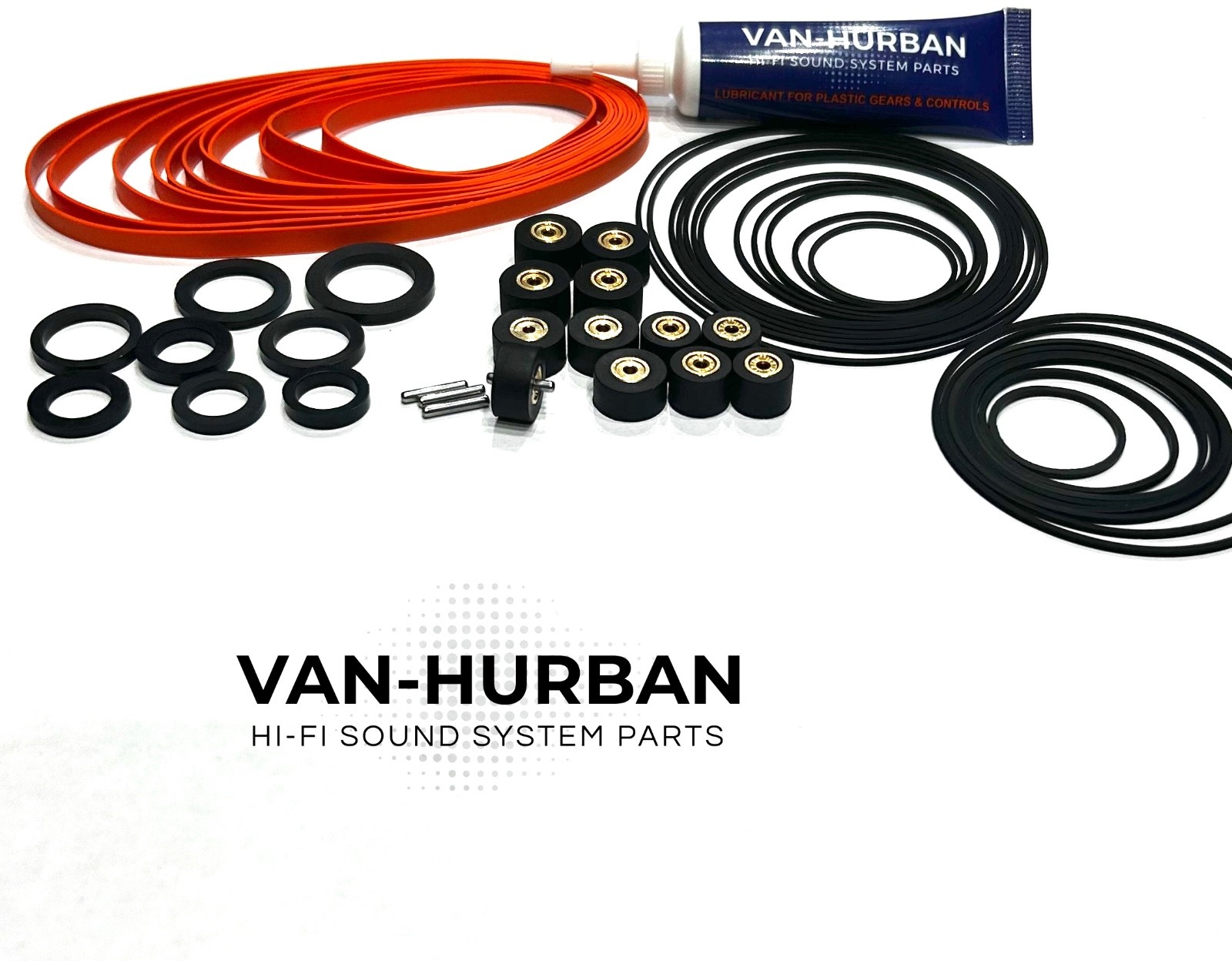
- Belt Degradation: Rubber belts can dry out and crack over time, leading to transport malfunctions.
- Idler Tire Wear: The idler wheel may harden or lose grip, causing speed instability.
- Capacitor Aging: Electrolytic capacitors in the power supply or audio circuits may leak or fail.
- Solenoid Issues: Mechanical solenoids controlling tape movement can become sluggish or stuck.
- Calibration Drift: Pots and switches involved in bias and level calibration may require cleaning or adjustment.
Maintenance Tips
1. Clean the Heads and Guides: Use isopropyl alcohol and a cotton swab after every few uses.
2. Demagnetize Regularly: Use a tape head demagnetizer to prevent signal loss and distortion.
3. Replace Worn Belts: Source OEM or high-quality replacements to restore proper function.
4. Service the Idler Tire: Clean or replace if slipping occurs during tape transport.
5. Check Capacitors: Have a technician inspect for bulging or leaking capacitors, especially if the unit has been stored for years.
6. Use Fresh Tapes: Avoid playing old or sticky tapes that can leave residue on heads.
Collectibility and Market Value
The Sony TC-U4 holds a moderate level of collectibility, rated around 6/10, due to its advanced features and solid build quality. While not as rare as some Japanese high-end decks from Nakamichi or TEAC, it remains a respected model among cassette enthusiasts.
In the current market (2024), a fully functional TC-U4 in good cosmetic condition typically sells for $100 to $250. Units with verified tape calibration, clean heads, and replaced belts command higher prices, especially when accompanied by original documentation or accessories.
Conclusion
The Sony TC-U4 is a testament to the engineering prowess of early 1980s audio design. With its 3-head system, dual capstan transport, and comprehensive noise reduction, it delivers performance that still impresses today. For collectors, restorers, or analog enthusiasts, the TC-U4 offers a rewarding experience and a tangible connection to the height of cassette fidelity. With proper care and maintenance, it remains a reliable and sonically excellent addition to any vintage audio setup.
eBay Listings



As an eBay Partner, we earn from qualifying purchases. This helps support our independent vintage technology research.
Related Models
- Sony TC-2050SD (1978)
- Sony TC-2130A (1974)
- Sony TC-2220 (1972)
- Sony TC-FX6 (1982)
- Sony TC-K96R (1986)
- Aiwa AD-F990 (1993)
- Kenwood KX-3060 (1982)
- Stromberg-Carlson RS-404 (1975)
- Akai CS-F33R (1985)
- Akai DX-59 (1983)