Sony TC-TX9 Cassette Deck (1983)
The Sony TC-TX9 is a high-fidelity cassette deck introduced in 1983 as part of Sony’s premium lineup during the golden era of analog tape. Designed for audiophiles and serious music enthusiasts, the TC-TX9 combines advanced engineering with user-friendly features, delivering accurate sound reproduction and reliable mechanical performance. With its quartz-locked direct drive system, auto-reverse functionality, and support for metal tapes, the TC-TX9 stands as a testament to Sony’s innovation in cassette technology during the early 1980s.
Key Features
- Dolby B and C Noise Reduction: Provides significantly reduced tape hiss, especially when using metal or high-quality Type II cassettes.
- Auto-Reverse Playback: Enables continuous playback of both sides of a cassette without manual intervention.
- Quartz-Locked Direct Drive: Ensures precise tape speed control with minimal wow and flutter for stable, accurate playback.
- Metal Tape Compatibility: Optimized for use with metal (Type IV) tapes, offering extended frequency response and dynamic range.
- Bias Fine Adjustment: Allows users to fine-tune recording bias for optimal performance with different tape formulations.
- Soft-Touch Mechanical Controls: Smooth, responsive buttons with a premium tactile feel.
- Peak Level Meters: Dual VU-style meters for accurate monitoring of input levels during recording.
Specifications
| Specification | Detail |
| Year of Production | 1983–1985 |
| Cassette Compatibility | Type I (Ferric), Type II (Chrome), Type IV (Metal) |
| Tape Speed | 1⅞ ips (4.76 cm/s) |
| Noise Reduction | Dolby B, Dolby C |
| Playback System | Auto-reverse, bidirectional playback |
| Drive System | Quartz-locked direct drive capstan |
| Frequency Response (Metal) | 20 Hz – 20 kHz (±3 dB) |
| Wow and Flutter | < 0.055% (measured RMS) |
| Total Harmonic Distortion | < 1.5% |
| Input/Output Levels | Line In: 150 mV, Line Out: 150 mV |
| Meters | Dual peak level LEDs |
| Dimensions (W×H×D) | 430 × 142 × 325 mm |
| Weight | 9.8 kg |
| Power Requirements | Not specified (assumed AC 120V/230V, 50/60 Hz) |
Note: Original power specifications are not widely documented in surviving service manuals.
Historical Context
The Sony TC-TX9 was released at the height of the cassette deck’s evolution, when manufacturers were pushing the limits of analog tape fidelity. As part of Sony’s high-end TC-series, the TC-TX9 competed with offerings from Nakamichi, Denon, and TEAC, targeting discerning listeners who valued both convenience and sound quality. Its quartz-locked direct drive system was a hallmark of precision, minimizing speed variations that plagued belt-driven designs.
The inclusion of auto-reverse functionality made the TC-TX9 a forward-thinking choice for users who wanted uninterrupted playback, while its support for metal tapes and Dolby C noise reduction placed it at the forefront of home audio technology. Though not as widely celebrated as the flagship TC-K665ES or TC-D500, the TC-TX9 offered a compelling balance of performance and features, making it a respected model among Sony’s cassette legacy.
Sound Signature
The TC-TX9 delivers a clean, neutral sound profile with excellent clarity and detail retrieval. Thanks to its direct drive mechanism, wow and flutter are exceptionally low, resulting in stable pitch and timing. When paired with metal tapes and Dolby C engaged, the deck achieves a wide frequency response and low noise floor, rivaling early CD players in dynamic expression.
The bias fine-tuning option allows users to optimize recordings for specific tape brands, enhancing compatibility and fidelity. Overall, the TC-TX9 excels in accurate, uncolored playback—ideal for jazz, classical, and acoustic recordings where transparency is key.
Common Issues and Maintenance Tips
Despite its robust build, the TC-TX9 is subject to age-related wear. Regular maintenance is essential to preserve performance:
Common Issues:
- Belt Degradation: Internal rubber belts may harden or crack, affecting loading and tension mechanisms.
- Idler Tire Wear: The auto-reverse mechanism relies on an idler tire, which can dry out and slip over time.
- Oxidized Potentiometers and Switches: Can cause channel dropouts or volume imbalances; periodic cleaning with contact cleaner is recommended.
- Capstan Motor Aging: Rare but possible; may result in speed instability.
- Head Alignment Drift: Misaligned heads can degrade stereo imaging and high-frequency response; professional calibration advised.
Maintenance Tips:
1. Clean Heads and Guides: Use isopropyl alcohol and a cotton swab after every 20–30 hours of use.
2. Demagnetize Regularly: Use a tape head demagnetizer every few months to prevent signal loss.
3. Replace Worn Belts: Proactively replace internal belts if the deck has been in storage for years.
4. Service the Idler Tire: Rejuvenate or replace the idler tire to ensure reliable auto-reverse operation.
5. Check Azimuth and Tracking: For critical listening, have the head alignment verified by a technician.
Collectibility and Market Value
The Sony TC-TX9 holds moderate collectible appeal, rated 6/10 among cassette enthusiasts. While not as iconic as some of Sony’s ES-series decks, it remains a capable performer with desirable features. Well-maintained units in working condition typically sell for $100–$250, with higher prices for fully serviced models or those with rare finishes.
Its blend of auto-reverse convenience, metal tape support, and direct drive precision ensures the TC-TX9 remains a respected choice for vintage audio collectors and analog tape advocates.
eBay Listings
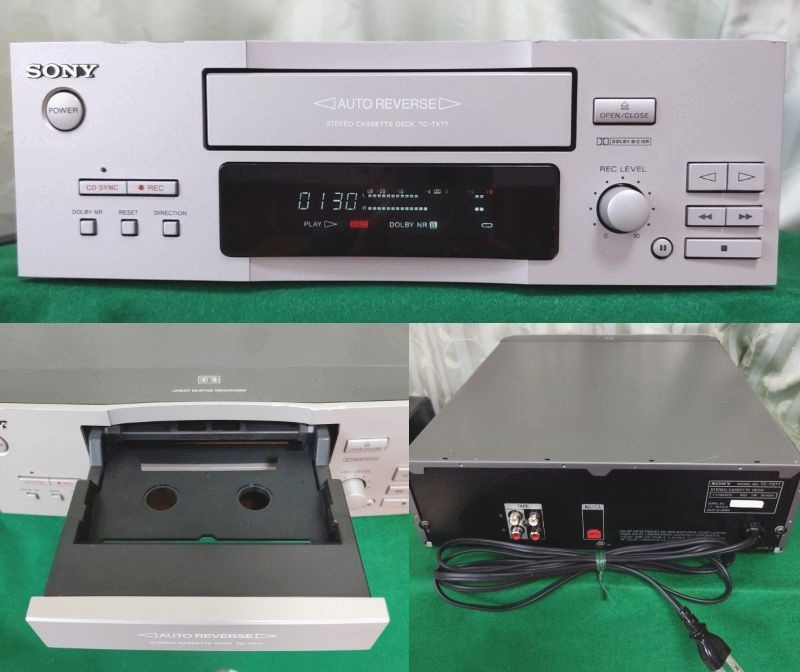


As an eBay Partner, we earn from qualifying purchases. This helps support our independent vintage technology research.
Related Models
- Sony TC-2050SD (1978)
- Sony TC-2130A (1974)
- Sony TC-2220 (1972)
- Sony TC-FX6 (1982)
- Sony TC-K96R (1986)
- Aiwa AD-F990 (1993)
- Kenwood KX-3060 (1982)
- Stromberg-Carlson RS-404 (1975)
- Akai CS-F33R (1985)
- Akai DX-59 (1983)