Sony TC-RX51 Cassette Deck
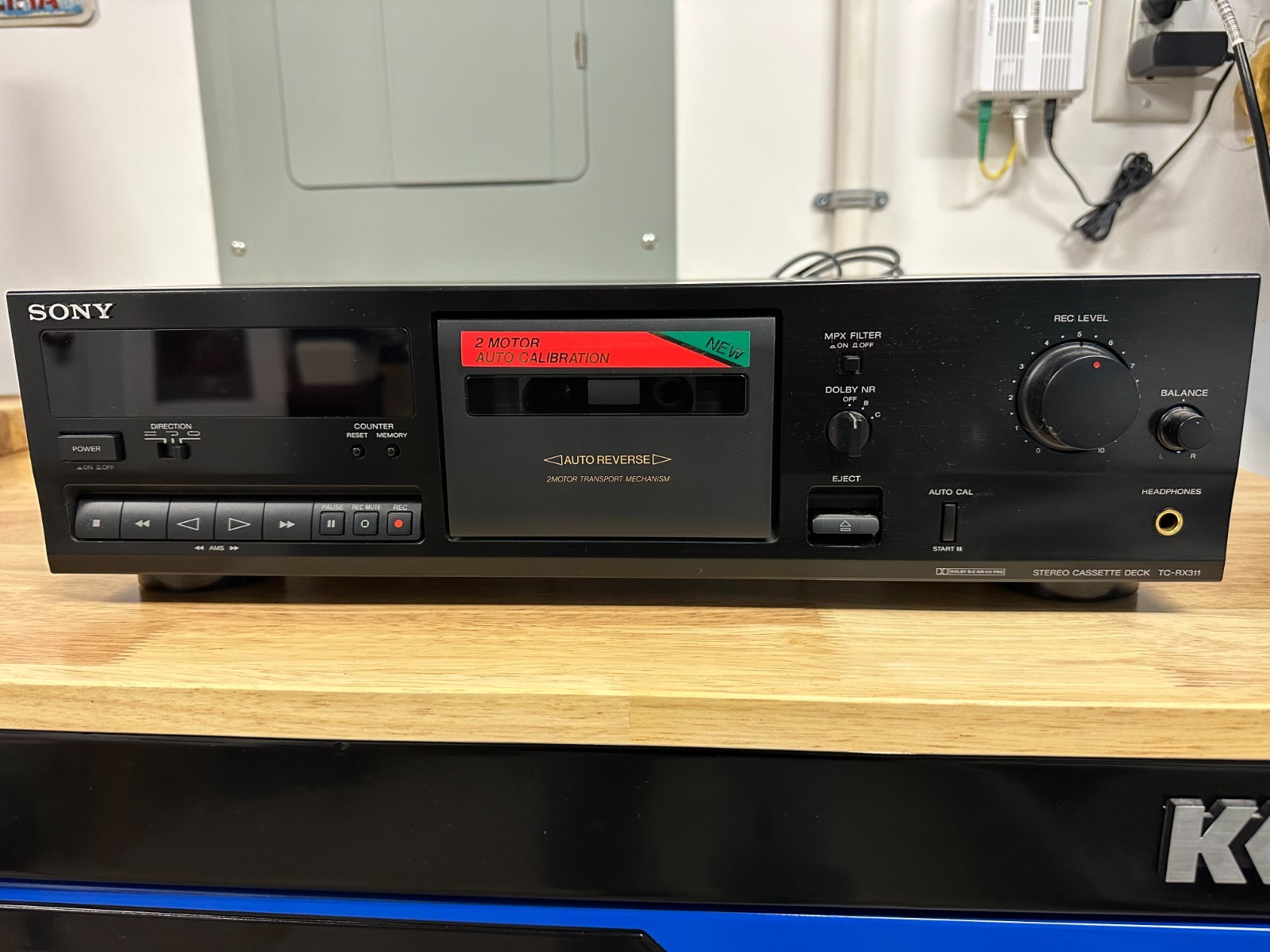
The Sony TC-RX51 is a double cassette deck released in 1989 as part of Sony's mid-range offering during the final peak of consumer cassette tape technology. Featuring a robust set of automation features, high-quality tape processing, and solid build quality, the TC-RX51 was designed for convenient music duplication and reliable playback. As one of the last generations of advanced cassette decks before the CD era fully took hold, it represents a mature stage in analog tape technology with user-friendly enhancements.
Key Features
- Double cassette transport with independent playback and recording functions
- Auto-reverse on both decks for uninterrupted playback and copying
- Dolby B and C noise reduction for improved signal-to-noise ratio
- Tape type selector: Normal, CrO2, and Metal compatibility
- Auto tape calibration for optimal recording levels
- Timer recording and playback with programmable functions
- Soft-touch mechanical controls with responsive feedback
- Fluorescent VU meters for precise level monitoring
Specifications
| Parameter | Specification |
| Year of Production | 1989–1991 |
| Cassette Functions | Double deck with auto-reverse (both sides) |
| Tape Types Supported | Normal (IEC I), CrO2 (IEC II), Metal (IEC IV) |
| Noise Reduction | Dolby B, Dolby C |
| Input Impedance | 50k ohms (line) |
| Output Impedance | 2.2k ohms (line) |
| Input Sensitivity | 70mV (line, for 0dB recording) |
| Output Level | 0.5V (line, at 0dB) |
| Power Consumption | 17W |
| Dimensions (W×H×D) | 430 × 145 × 323 mm |
| Weight | 7.5 kg |
| Display | Fluorescent dual VU meters with tape status indicators |
Historical Context
The Sony TC-RX51 arrived at a pivotal moment in audio history—the twilight of the cassette era. By 1989, compact discs were gaining rapid adoption, but cassette tapes remained dominant in home and portable audio due to their affordability and convenience. Sony, a leader in both formats, continued refining cassette technology to maximize fidelity and usability.
The TC-RX51 exemplifies this effort. As a mid-tier model, it offered many features found in higher-end decks—such as auto-calibration, metal tape support, and precise Dolby tracking—while maintaining an accessible price point. Its double-deck design catered to the widespread demand for easy tape dubbing, a crucial function before digital file sharing.
With clean, neutral sound reproduction and low measured distortion, the TC-RX51 delivered the trusted "Sony sound": accurate, well-balanced, and reliable. It stands as a testament to the engineering maturity of analog cassette decks just before digital formats reshaped the industry.
Sound Signature
The TC-RX51 produces a clean, neutral playback character typical of late-era Sony solid-state designs. When properly calibrated and maintained, it offers a flat frequency response across the audible spectrum, with tight bass, clear mids, and smooth highs. Dolby B and C systems function effectively with good tracking, minimizing tape hiss without introducing audible artifacts.
Metal and CrO2 tapes benefit from the deck’s optimized bias and equalization settings, unlocking higher dynamic range and extended high-frequency response. The auto-calibration feature helps maintain consistent recording levels across different tape batches, contributing to its reputation for dependable performance.
Maintenance and Common Issues
Despite its solid build, the TC-RX51 is subject to age-related wear. Regular maintenance is essential for optimal performance:
Common Failures:
- Rubber parts degradation: Idler tires and drive belts harden and crack over time, leading to transport malfunctions. Replacement with fresh rubber parts is recommended.
- Capstan motor issues: Some units experience motor failure or speed instability due to worn bearings or dried lubricants.
- Potentiometer oxidation: Soft-touch controls and level pots can develop crackling or channel imbalance. Cleaning with contact cleaner may help; replacement is ideal for persistent issues.
- Display problems: The fluorescent VU meters may dim or fail due to aging cathodes or failing driver circuits. Backlight burnout is common after decades of use.
- Head alignment and wear: Misaligned or worn heads cause poor stereo imaging and high-frequency loss. Professional alignment and demagnetization are advised annually.
Maintenance Tips:
1. Clean the tape path regularly with isopropyl alcohol and a cleaning cassette or cotton swabs.
2. Demagnetize the heads and tape path using a quality tape head demagnetizer (under $20).
3. Replace rubber components every 10–15 years, or if the deck exhibits sluggish operation.
4. Store in a dry, dust-free environment to prevent corrosion and contamination.
5. Use tapes regularly to prevent sticky shed syndrome and keep mechanisms lubricated.
Collectibility and Market Value
The TC-RX51 holds moderate appeal among cassette enthusiasts and retro audio collectors. With a collectibility rating of 4/10, it is appreciated more for functionality than rarity. It lacks the prestige of Sony’s ES (Elevated Standard) series but remains a capable and practical machine.
As of 2024, working units in good cosmetic condition typically sell for $50–$120, depending on region and included accessories. Fully serviced units with replaced belts and calibrated heads command the higher end of the range. Non-working units are often sold for parts or restoration projects.
While not a high-value collector’s item, the TC-RX51 offers excellent value for those seeking a reliable, feature-rich double cassette deck for everyday use or archival dubbing.
Conclusion
The Sony TC-RX51 is a well-engineered cassette deck that captures the essence of late-1980s analog audio technology. With its blend of automation, sound quality, and build integrity, it remains a functional and nostalgic piece for tape lovers. Though overshadowed by the rise of digital media, it continues to serve as a capable tool for preserving and enjoying music on cassette—especially when maintained with care.
eBay Listings



As an eBay Partner, we earn from qualifying purchases. This helps support our independent vintage technology research.
Related Models
- Sony TC-2050SD (1978)
- Sony TC-2130A (1974)
- Sony TC-2220 (1972)
- Sony TC-FX6 (1982)
- Sony TC-K96R (1986)
- Aiwa AD-F990 (1993)
- Kenwood KX-3060 (1982)
- Stromberg-Carlson RS-404 (1975)
- Akai CS-F33R (1985)
- Akai DX-59 (1983)