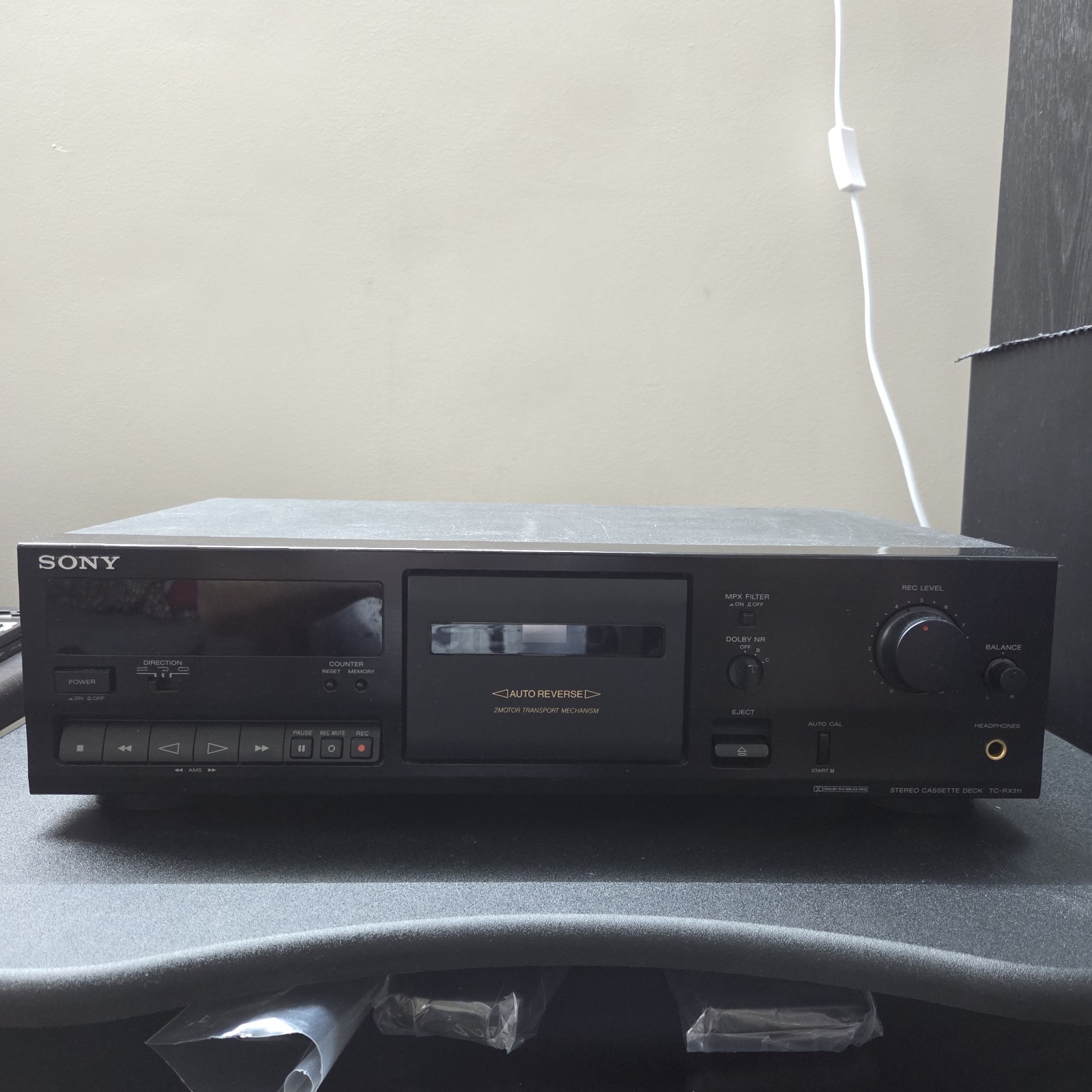
Sony TC-RX311 Cassette Deck
The Sony TC-RX311 is a double cassette deck released in the early 1990s as part of Sony's mid-tier consumer audio lineup. Designed for convenient music dubbing, timer-based recording, and everyday cassette playback, the TC-RX311 reflects the technological priorities of its era—ease of use, noise reduction, and multi-functionality for the home audio enthusiast.
Key Features
- Double cassette mechanism – Enables direct tape-to-tape dubbing without external equipment.
- Auto-reverse playback – Allows continuous playback of both sides of a cassette with automatic reversal.
- Dolby B and C noise reduction – Reduces tape hiss for cleaner audio during playback and recording.
- Tape selector and auto bias calibration – Automatically adjusts recording settings based on tape type (normal, chrome, metal) for optimal performance.
- Music search function – Fast forwards or rewinds while monitoring audio to quickly locate tracks.
- Timer recording and playback – Schedule recordings from external sources or set the deck to play at a preset time.
Specifications
| Feature | Specification |
| Year of Release | 1990 |
| Category | Double Cassette Deck |
| Playback Direction | Auto-reverse (A-B or B-A) |
| Noise Reduction | Dolby B, Dolby C |
| Tape Types Supported | Type I (Normal), Type II (Chrome), Type IV (Metal) |
| Bias Calibration | Automatic |
| Dubbing Capability | Yes (Cassette-to-Cassette) |
| Search Function | Music Search (audio-sensing skip) |
| Timer Function | Recording and Playback Timer |
| Display | LED or fluorescent display (model variant dependent) |
| Inputs/Outputs | Line In, Line Out (RCA) |
| Power Requirements | Not specified (mains powered, 120V/230V likely) |
| Dimensions (approx.) | 430 × 140 × 305 mm |
| Weight | ~7.5 kg |
Historical Context
The Sony TC-RX311 emerged during the final peak of cassette tape popularity, a time when home audio systems increasingly emphasized automation and user convenience. As compact discs began to rise in the early 1990s, cassette decks like the TC-RX311 catered to users who still relied on tapes for recording radio broadcasts, creating mixtapes, or preserving vinyl collections.
Sony positioned the TC-RX311 as a practical, feature-rich option for non-audiophile consumers. Its inclusion of Dolby C noise reduction and auto-calibration placed it above entry-level models, while its double-deck design made it ideal for tape duplication—a common use case before digital media.
Though not marketed as a high-fidelity component, the TC-RX311 delivered solid performance for casual listening and home use, embodying the balance between affordability and functionality that defined Sony’s consumer audio strategy in the 1990s.
Sound Quality
The TC-RX311 provides clean, consistent playback with effective noise suppression thanks to Dolby B and C systems. Frequency response is typical of mid-range cassette decks—adequate for pop, rock, and spoken word, with reasonable treble clarity and bass response. However, it lacks the precision, dynamic range, and wow-and-flutter stability of professional or high-end audiophile decks.
Best used with high-quality tapes (e.g., Sony HF, Maxell XLII) and properly maintained heads, the TC-RX311 can deliver enjoyable analog sound, especially when paired with a quality stereo system.
Maintenance and Common Issues
Due to its age, the TC-RX311 may require servicing to restore full functionality. Common issues include:
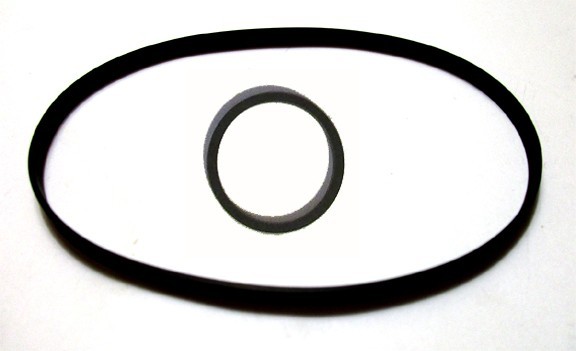
- Rubber belt degradation – Causes slow tape speed, transport failure, or erratic behavior.
- Idler tire wear – Leads to poor capstan drive engagement and speed instability.
- Dried-up lubrication – Results in stiff mechanisms or noisy operation.
- Potentiometer noise – Causes crackling in audio or control circuits; can be cleaned or replaced.
- Capacitor aging – Electrolytic capacitors in the power supply or signal path may leak or fail.
Maintenance Tips
1. Clean the tape path regularly – Use isopropyl alcohol and a cotton swab to clean heads, capstan, and pinch rollers.
2. Demagnetize periodically – Use a tape head demagnetizer to prevent dull or distorted playback.
3. Replace worn belts and idlers – Rebuilding the transport with new rubber parts is often necessary for reliable operation.
4. Check tape alignment – Misaligned heads can cause poor stereo imaging or high-frequency loss.
5. Store in a dry, dust-free environment – Prevents corrosion and mechanical binding.
Collectibility and Market Value
The Sony TC-RX311 is not considered a high-collectibility item, scoring around 3/10 on the vintage audio scale. It lacks the build quality or rarity of audiophile-grade decks like the TC-K770 or Technics RS-1500, but remains functional and desirable for users seeking a practical cassette dubbing solution.
- Market Value: $20–$50 USD
- Value Factors: Working condition, completeness (remote, manual), cosmetic state, and recent servicing.
While not a showpiece, the TC-RX311 is a capable representative of 1990s consumer cassette technology and a reliable choice for casual collectors or those digitizing cassette collections.
eBay Listings


As an eBay Partner, we earn from qualifying purchases. This helps support our independent vintage technology research.
Related Models
- Sony TC-2050SD (1978)
- Sony TC-2130A (1974)
- Sony TC-2220 (1972)
- Sony TC-FX6 (1982)
- Sony TC-K96R (1986)
- Aiwa AD-F990 (1993)
- Kenwood KX-3060 (1982)
- Stromberg-Carlson RS-404 (1975)
- Akai CS-F33R (1985)
- Akai DX-59 (1983)