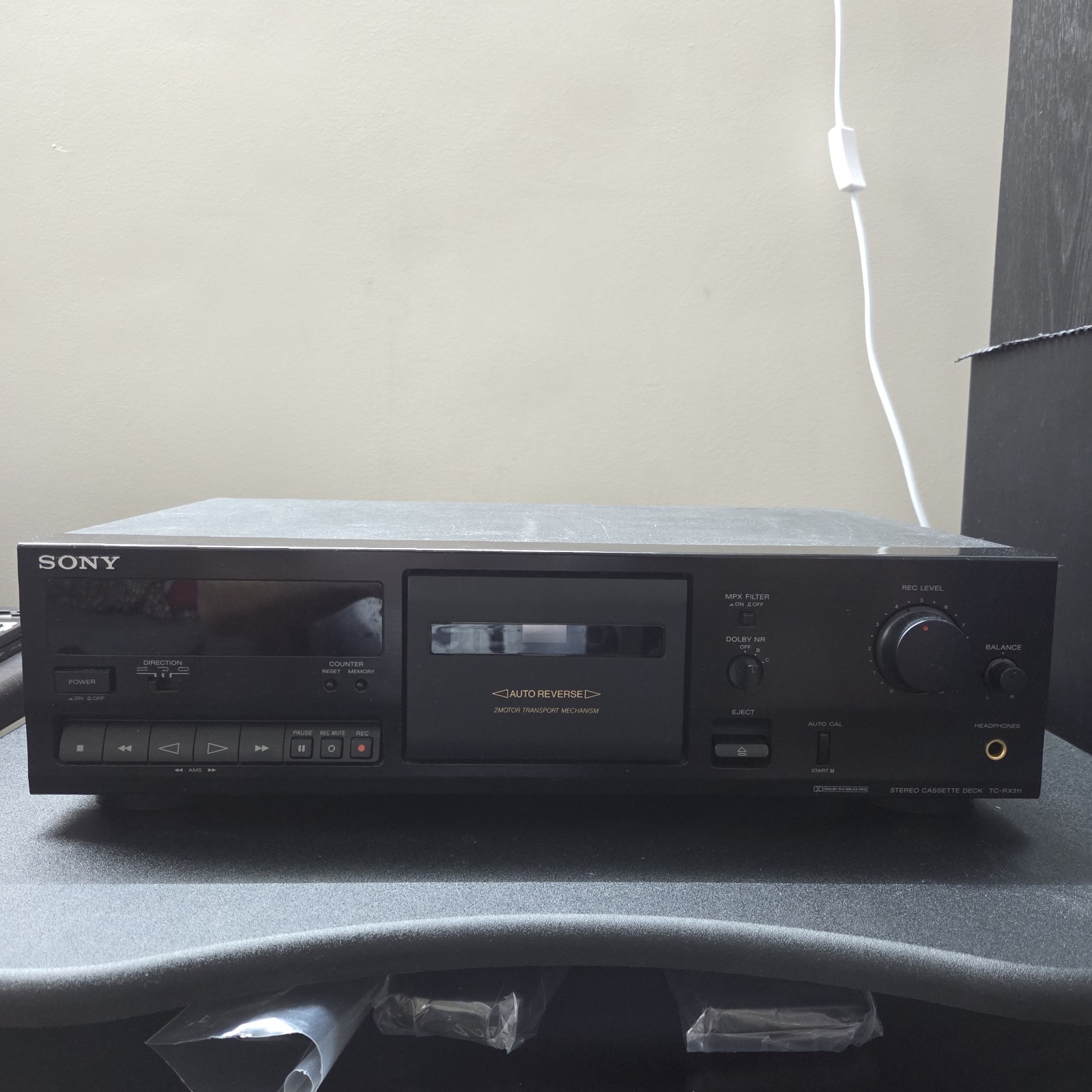
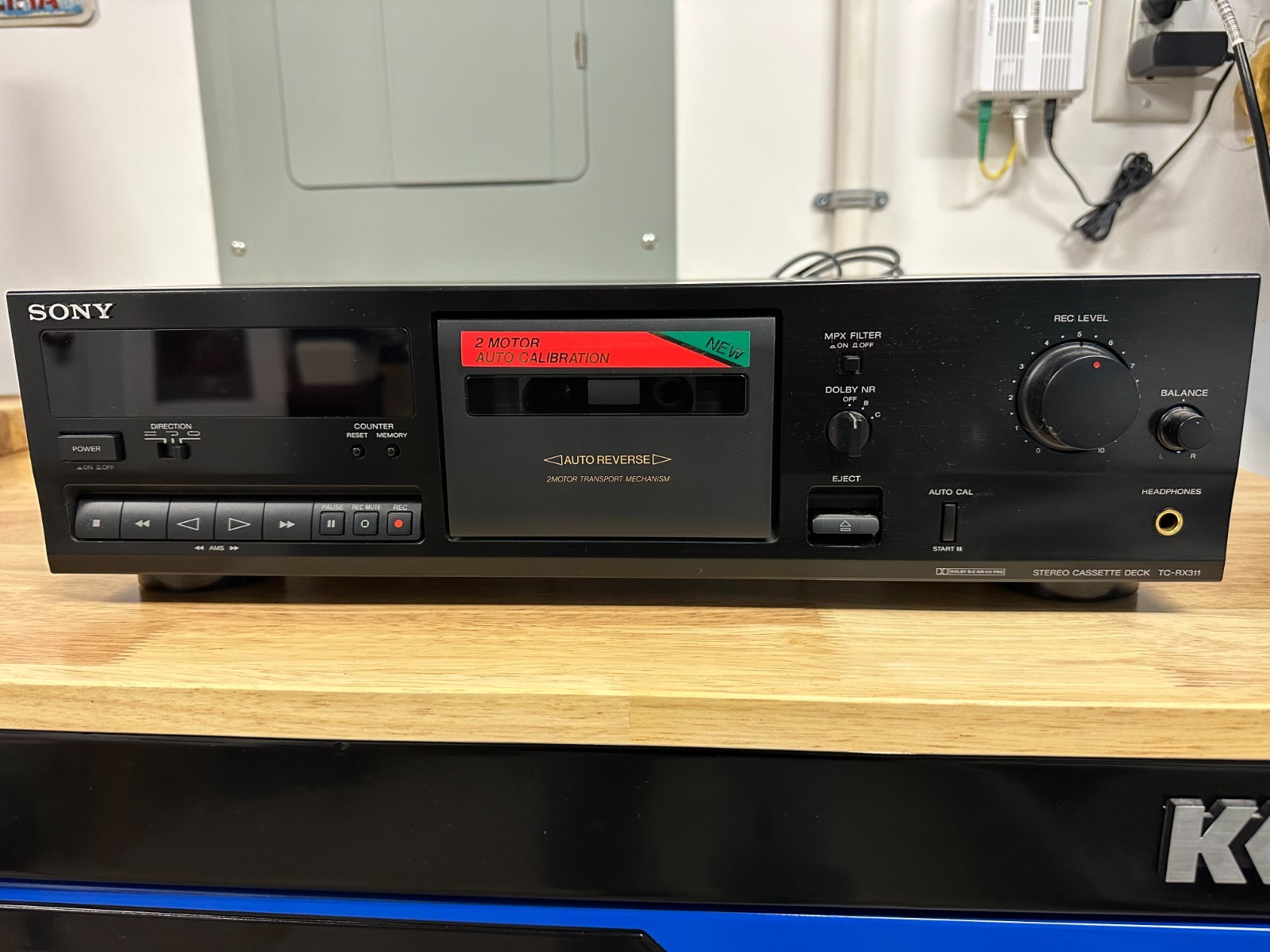
Sony TC-RX300 Cassette Deck
The Sony TC-RX300 is a mid-tier cassette deck produced from 1989 to 1991, representing the mature phase of cassette tape technology. Designed for home audio enthusiasts, it combines convenience features like auto-reverse playback with professional-grade noise reduction and headroom extension systems. With its clean sound signature and solid build quality, the TC-RX300 remains a functional and nostalgic component in vintage audio setups.
Key Features
- Auto-Reverse Playback and Recording: Seamlessly plays and records both sides of a cassette without manual flipping.
- Dolby B and C Noise Reduction: Reduces tape hiss during playback and recording for cleaner audio.
- HX Pro (Headroom Extension): Dynamically adjusts bias during recording to improve high-frequency response and prevent distortion.
- Tape Selector Switch: Allows optimal bias and replay equalization settings for Type I (Normal), Type II (Chrome), and Type IV (Metal) tapes.
- Timer Recording and Playback: Enables scheduled operation for recording radio broadcasts or timed listening.
- Soft-Touch Mechanical Controls: Provides a refined user interface with responsive button operation.
- Dual Capstan Drive System: Ensures stable tape transport and consistent speed accuracy.
Specifications
| Parameter | Specification |
| Year of Production | 1989–1991 |
| Power Consumption | 17W |
| Input Impedance (Line) | 50k ohms |
| Output Impedance (Line) | 2.2k ohms |
| Input Sensitivity (Line) | 50mV |
| Output Level (Line) | 0.5V |
| Wow and Flutter | ≤ 0.08% (weighted, JIS) |
| Frequency Response | 20Hz–20kHz (Type IV, with Dolby C) |
| Signal-to-Noise Ratio | > 70dB (Dolby C, Type IV) |
| Total Harmonic Distortion | < 1.5% |
| Tape Speed | 4.76 cm/s (1⅞ ips) |
| Cassette Compatibility | Type I (Normal), Type II (Chrome), Type IV (Metal) |
| Noise Reduction | Dolby B, Dolby C, HX Pro |
| Auto-Reverse | Yes |
| Timer Function | Yes (record and playback) |
| Dimensions (W×H×D) | 430 × 136 × 305 mm |
| Weight | 6.5 kg |
Historical Context
The TC-RX300 was part of Sony’s broader push in the late 1980s to refine cassette deck performance while maintaining user-friendly features. Positioned between entry-level and high-end models like the TC-K665ES, it offered advanced technologies such as HX Pro and Dolby C NR—features once reserved for professional or premium consumer gear. This model reflects the peak of cassette deck engineering just before the CD era fully took hold.
Its auto-reverse mechanism and timer functions catered to the growing demand for convenience in home audio systems, while its accurate sound reproduction appealed to listeners who valued fidelity. The inclusion of HX Pro, a technology licensed from Bang & Olufsen, demonstrated Sony’s commitment to maximizing analog tape performance even as digital formats gained momentum.
Sound Signature
The TC-RX300 delivers a clean, neutral, and well-balanced audio presentation typical of Sony’s engineering philosophy during this era. Bass is tight and controlled, mids are clear, and highs are extended without harshness—especially when using metal tapes with Dolby C and HX Pro enabled. The combination of low wow and flutter and effective noise reduction results in a listening experience that remains impressive by analog standards.
Maintenance and Common Issues
Like all vintage cassette decks, the TC-RX300 requires periodic maintenance to perform optimally:
- Belt Degradation: Rubber belts and idler tires dry out over time, leading to speed instability or transport failure. Replacement with fresh belts is recommended every 10–15 years.
- Potentiometer Oxidation: Soft-touch controls and internal potentiometers can develop crackling or channel imbalance. Cleaning with contact cleaner may help, but replacement is often necessary.
- Capacitor Aging: Electrolytic capacitors in the power supply and signal path can leak or lose capacitance, potentially causing hum or circuit damage.
- Auto-Reverse Mechanism: The complex mechanical system can misalign or wear, resulting in improper tape flipping or head engagement. Lubrication and calibration by a technician may be required.
- Head Alignment and Wear: Playback heads can become misaligned or worn. Demagnetizing before use and periodic professional alignment ensure optimal performance.
Maintenance Tips:
- Always demagnetize the tape heads and guides before extended use.
- Clean the heads, capstans, and pinch rollers with isopropyl alcohol after every 20–30 hours of use.
- Store in a dry, dust-free environment to prevent corrosion.
- Use high-quality tapes to minimize head wear and debris buildup.
Collectibility and Market Value
The TC-RX300 holds moderate collectible appeal with a rating of 4/10. While not a rare or flagship model, it is appreciated for its feature set and reliability. Units in excellent working condition with clean cosmetics typically sell for $50–$150, depending on region and included accessories.
It is most valuable to:
- Vintage audio enthusiasts restoring classic stereo systems.
- Cassette tape archivists seeking reliable duplication decks.
- Sony collectors focusing on late-era cassette technology.
Conclusion
The Sony TC-RX300 stands as a competent and well-rounded cassette deck from the final golden years of analog tape. Its blend of advanced noise reduction, headroom extension, and user-friendly automation makes it a practical choice for both daily listening and tape digitization projects. With proper care and maintenance, the TC-RX300 continues to deliver high-quality analog performance more than three decades after its release.
eBay Listings


As an eBay Partner, we earn from qualifying purchases. This helps support our independent vintage technology research.
Related Models
- Sony TC-2050SD (1978)
- Sony TC-2130A (1974)
- Sony TC-2220 (1972)
- Sony TC-FX6 (1982)
- Sony TC-K96R (1986)
- Aiwa AD-F990 (1993)
- Kenwood KX-3060 (1982)
- Stromberg-Carlson RS-404 (1975)
- Akai CS-F33R (1985)
- Akai DX-59 (1983)