Sony TC-R303 Cassette Deck
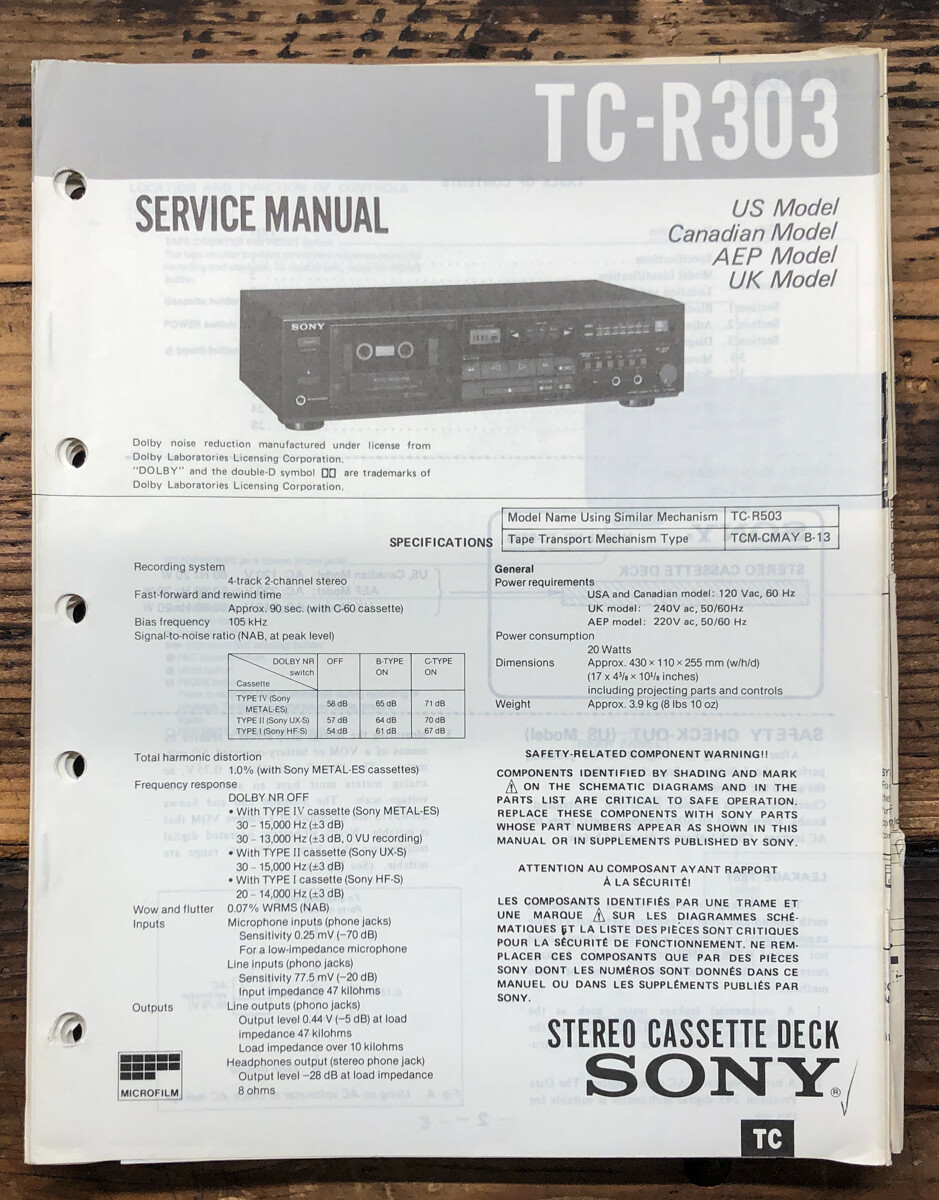
The Sony TC-R303 is a dual cassette deck released in 1984 as part of Sony’s mid-range audio lineup during the height of the cassette tape era. Designed for convenience and everyday use, the TC-R303 offered features that catered to casual listeners and home tapers, including auto-reverse playback, dual cassette bays for easy dubbing, and Dolby noise reduction for improved sound quality. While not positioned as a high-end audiophile component, the TC-R303 exemplifies the practical home audio technology of the mid-1980s.
Specifications
| Feature | Specification |
| Model | TC-R303 |
| Brand | Sony |
| Year of Release | 1984 |
| Production Period | 1984–1986 |
| Category | Dual Cassette Deck |
| Tape Transport | Dual cassette bays |
| Auto-Reverse | Yes |
| Noise Reduction | Dolby B and C |
| Tape Selector | Yes (Normal, CrO2, Metal) |
| Bias Calibration | Auto tape bias calibration |
| Counter | Digital tape counter |
| Controls | Soft-touch mechanical buttons |
| Recording Levels | Manual input level adjustment |
| Inputs | Line In (RCA) |
| Outputs | Line Out (RCA) |
| Power Requirements | Unknown (likely AC adapter or internal transformer) |
| Impedance | Unknown |
| Sensitivity | Unknown |
| Dimensions | Approx. 430 mm (W) × 140 mm (H) × 305 mm (D) |
| Weight | Approx. 7.5 kg (16.5 lbs) |
Key Features
- Dual Cassette Design: Enables direct cassette-to-cassette dubbing without external equipment.
- Auto-Reverse Playback: Allows continuous playback of both sides of a cassette without manual flipping.
- Dolby B/C Noise Reduction: Reduces tape hiss during playback for cleaner audio, especially on Type I and Type II tapes.
- Tape Type Selection: Supports Normal (Fe), CrO2 (Type II), and Metal (Type IV) tapes with optimized bias and equalization.
- Auto Tape Bias Calibration: Automatically adjusts recording settings based on tape type for improved recording fidelity.
- Digital Counter: Facilitates cueing and locating specific sections on tapes.
- Soft-Touch Controls: Provides a premium tactile experience with responsive button operation.
Historical Context
The Sony TC-R303 was introduced during a transitional period in consumer audio, when cassette tapes were at their peak popularity for both pre-recorded music and personal recording. As part of Sony’s mid-tier cassette deck offerings, the TC-R303 balanced functionality and affordability, targeting users who wanted convenience features without the cost of high-fidelity models like the TC-K655 or Esprit series.
Its dual-deck design reflected the widespread demand for easy tape dubbing—commonly used to create mixtapes or back up vinyl records—while auto-reverse functionality improved usability. The inclusion of Dolby B and C noise reduction placed it above entry-level models, offering noticeably cleaner playback. However, it lacked the three-head design, manual bias control, or quartz-lock transport found in higher-end decks, limiting its appeal to serious audiophiles.
The TC-R303 represents the mainstream cassette experience of the 1980s: practical, feature-rich, and built for daily use in living rooms and home entertainment centers.
Sound Signature
The TC-R303 delivers a clean and balanced sound typical of mid-range cassette decks of its era. With Dolby noise reduction engaged, background tape hiss is significantly reduced, especially on Type I and Type II tapes. Bass response is adequate, and treble is clear without being overly bright. While it lacks the precision and dynamic range of professional or high-end decks, it performs well for casual listening and tape duplication. Recordings made on the TC-R303 are suitable for personal use but may not meet archival or critical listening standards.
Common Issues and Reliability
Like most vintage cassette decks, the TC-R303 is prone to age-related issues, particularly if not regularly maintained. Common problems include:
- Belt Degradation: Rubber belts and idler tires can dry out, crack, or lose elasticity, leading to transport malfunctions.
- Auto-Reverse Mechanism Failure: The complex mechanical system for auto-reverse may become sluggish or fail due to worn parts or dried lubricants.
- Dirty or Worn Heads: Oxidation and debris on the playback/record heads can degrade sound quality and recording performance.
- Capacitor Aging: Electrolytic capacitors may leak or lose capacitance, potentially affecting power regulation and audio circuits.
- Oxidized Switches and Pots: Soft-touch buttons and internal potentiometers can develop resistance issues due to oxidation.
Maintenance and Restoration Tips
To keep the Sony TC-R303 in working condition or restore a non-functional unit, consider the following:
1. Clean the Tape Path: Use isopropyl alcohol (90%+) and lint-free swabs to clean the heads, capstan, pinch roller, and tape guides.
2. Inspect and Replace Belts: If the deck fails to load, eject, or transport tape properly, replace all rubber belts and idler tires with fresh ones.
3. Lubricate Moving Parts: Apply a small amount of synthetic grease to gears and mechanical linkages, especially in the auto-reverse mechanism.
4. Check Capacitors: If experiencing power issues or audio distortion, consider recapping the power supply and audio signal path.
5. Exercise the Mechanism: Regular use helps prevent mechanical sticking. Run tapes occasionally to keep belts and gears conditioned.
6. Use Quality Tapes: Avoid abrasive or damaged tapes that can wear down heads and guides prematurely.
Market Value and Collectibility
The Sony TC-R303 is not considered a rare or highly collectible model. Its current market value ranges from $30 to $80, depending on cosmetic condition, mechanical functionality, and completeness. Fully operational units with clean heads and replaced belts command higher prices, especially among users seeking a functional dual cassette deck for dubbing or nostalgic use.
Collectibility Rating: 3/10
While not a sought-after classic, the TC-R303 holds nostalgic value for retro audio enthusiasts and those revisiting analog tape culture.
Conclusion
The Sony TC-R303 is a solid representative of 1980s consumer audio engineering—functional, user-friendly, and packed with the era’s hallmark features. Though not a high-fidelity powerhouse, it excels in convenience and reliability for everyday cassette use. With proper maintenance, it remains a viable option for tape dubbing, digitization projects, or enjoying vintage recordings in their original format.
eBay Listings


As an eBay Partner, we earn from qualifying purchases. This helps support our independent vintage technology research.
Related Models
- Sony TC-2050SD (1978)
- Sony TC-2130A (1974)
- Sony TC-2220 (1972)
- Sony TC-FX6 (1982)
- Sony TC-K96R (1986)
- Aiwa AD-F990 (1993)
- Kenwood KX-3060 (1982)
- Stromberg-Carlson RS-404 (1975)
- Akai CS-F33R (1985)
- Akai DX-59 (1983)