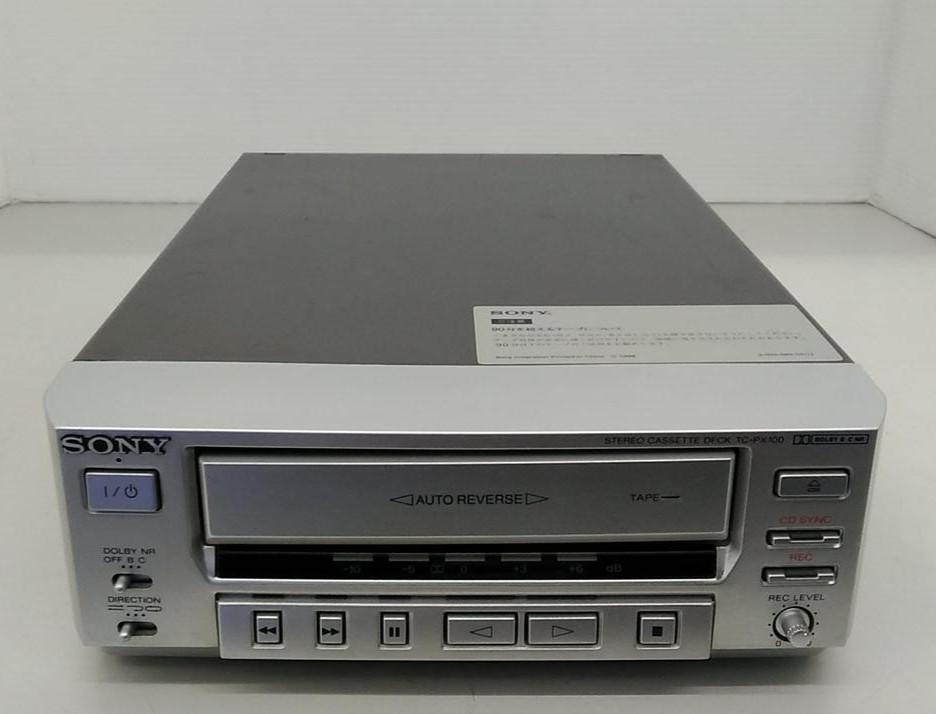
Sony TC-PX100 Cassette Deck (1983)
Step into any well-equipped living room in 1983 and there’s a good chance you’d spot a Sony TC-PX100 on the shelf. More than just a tape player, it was a symbol of modern convenience—sleek, smart, and packed with features that made cassette listening effortless. With auto-reverse playback, Dolby B noise reduction, and a soft-touch control panel glowing with LED meters, the TC-PX100 brought a touch of sophistication to everyday audio. It wasn’t built for critical listening, but for real life: flipping sides automatically, adapting to tape types on the fly, and delivering clean, reliable sound night after night.
Key Features
- Auto-reverse playback: Enables continuous playback of both sides of a cassette without manual flipping
- Dolby B noise reduction: Reduces tape hiss for cleaner audio during playback
- Soft-touch control panel: Modern-feeling button interface for transport functions
- LED level meters: Visual feedback for recording levels on both channels
- Auto tape selector: Detects and optimizes playback for normal, chrome, or metal tapes
- Music search function: Allows fast forward or rewind scanning with audio playback for quick track location
Specifications
| Specification | Detail |
| Model | TC-PX100 |
| Brand | Sony |
| Year of Release | 1983 |
| Production Period | 1983–1984 |
| Category | Stereo cassette deck |
| Playback Direction | Auto-reverse (both sides) |
| Noise Reduction | Dolby B |
| Tape Selector | Automatic (Normal, CrO₂, Metal) |
| Level Meters | Dual LED bar graphs |
| Control Interface | Soft-touch buttons |
| Special Features | Music search, auto-stop at tape end |
| Recording Capability | Yes |
| Playback Capability | Yes |
| Inputs | Line In (RCA) |
| Outputs | Line Out (RCA) |
| Power Requirements | Unknown |
| Impedance | Unknown |
| Sensitivity | Unknown |
| Dimensions (W×H×D) | 430 × 135 × 300 mm (typical for console decks of era) |
| Weight | Approx. 5.5 kg (estimated) |
Historical Context
By 1983, the cassette had conquered the audio world. Compact, portable, and recordable, it had dethroned the 8-track and sidelined reel-to-reel in most homes. Sony, already a titan in consumer electronics, didn’t just ride the wave—they helped shape it. The TC-PX100 arrived at the peak of this golden era, designed not for tweaker audiophiles, but for people who wanted their music without fuss.
Where high-end decks demanded calibration and careful handling, the TC-PX100 offered simplicity. Auto-reverse meant no more getting up to flip tapes. The automatic tape selector adjusted playback bias on the fly—just pop in a chrome or metal tape and go. Dolby B reduced hiss without any user input. These weren’t revolutionary innovations, but together, they created an experience that felt quietly futuristic. It was tech that worked when you needed it, then stepped back.
Often paired with Sony’s RX-series receivers or tucked into compact stereo systems, the TC-PX100 embodied the era’s love for integrated, all-in-one audio. It wasn’t flashy, but it was dependable—the kind of component that could disappear into daily life while still delivering solid performance.
Sound Signature
Turn on a well-maintained TC-PX100, and you’re greeted with a sound that’s clean, balanced, and unmistakably 1980s. Engage Dolby B, and the usual tape hiss melts away, leaving vocals crisp and instruments well-defined. Bass is present and punchy enough for pop and rock, though it doesn’t dive deep like a high-end deck. Stereo imaging holds steady across the soundstage, creating a cohesive listening experience—even if it lacks the razor-sharp precision of audiophile gear.
Let’s be clear: this isn’t a reference machine. Wow and flutter are within consumer-grade tolerances, not lab-grade specs. But for enjoying mixtapes, dubbing LPs, or reliving the warmth of analog recordings, the TC-PX100 delivers with charm and consistency. It’s the sound of music shared, not dissected.
Maintenance and Common Issues
Decades of shelf time take their toll. To bring a TC-PX100 back to life, expect some hands-on care:
- Belt degradation: Rubber drive belts dry out and crack over time. Replacing them is often the first step to restoring smooth operation.
- Idler tire wear: The idler wheel drives the capstan and switches modes. When it hardens or slips, the deck stumbles—cleaning or replacing it usually fixes the issue.
- Capacitor aging: Electrolytic capacitors in the power supply or audio path can leak or fail. Swapping them out prevents damage and stabilizes performance.
- Auto-reverse mechanism: The mechanical linkages and sensors behind auto-reverse can gum up. A careful cleaning and light lubrication keep the system flipping sides reliably.
- Head alignment and wear: Regular cleaning with isopropyl alcohol keeps the tape path clear. Demagnetizing the heads and guides before extended use ensures optimal sound quality.
Tips for Owners
- Always clean the tape path before playing any cassettes—grime is the enemy of both sound and mechanics.
- Use a non-powered demagnetizer every 50–100 hours to keep heads sharp and noise low.
- Avoid warped or damaged tapes—they can misalign the mechanism or damage the heads.
- Store the unit in a dry, dust-free space to prevent corrosion and sticky parts.
- For peak performance, consider a professional calibration. Parts are scarce, but a good tech can work wonders.
Market Value and Collectibility
On the secondhand market, working TC-PX100 units typically sell between $30 and $80, with price depending on condition, functionality, and cosmetic freshness. Fully serviced decks with clean heads and responsive controls can command higher offers, especially when bundled with original manuals or packaging.
Collectibility: 3/10
This isn’t a holy grail. The TC-PX100 doesn’t turn heads like a Nakamichi Dragon or a Revox B77. But for collectors restoring vintage Sony systems or recreating an authentic 1980s setup, it’s a functional and faithful piece of the puzzle. Its appeal lies not in rarity or specs, but in its quiet reliability and nostalgic presence—a machine that once made everyday listening feel just a little more modern.
Conclusion
The Sony TC-PX100 stands as a testament to thoughtful, user-centered design in the cassette era. It didn’t chase audiophile accolades, but it delivered consistent performance, smart features, and a sleek interface that made tape handling effortless. With proper care, it still holds up today—not as a sonic marvel, but as a capable, characterful machine that once brought music into homes with quiet confidence. For vintage enthusiasts and Sony loyalists, it’s a welcome echo of a time when pressing play was all the magic you needed.
eBay Listings


As an eBay Partner, we earn from qualifying purchases. This helps support our independent vintage technology research.
Related Models
- Sony TC-2050SD (1978)
- Sony TC-2130A (1974)
- Sony TC-2220 (1972)
- Sony TC-FX6 (1982)
- Sony TC-K96R (1986)
- Aiwa AD-F990 (1993)
- Kenwood KX-3060 (1982)
- Stromberg-Carlson RS-404 (1975)
- Akai CS-F33R (1985)
- Akai DX-59 (1983)