Sony TC-K700S
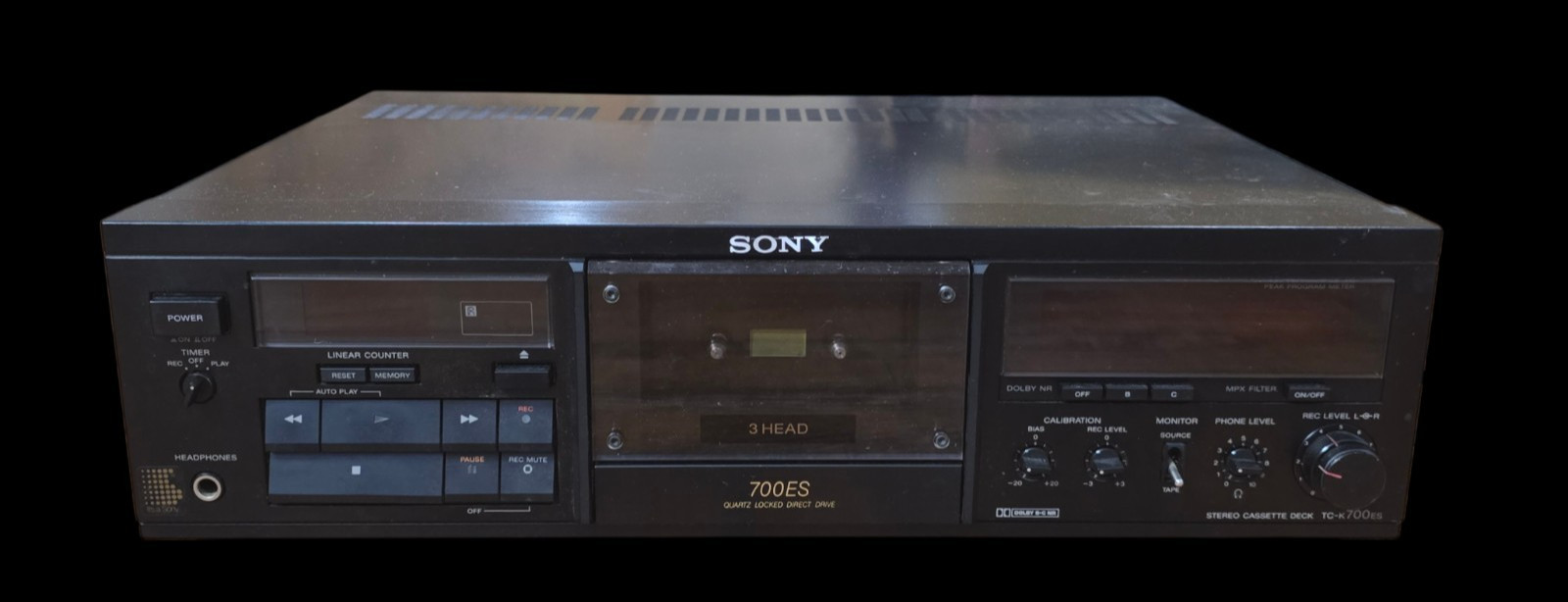
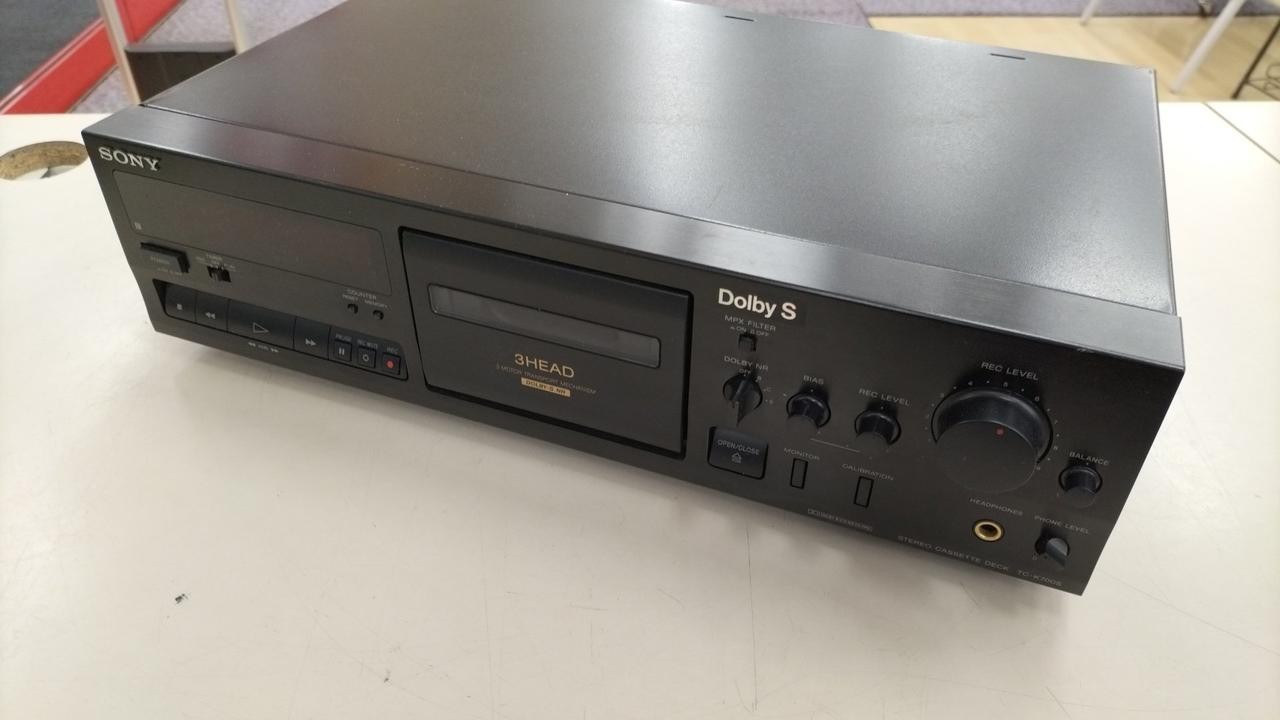
The Sony TC-K700S is a mid-tier cassette deck released in 1982 as part of Sony's ES (Elevated Standard) series. Designed during the golden era of analog tape, the TC-K700S offered a compelling blend of advanced engineering, solid build quality, and accurate sound reproduction. While not positioned at the top of Sony’s lineup, it delivered performance that approached higher-end models, making it a favorite among audiophiles seeking value without compromise.
Key Features
- Dolby B and C Noise Reduction: Provides effective reduction of tape hiss across a wide frequency range, improving signal-to-noise ratio.
- Direct-Drive Capstan Motor: Eliminates the need for belts in the tape transport system, ensuring consistent speed accuracy and low wow and flutter.
- Dual-Motor Transport System: Separate motors for capstan and take-up spools enhance tape tension control and reduce mechanical crosstalk.
- Auto Tape Selector: Automatically detects tape type (I, II, IV) via the notches on the cassette shell, optimizing bias and equalization settings.
- Bias Fine Adjustment: Allows manual calibration for optimal recording performance with different tape formulations.
- Peak Level Meters: Dual VU-style meters provide real-time monitoring of recording levels for precise input adjustment.
Specifications
| Specification | Detail |
| Year of Release | 1982 |
| Production Period | 1982–1984 |
| Category | Cassette Deck |
| Series | ES (Elevated Standard) |
| Recording System | 4-track, 2-channel stereo |
| Tape Speed | 1⅞ ips (4.76 cm/s) |
| Wow and Flutter | < 0.055% (weighted, RMS) |
| Frequency Response (Normal) | 30 Hz – 16 kHz (Dolby B) |
| Frequency Response (Chrome) | 30 Hz – 17 kHz (Dolby C) |
| Signal-to-Noise Ratio | > 68 dB (Dolby C) |
| Total Harmonic Distortion | < 1.5% |
| Input Level (Line) | 150 mV (max) |
| Output Level (Line) | 150 mV (0 dB) |
| Head Type | Separate record/play, ferrite |
| Erase Method | AC erase |
| Motor System | Direct-drive capstan, dual DC motors |
| Noise Reduction | Dolby B, Dolby C |
| Auto Reverse | No |
| Auto Tape Selector | Yes (Type I/II/IV) |
| Level Meters | Dual peak reading (LED or analog, depending on region) |
| Dimensions (W×H×D) | 430 × 140 × 330 mm |
| Weight | 9.8 kg |
Note: Some specifications may vary slightly by regional model.
Historical Context
The early 1980s marked the peak of cassette deck innovation, with manufacturers pushing the limits of analog tape fidelity. Sony’s ES series was positioned between consumer and professional gear, offering laboratory-grade performance in a home audio format. The TC-K700S arrived at a time when cassettes were not only a portable medium but also a legitimate high-fidelity option—especially with the advent of metal tapes and advanced noise reduction.
As a mid-range ES model, the TC-K700S benefited from many of the same design principles as its more expensive siblings, such as the TC-K815 and TC-K915. Its direct-drive transport and precision heads reflected Sony’s commitment to minimizing speed instability and maximizing frequency response. The inclusion of Dolby C—a relatively new technology at the time—gave it an edge in noise reduction performance over many competitors.
Sound Signature
The TC-K700S delivers a clean, neutral, and detailed sound profile. Its low wow and flutter (under 0.055%) ensure rhythmic stability and pitch accuracy, making it well-suited for both music recording and playback. With excellent Dolby tracking and bias calibration options, it handles a wide range of tape types with consistency. Users often praise its transparency—revealing the character of the tape itself rather than imposing a sonic coloration.
Maintenance and Common Issues
Despite its robust construction, the TC-K700S is subject to age-related wear. Regular maintenance is recommended for optimal performance:
- Belt Degradation: While the capstan is direct-drive, some internal belts (e.g., for loading mechanisms) may degrade. Inspect and replace if cracked or loose.
- Idler Tire Wear: The idler wheel in the tape loading mechanism can harden or crack over time, leading to incomplete tape loading. Replacement is advised during servicing.
- Capacitor Aging: Electrolytic capacitors in the power supply and audio circuits may dry out, causing hum, channel imbalance, or failure. Recapping is a common restoration step.
- Head Alignment and Cleaning: Misaligned or dirty heads result in poor frequency response and channel imbalance. Clean with isopropyl alcohol and demagnetize regularly.
- Pinch Roller Glazing: The rubber pinch roller can become glazed or sticky. Clean with alcohol or replace if necessary.
Tip: When purchasing a used unit, verify that the auto tape selector functions correctly and that the bias adjustment produces audible changes in high-frequency response during test recordings.
Collectibility and Market Value
The TC-K700S holds moderate collectible appeal, rated around 6/10. It is appreciated by vintage audio enthusiasts for its ES-series pedigree, build quality, and faithful sound reproduction. While not as rare or revered as flagship models, it represents excellent value in the restored vintage market.
- Market Value: $100–$250 USD, depending on condition and service history.
- Restored Units: Fully serviced decks with new belts, cleaned heads, and recapped power supplies command higher prices.
- Original Packaging and Accessories: Adds value for collectors.
Conclusion
The Sony TC-K700S stands as a testament to Sony’s engineering excellence during the cassette era. Offering a balance of advanced features, reliability, and sonic accuracy, it remains a practical and enjoyable choice for analog enthusiasts, home tapers, and vintage gear collectors. With proper care, the TC-K700S continues to deliver high-fidelity performance more than four decades after its release.
eBay Listings


As an eBay Partner, we earn from qualifying purchases. This helps support our independent vintage technology research.
Related Models
- Sony TC-2050SD (1978)
- Sony TC-2130A (1974)
- Sony TC-2220 (1972)
- Sony TC-FX6 (1982)
- Sony TC-K96R (1986)
- Aiwa AD-F990 (1993)
- Kenwood KX-3060 (1982)
- Stromberg-Carlson RS-404 (1975)
- Akai CS-F33R (1985)
- Akai DX-59 (1983)