Sony TC-K555ESL: Elevated Standard in Analog Excellence
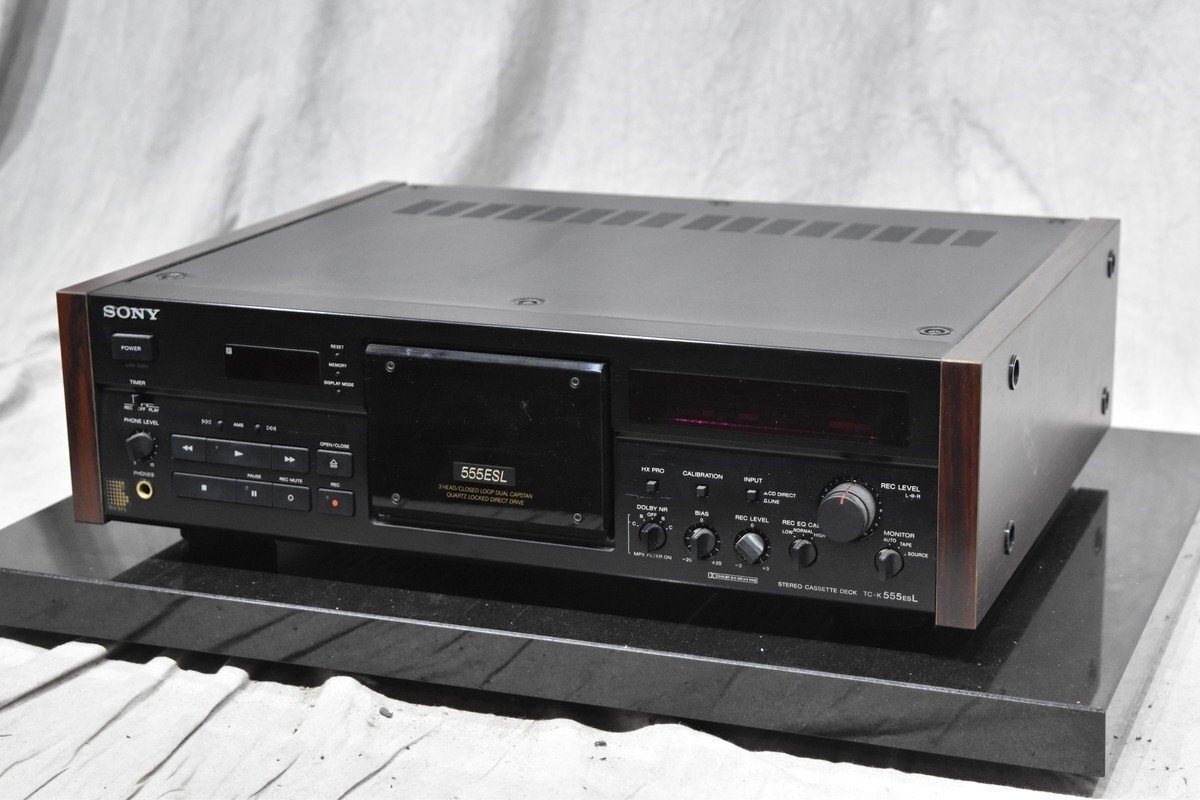
The Sony TC-K555ESL came out in 1986 as part of Sony's ES (Elevated Standard) series. It was built for audiophiles and professional users, and it went up against the best from Nakamichi, TEAC, and other top manufacturers of the era.
The TC-K555ESL has a 3-head design, a dual-capstan closed-loop transport, and amorphous sendust heads. That gives it solid tape control, low distortion, and a transparent sound. Vintage audio enthusiasts and cassette collectors still look for it because of its reliability, precision, and sonic accuracy.
Historical Context
Sony introduced the TC-K555ESL during the golden age of analog audio, when cassette decks were serious high-fidelity instruments and not just playback devices. The ES line sat above the consumer models and was aimed at discerning listeners.
The 3-head design allowed independent optimization of recording and playback functions. The dual-capstan transport minimized tape flutter and kept tape-to-head contact consistent. The amorphous sendust heads gave better high-frequency response and durability than conventional ferrite heads.
The TC-K555ESL competed directly with flagship models like the Nakamichi Dragon and TEAC A-3340S. It offered advanced mechanics, user-adjustable features, and an elegant design. Dolby C noise reduction and manual calibration options made it a favorite with users who wanted the highest fidelity from pre-recorded tapes and home recordings alike.
Sound Signature
The TC-K555ESL has a neutral, transparent, and highly accurate sound. Its low wow/flutter and wide frequency response reproduce source material with minimal coloration. Dolby C suppresses tape hiss, and the deck's high-quality components contribute to a clean, dynamic presentation.
It handles metal-formulated tapes and high-grade Type II cassettes alike, with detail and spatial clarity. Stereo imaging and bass control are especially notable, which makes it suitable for critical listening and archival applications.
Maintenance and Tips
Like all vintage cassette decks, the TC-K555ESL needs regular maintenance, especially after decades of dormancy. It was built to last, but aging components can affect performance.
Common Issues:
- Belt Deterioration: Rubber belts and idler tires may harden or crack over time. Replacement with modern equivalents is recommended.
- Capacitor Aging: Electrolytic capacitors in the power supply or signal path may dry out. Re-capping improves reliability and audio quality.
- Head Wear and Alignment: Playback heads can wear with heavy use. Professional cleaning and alignment ensure optimal tracking and frequency response.
- Pinch Roller Glazing: The rubber pinch roller may become glazed or sticky. Cleaning or replacement restores proper tape tension.
Maintenance Tips:
- Clean tape heads, capstan, and pinch roller regularly with isopropyl alcohol and a lint-free swab.
- Use demagnetizer tools periodically to prevent head magnetization.
- Store in a dry, dust-free environment to prevent corrosion.
- Have the deck professionally serviced before extended use, especially if purchased used.
- Use high-quality tapes (e.g., Type II or IV) to maximize performance and minimize head wear.
Collectibility and Market Value
Collectors value the TC-K555ESL highly. It has a collectibility rating of 8/10, and buyers prize its ES-series pedigree, advanced features, and sturdy construction. Fully operational units with service records command premium prices.
Current Market Value: $300 - $600, depending on condition, completeness, and recent servicing. Units with wood side panels in excellent cosmetic and mechanical condition are especially desirable.
While not as rare as some boutique Japanese decks, the TC-K555ESL remains a benchmark for Sony’s analog engineering and a worthy centerpiece in any vintage audio setup.
eBay Listings


As an eBay Partner, we earn from qualifying purchases. This helps support our independent vintage technology research.
Related Models
- Sony TC-K333ESG (1989)
- Sony TC-K333ESJ (1991)
- Sony TC-K333ESX (1991)
- Sony TC-K555ESA (1989)
- Sony TC-2050SD (1978)
- Infinity RS-IIA (1977)
- Infinity RS-4.5 (1978)
- Aiwa AD-1200 (1980)
- Aiwa AD-1250 (1982)
- Aiwa AD-F70 (1985)