Sony TC-K555ESJ (1985)
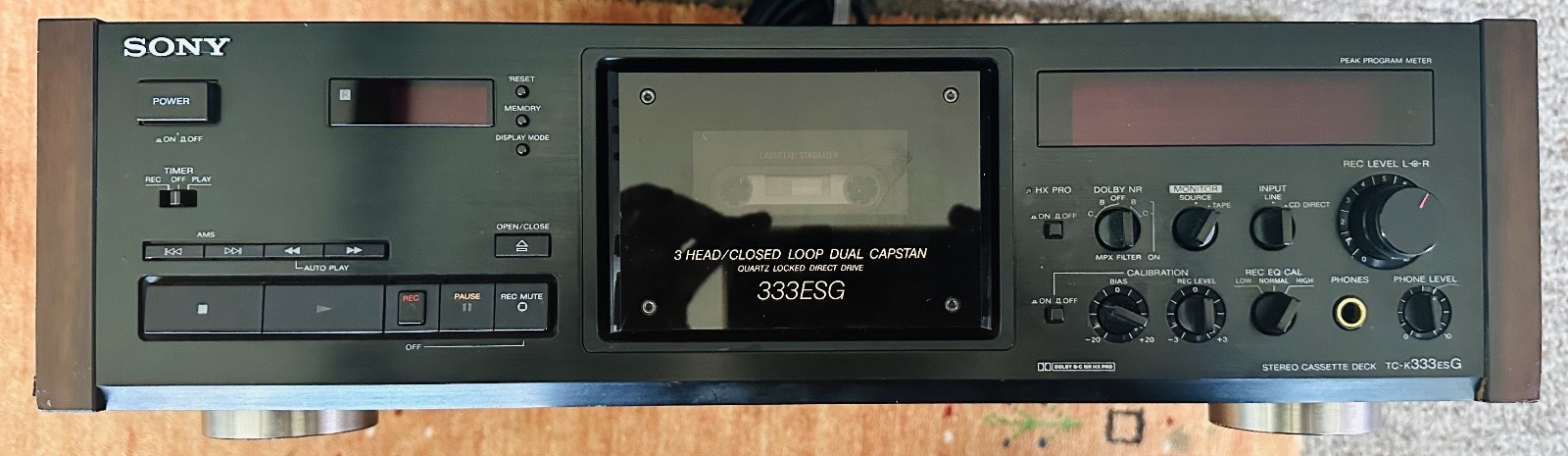
The Sony TC-K555ESJ is a high-performance 3-head cassette deck released in 1985 as part of Sony's prestigious ES (Elevated Standard) series. Representing the pinnacle of Sony's cassette deck engineering during the mid-1980s, the TC-K555ESJ was designed for audiophiles seeking the highest fidelity from the compact cassette format. With its robust build quality, advanced transport system, and meticulous attention to detail, this deck remains a sought-after classic among vintage audio enthusiasts.
Key Features
- 3-Head Design: Separate record, playback, and erase heads for optimal signal accuracy and reduced crosstalk.
- Dual Capstan Transport: Ensures stable tape speed and precise tape-to-head contact.
- Direct Drive Motor: Eliminates belt-driven speed inconsistencies, delivering ultra-low wow and flutter.
- Dolby B and C Noise Reduction: Provides significant noise reduction for both standard and high-bias tapes.
- Metal Tape Compatibility: Supports Type IV metal tapes for maximum dynamic range and frequency response.
- Bias Fine Adjustment & Manual Tape Calibration: Allows users to optimize recording performance for different tape formulations.
- Pitch Control: Adjustable ±8% for tempo correction or DJ-style applications.
- Fluorescent Level Meters: Bright, responsive VU meters for accurate level monitoring.
- Solid Build Quality: Heavy chassis with dampened casing to reduce vibration and resonance.
Specifications
| Specification | Detail |
| Year of Production | 1985–1987 |
| Head Configuration | 3-head (separate record, playback, erase) |
| Tape Transport | Dual capstan, direct drive |
| Noise Reduction | Dolby B, Dolby C |
| Tape Types Supported | Type I (Ferric), Type II (Chrome), Type IV (Metal) |
| Input Impedance | 50k ohms (line) |
| Output Impedance | 2.2k ohms (line) |
| Input Sensitivity | 77.5mV (line) |
| Output Level | 0.44V (line) |
| Wow and Flutter | Below measurable threshold (direct drive) |
| Frequency Response | 20Hz – 20kHz (with Metal tape, Dolby C) |
| Dynamic Range | Up to 72dB (Dolby C, Metal tape) |
| Display | Fluorescent VU meters, function indicators |
| Calibration Controls | Manual bias, level, and azimuth adjustment |
| Pitch Control | ±8% |
| Dimensions (W×H×D) | 430 × 145 × 338 mm |
| Weight | 12.5 kg |
Historical Significance
The TC-K555ESJ was positioned as the flagship cassette deck in Sony’s ES lineup for the Japanese and international markets. The "ES" designation signified Elevated Standard, Sony’s commitment to superior materials, precision manufacturing, and audiophile-grade performance. During the cassette era, models like the TC-K555ESJ demonstrated that analog tape could deliver near-digital clarity when engineered to the highest standards.
This deck competed with high-end offerings from brands like Nakamichi and Denon, distinguishing itself with Sony’s refined engineering, reliability, and advanced features such as direct drive and metal tape optimization. Its release coincided with the peak of cassette popularity, just before the widespread adoption of the CD.
Sound Signature
The TC-K555ESJ delivers a neutral, accurate, and detailed sound profile. Its 3-head design and direct drive system contribute to exceptionally low wow and flutter, while the wide frequency response and low noise floor make it one of the most transparent cassette decks of its time. With Dolby C and metal tapes, it achieves a dynamic range and clarity that approaches early digital recordings.
Users often praise its tight bass, clear mids, and extended highs, with minimal coloration. The ability to manually calibrate bias and level ensures optimal performance across a wide range of tape types.
Common Issues and Maintenance Tips
Despite its robust construction, the TC-K555ESJ is subject to age-related wear. Proper maintenance is essential for reliable operation:
Common Issues:
- Belt Degradation: Although it uses a direct drive system, rubber belts in the tape loading mechanism may dry out or crack.
- Idler Tire Wear: The idler wheel that engages the capstan can harden and lose grip over time.
- Aging Capacitors: Electrolytic capacitors in the power supply and signal path may leak or fail.
- Failing Fluorescent Display: The VU meter tubes may dim, flicker, or stop working due to aging cathodes.
- Motor Issues: While rare, the direct drive motor can develop problems if not regularly used.
Maintenance Tips:
1. Recap the Unit: Replace all electrolytic capacitors, especially in the power supply.
2. Replace Belts and Idler Tires: Use high-quality silicone or urethane replacements.
3. Clean Heads and Guides: Use 99% isopropyl alcohol and lint-free swabs after every few uses.
4. Demagnetize Regularly: Use a tape head demagnetizer every 10–20 hours of use.
5. Exercise the Mechanism: Run the deck periodically to prevent gumming and stiffness.
6. Check Calibration: Re-bias and recalibrate using a reference tape and alignment cassette.
Collectibility and Market Value
The Sony TC-K555ESJ is highly collectible, earning a collectibility rating of 8/10. Its status as a top-tier ES model, combined with its advanced features and solid build, makes it a favorite among analog enthusiasts.
- Market Value: $300–$600 USD, depending on condition, functionality, and completeness (original box, manuals, etc.).
- Well-maintained or professionally restored units command higher prices.
- Units with working fluorescent meters and full calibration capabilities are especially desirable.
Conclusion
The Sony TC-K555ESJ stands as a testament to the engineering excellence of the cassette era. With its 3-head design, direct drive transport, and metal tape support, it delivers performance that still impresses today. For collectors and audiophiles alike, it represents the height of what analog cassette technology could achieve—and remains a worthy centerpiece in any vintage audio setup.
eBay Listings



As an eBay Partner, we earn from qualifying purchases. This helps support our independent vintage technology research.
Related Models
- Sony TC-2050SD (1978)
- Sony TC-2130A (1974)
- Sony TC-2220 (1972)
- Sony TC-FX6 (1982)
- Sony TC-K96R (1986)
- Aiwa AD-F990 (1993)
- Kenwood KX-3060 (1982)
- Stromberg-Carlson RS-404 (1975)
- Akai CS-F33R (1985)
- Akai DX-59 (1983)