Sony TC-K333ES
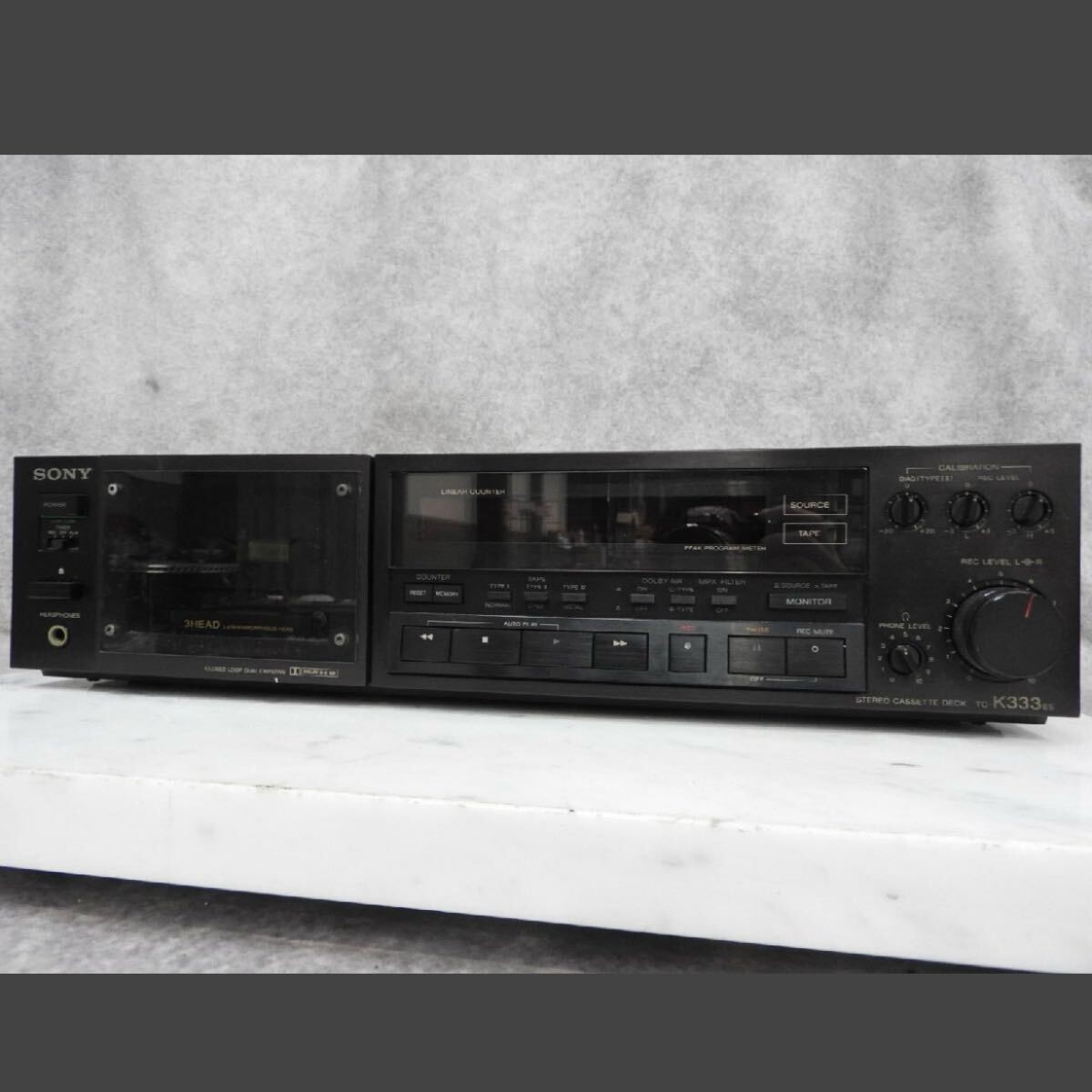
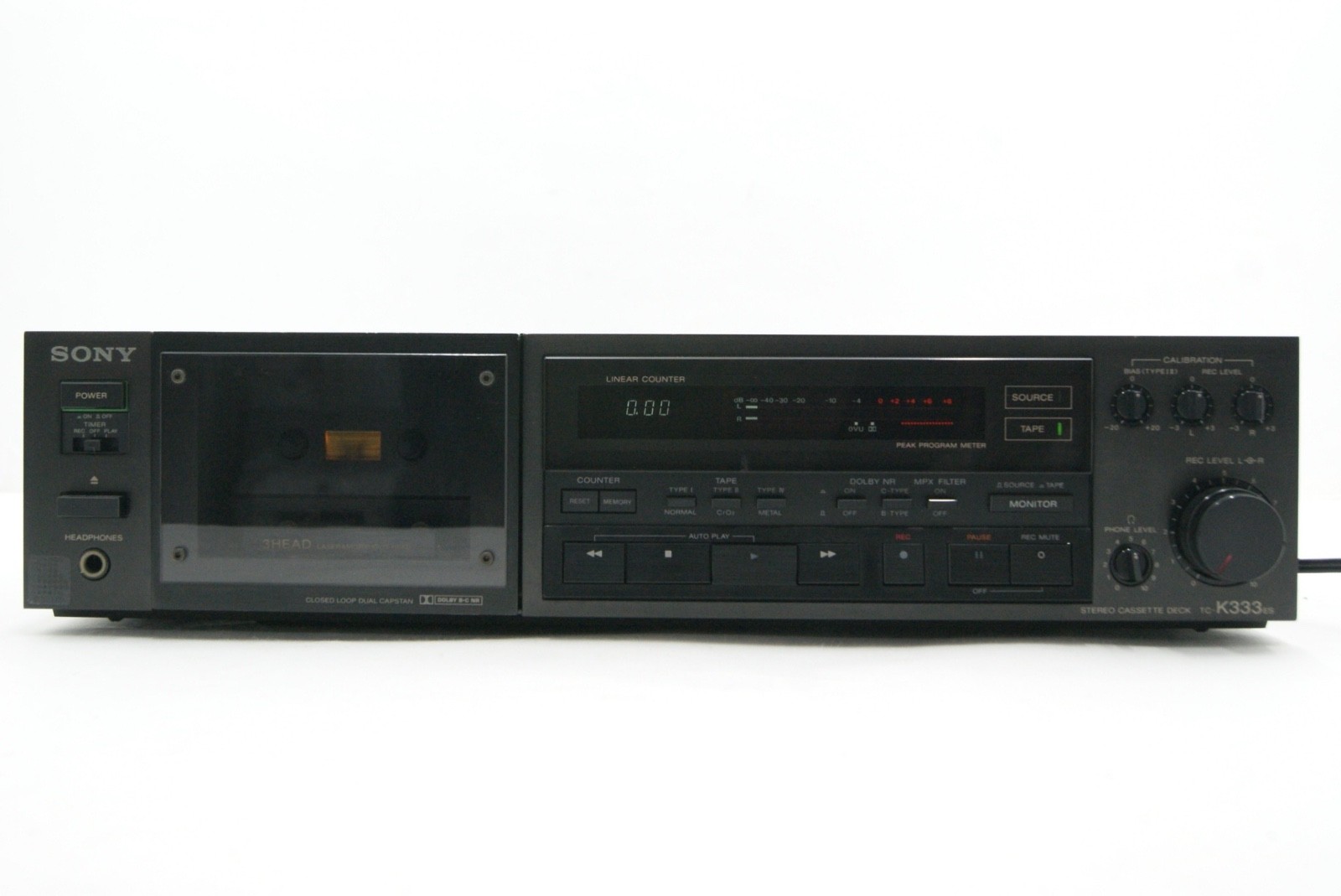
The Sony TC-K333ES is a high-fidelity cassette deck released in 1988 as part of Sony's prestigious ES (Elevated Standard) series. Designed for audiophiles and serious tape enthusiasts, the TC-K333ES combines advanced engineering with meticulous build quality to deliver reference-level analog tape performance. With its 3-head design, dual capstan transport, and support for Metal tape formulations, it stands as one of the most capable consumer cassette decks of the late 1980s.
Key Features
- 3-Head Design: Separate record, playback, and erase heads for optimal signal accuracy and minimal crosstalk
- Dual Capstan Transport: Ensures stable tape-to-head contact and exceptional speed stability
- Direct Drive Motor: Eliminates belt-induced speed variations for ultra-low wow and flutter
- Dolby B and C Noise Reduction: Reduces tape hiss across all tape types
- Metal Tape Compatibility: Full support for high-output Metal Type I tapes with bias and equalization adjustments
- Manual Tape Calibration: Front-panel controls for level, bias, and equalization fine-tuning
- Fluorescent Level Meters: Bright, responsive VU meters with peak hold functionality
- Pitch Control: Adjustable playback speed from ±6% for tempo correction or DJ use
- Line-Level I/O: Unbalanced RCA inputs and outputs for integration with high-end preamps and recorders
Specifications
| Specification | Detail |
| Year of Release | 1988 |
| Production Period | 1988–1990 |
| Head Configuration | 3-head (separate record, playback, erase) |
| Tape Types Supported | Type I (Normal), Type II (Chrome), Type IV (Metal) |
| Noise Reduction | Dolby B, Dolby C |
| Transport System | Dual capstan, direct drive |
| Wow and Flutter | < 0.045% (weighted RMS) |
| Frequency Response | 20 Hz – 20 kHz (Metal tape, ±3 dB) |
| Signal-to-Noise Ratio | > 70 dB (Dolby C on Metal tape) |
| Total Harmonic Distortion | < 1.5% |
| Input/Output | Line-level RCA (unbalanced) |
| Impedance (I/O) | N/A (line-level) |
| Power Requirements | N/A (signal transport only) |
| Dimensions (W×H×D) | 430 × 142 × 335 mm |
| Weight | 10.5 kg |
| Display | Fluorescent vacuum tube (VFD) level meters and status indicators |
Historical Context
The TC-K333ES was part of Sony’s ES (Elevated Standard) line, a series of high-end consumer audio components designed to bridge the gap between professional studio gear and home audio systems. During the late 1980s, cassette technology reached its peak, and models like the TC-K333ES exemplified the pinnacle of analog tape engineering.
With its precision mechanics, metal tape support, and user-adjustable calibration, the TC-K333ES was marketed to discerning listeners who demanded studio-grade fidelity from their home setups. It competed with high-end decks from brands like Nakamichi, Denon, and TEAC, offering a compelling blend of performance, reliability, and serviceability.
Its 3-head design allowed for real-time monitoring during recording—a feature typically found in professional recorders—while the direct-drive dual capstan system minimized speed fluctuations, resulting in one of the lowest wow and flutter measurements in its class.
Sound Signature
The TC-K333ES delivers a neutral, transparent, and highly accurate sound reproduction. It exhibits minimal coloration, making it ideal for critical listening and archival tape transfers. The frequency response is exceptionally flat across the audible spectrum, especially when using Metal tapes with Dolby C engaged.
Thanks to its low noise floor and precise head alignment, the deck captures subtle nuances in recordings with clarity and detail. The result is a clean, open soundstage with excellent imaging and dynamic range—hallmarks of the ES series’ design philosophy.
Maintenance and Tips
Due to its age, proper maintenance is essential to preserve the TC-K333ES’s performance:
- Belt and Idler Tire Inspection: While the capstan is direct-driven, some internal mechanisms use rubber belts and idler tires. These can degrade over time and should be replaced if cracked or hardened.
- Capacitor Replacement: Aging electrolytic capacitors in the power supply (if used with external power modules) or signal path may need recapping to prevent noise or failure.
- Head Cleaning and Demagnetizing: Regular cleaning with isopropyl alcohol and periodic demagnetization (using a non-contact tape head demagnetizer) are crucial for optimal performance.
- Fluorescent Display Care: The VFD display may dim or flicker with age. While not repairable, it can sometimes be restored with gentle cleaning of contacts or professional refurbishment.
- Motor Noise: Some units may develop slight motor hum over time. This can often be mitigated with lubrication or motor servicing by a qualified technician.
- Tape Calibration: Use reference tapes or a known-good source to recalibrate bias, level, and EQ for each tape type to maintain accuracy.
Collectibility and Market Value
The TC-K333ES holds a collectibility rating of 7/10 among vintage audio enthusiasts. Its status as an ES-series flagship, combined with its advanced feature set and solid build, ensures ongoing demand.
As of 2024, a fully functional and serviced unit typically sells for $150 to $400, depending on condition, completeness, and provenance. Units with bright displays, low usage, and service records command higher prices, especially in markets where high-end cassette decks are sought after for analog revival projects.
Conclusion
The Sony TC-K333ES remains a benchmark in consumer cassette deck design. Its combination of 3-head precision, metal tape support, and ES-series build quality makes it a prized component for analog purists and vintage audio collectors alike. With proper care, it continues to deliver exceptional tape playback and recording performance—over three decades after its release.
eBay Listings


As an eBay Partner, we earn from qualifying purchases. This helps support our independent vintage technology research.
Related Models
- Sony TC-2050SD (1978)
- Sony TC-2130A (1974)
- Sony TC-2220 (1972)
- Sony TC-FX6 (1982)
- Sony TC-K96R (1986)
- Aiwa AD-F990 (1993)
- Kenwood KX-3060 (1982)
- Stromberg-Carlson RS-404 (1975)
- Akai CS-F33R (1985)
- Akai DX-59 (1983)