Sony TC-K1: The Pioneer of High-Fidelity Cassette Recording
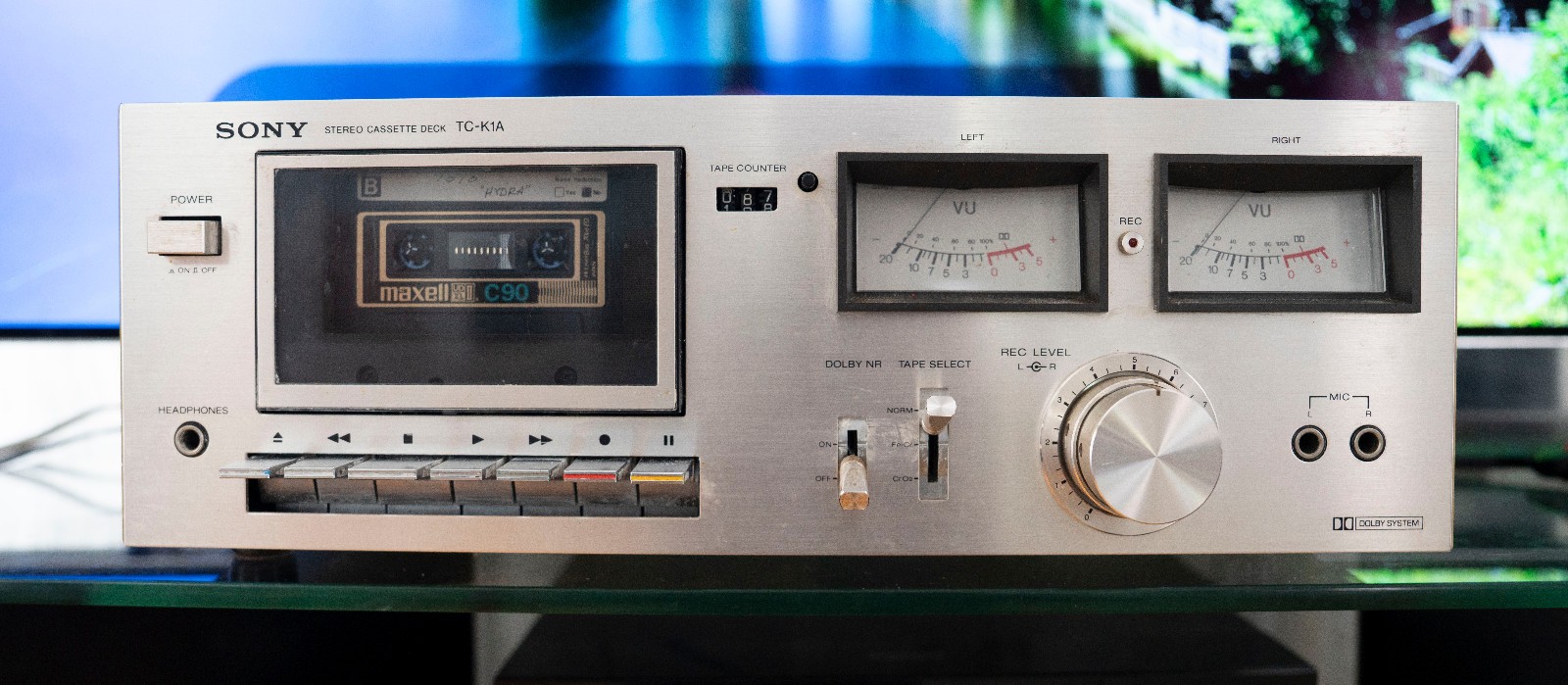
The Sony TC-K1, introduced in 1975, stands as a landmark achievement in the evolution of consumer audio technology. As Sony's first high-end cassette deck to feature Dolby B noise reduction and full metal tape compatibility, the TC-K1 helped elevate the compact cassette from a portable convenience format to a serious medium for high-fidelity music reproduction. With its advanced 3-head design, precision engineering, and forward-thinking features, the TC-K1 became a benchmark for cassette deck performance in the mid-1970s.
Key Specifications
| Feature | Specification |
| Model | TC-K1 |
| Brand | Sony |
| Year of Release | 1975 |
| Production Period | 1975–1977 |
| Head Configuration | 3-head (separate record, playback, erase heads) |
| Tape Head Type | Permalloy |
| Motor System | DC servo motor |
| Transport Mechanism | Solenoid-controlled |
| Noise Reduction | Dolby B (Sony's first cassette deck with this) |
| Tape Compatibility | Type I (Ferric), Type II (Chrome), Type IV (Metal) |
| Bias Adjustment | Manual fine bias control for optimal metal recording |
| Frequency Response | 30 Hz – 18 kHz (with metal tape, Dolby B on) |
| Signal-to-Noise Ratio | ~72 dB (Dolby B on, metal tape) |
| Total Harmonic Distortion | <1.5% |
| Wow and Flutter | <0.08% (measured RMS) |
| Inputs/Outputs | Line In, Line Out (RCA) |
| Power Requirements | Unknown (original AC adapter or internal supply) |
| Dimensions | 430 × 140 × 325 mm (W × H × D) |
| Weight | Approx. 10.5 kg (23.1 lbs) |
Historical Significance
The Sony TC-K1 was a bold statement in an era when audiophiles still favored reel-to-reel tape or vinyl for high-quality sound. At a time when most cassette decks used a single combined head and lacked noise reduction, the TC-K1 introduced a suite of professional-grade features to the consumer market. Its 3-head design allowed independent optimization of recording and playback, while the inclusion of Dolby B noise reduction significantly reduced tape hiss—especially critical when using high-output metal tapes.
As the first Sony cassette deck with Dolby B, the TC-K1 demonstrated Sony’s commitment to pushing the limits of the compact cassette format. It was also one of the earliest decks designed to fully exploit the potential of Type IV metal tapes, which Sony had helped pioneer. The manual bias fine adjustment allowed users to tailor the recording signal for different tape formulations, a feature previously seen only on professional machines.
The TC-K1 laid the foundation for Sony’s future high-end cassette decks, including the legendary TC-K7 and TC-K80, and played a crucial role in legitimizing cassette tapes as a viable medium for audiophile listening and home recording.
Sound Signature
The TC-K1 delivers a remarkably clean, detailed, and neutral sound for its era. With metal tapes and Dolby B engaged, it achieves an extended frequency response and low noise floor that rivals many reel-to-reel systems of the time. The separate playback head ensures accurate high-frequency reproduction, while the DC servo motor and precision capstan provide excellent speed stability and low wow and flutter.
Users often praise the TC-K1 for its transparent midrange, tight bass, and smooth treble—qualities that make it especially well-suited for jazz, classical, and vocal recordings. When properly maintained and calibrated, the TC-K1 remains competitive with many modern digital playback systems in terms of musicality and analog warmth.
Maintenance and Restoration Tips
Due to its age, the Sony TC-K1 requires careful maintenance to perform at its best. Here are essential tips for owners and restorers:
- Capacitor Replacement: Replace all electrolytic capacitors in the power supply and signal path. Aging capacitors are the most common cause of noise, distortion, or motor instability.
- Belt and Idler Tire Inspection: Check rubber belts and idler tires for hardening or cracking. Replace with high-quality modern equivalents to ensure proper tape tension and transport operation.
- Head Cleaning and Demagnetizing: Clean tape heads, capstan, and pinch roller with isopropyl alcohol. Use a non-abrasive demagnetizer regularly to maintain optimal head performance.
- Mechanical Lubrication: Lubricate transport gears and sliding parts sparingly with synthetic grease designed for audio equipment. Avoid over-lubrication, which can attract dust.
- Solenoid Function Check: Test solenoid actuators for responsiveness. Weak or sticky solenoids can cause transport malfunctions.
- Calibration Required: For best results, perform full calibration of azimuth, bias, level, and Dolby alignment—especially when using metal tapes. This typically requires test tapes, an oscilloscope, and a signal generator.
- Tape Path Inspection: Ensure all guides are aligned and free of wear. Misaligned guides can cause tracking issues and premature tape wear.
Market Value and Collectibility
The Sony TC-K1 is valued between $150 and $300, depending on condition, functionality, and completeness. Fully operational units that have been serviced and calibrated command higher prices, especially among analog enthusiasts and tape collectors.
With a collectibility rating of 7/10, the TC-K1 is sought after for its historical significance and technical innovation. While not as rare as some Japanese high-end decks, its status as Sony’s first Dolby B-equipped cassette deck and its role in advancing metal tape technology ensure its place in audio history.
Conclusion
The Sony TC-K1 is more than just a vintage cassette deck—it’s a milestone in audio engineering. As a trailblazer in high-fidelity cassette recording, it combined cutting-edge features with meticulous build quality to deliver performance that still impresses today. For collectors, restorers, and analog lovers, the TC-K1 represents the beginning of a new era in portable, high-quality sound. With proper care, this classic deck continues to offer a listening experience that bridges the gap between nostalgia and enduring audio excellence.
eBay Listings



As an eBay Partner, we earn from qualifying purchases. This helps support our independent vintage technology research.
Related Models
- Sony TC-2050SD (1978)
- Sony TC-2130A (1974)
- Sony TC-2220 (1972)
- Sony TC-FX6 (1982)
- Sony TC-K96R (1986)
- Aiwa AD-F990 (1993)
- Kenwood KX-3060 (1982)
- Stromberg-Carlson RS-404 (1975)
- Akai CS-F33R (1985)
- Akai DX-59 (1983)