Sony TC-3250SD
Overview
Step into the golden era of analog audio with the Sony TC-3250SD—the company’s bold debut into high-end cassette decks. Launched in 1978, this machine wasn’t just another recorder; it was Sony’s statement piece, engineered to challenge elite players like Nakamichi. With its precision 3-head design and professional-grade features, the TC-3250SD marked a turning point in cassette technology, blending studio-level performance with home audio elegance.
Specifications
| Specification | Value |
| Year of Production | 1978-1980 |
| Power Specifications | N/A (cassette deck, no power amplification) |
| Impedance | N/A (line-level output device) |
| Sensitivity | Unknown |
| Current Market Value | $300-$600 depending on condition and functionality |
| Collectibility Rating | 7/10 |
Key Features and Technologies
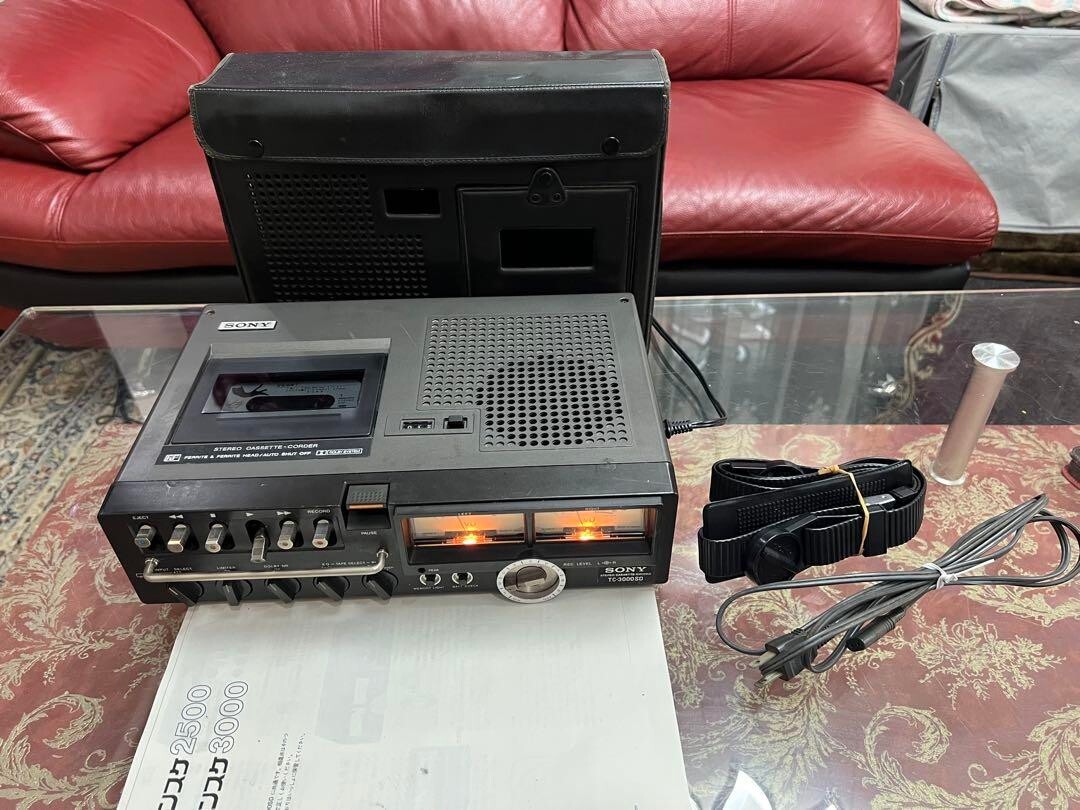
Three separate heads for record, playback, and erase meant no compromise in signal integrity—each optimized for its role. Toss in Dolby B noise reduction, a dual capstan transport for rock-solid tape control, and a direct drive motor for unwavering speed stability, and you’ve got a deck built for fidelity. Front-panel peak level meters let you nail recordings without distortion, while bias fine-tuning gave tinkerers the edge in tailoring tape response. Whether capturing live sessions or archiving vinyl, the mic and line inputs made the TC-3250SD as versatile as it was precise.
Historical Significance
The TC-3250SD wasn’t just Sony’s first 3-head cassette deck—it was their declaration of intent in the high-fidelity arms race. At a time when cassette was still fighting for audiophile credibility, this deck proved magnetic tape could deliver reference-grade sound. By stepping up to compete with Nakamichi and other audio titans, Sony cemented its place in the upper echelon of analog engineering.
Sound Signature
Neutral, clean, and remarkably detailed—this is a deck that gets out of the way. Its wide frequency response and ultra-low wow and flutter deliver recordings with startling clarity and tight bass control. Whether you're playing back vintage mixtapes or laying down new tracks, the TC-3250SD captures every nuance with surgical accuracy, making it a favorite among purists who value truth over coloration.
Common Issues and Maintenance
After decades on the shelf, mechanical wear is inevitable. Belts and idler tires often harden or crack, affecting speed stability. Pinch rollers lose their grip, capacitors dry out, and calibration can drift—especially if the deck hasn’t been used in years. The analog meters, while beautiful, are prone to bulb failure. A full service—recap, cleaning, alignment—is usually required to restore peak performance, but for dedicated collectors, the effort is part of the ritual.
Conclusion
The Sony TC-3250SD stands as a milestone in analog audio history—a machine that helped elevate cassette from convenience to artistry. Today, it’s more than a relic; it’s a working testament to Sony’s engineering ambition. For collectors and enthusiasts, finding a well-maintained unit isn’t just a score—it’s a connection to a pivotal moment in sound.
Note: This page was automatically generated from existing data. Additional content and details may be added in the future.
eBay Listings



As an eBay Partner, we earn from qualifying purchases. This helps support our independent vintage technology research.
Related Models
- Sony TC-2050SD (1978)
- Sony TC-2130A (1974)
- Sony TC-2220 (1972)
- Sony TC-FX6 (1982)
- Sony TC-K96R (1986)
- Aiwa AD-F990 (1993)
- Kenwood KX-3060 (1982)
- Stromberg-Carlson RS-404 (1975)
- Akai CS-F33R (1985)
- Akai DX-59 (1983)