Sony TC-2130A (1971)
It hums to life with a quiet authority—the whir of the capstan, the soft click of solenoids, the glow of VU meters lighting up like a console from a future that never quite arrived.
Overview
The Sony TC-2130A isn’t just another stereo cassette deck from the early '70s—it’s a milestone. Released in 1971, this machine arrived when cassette was still clawing its way toward respectability, and Sony wasn’t playing it safe. Priced at ¥35,800, it sat firmly in the serious audio buyer’s realm—not quite pro gear, but far beyond the realm of kitchen-counter convenience recorders. It looks the part too: a brushed-metal chassis, piano-key levers, illuminated meters, and a cassette lid that pops open cleanly on ejection. This is a deck built to be seen as much as heard, with a semi-professional presence that says you care about how sound gets captured, not just played back.
What makes the TC-2130A stand out in Sony’s own lineup is its claim to fame: it was the first cassette deck ever to use Sony’s proprietary F&F (Ferrite & Ferrite) head. That wasn’t just marketing fluff—it was a real engineering leap. By using ferrite in both the core and guard sections, Sony eliminated the uneven wear and thermal instability that plagued earlier metal-guarded heads. The result? Better tape-to-head contact, longer head life, and a cleaner signal path. Paired with support for Sony’s Chromium cassettes and an ultra-narrow 1.5μ head gap, this deck was pushing the limits of what cassette could do in 1971. It wasn’t trying to replace reel-to-reel, but it was damn close.
Specifications
| Manufacturer | Sony |
| Year of Production | 1971 |
| Tape Speed | 4.8 cm/s |
| Wow and Flutter | 0.2% WRMS |
| Recording Bias | 85 kHz |
| Frequency Response (Standard Tape) | 30Hz–15kHz |
| Frequency Response (Chrome Tape) | 30Hz–17kHz |
| Total Harmonic Distortion | 2.5% |
| Total S/N Ratio | 48dB |
| Dimensions (W x H x D) | 412mm x 105mm x 223mm |
| Weight | 4.8 kg |
| Motor | single-capstan, single-motor transport |
| Heads | 2 |
| Inputs | line and microphone |
| Outputs | line |
Key Features
The F&F Head: Precision in Ferrite
The heart of the TC-2130A is its F&F (Ferrite & Ferrite) head—the first of its kind in any cassette deck. Unlike earlier designs that used metal for the guard section, Sony’s F&F head uses ferrite throughout, which improves tape-to-head contact and eliminates uneven wear. That ultra-narrow 1.5μ gap wasn’t just for show; it allowed tighter magnetic transitions, translating to better high-frequency response. To keep that gap stable over time, Sony used a specially developed high-hardness, non-distortion glass as the gap fusion material. They even employed a special grindstone for ferrite processing to improve machining accuracy. This wasn’t just incremental progress—it was materials science meeting mass production.
Recording Control and Monitoring
Sony gave users real control with two recording modes: the proprietary limiter recording system, which prevents distortion even with hot input signals, and a manual mode for those who want full hands-on adjustment. The slide-type recording volume controls make balancing left and right channels intuitive, and the illuminated VU meters—part of its polished aesthetic—let you watch levels rise and fall in real time. A tape counter adds precision, so you’re never guessing where your recording starts or ends. It’s the kind of thoughtful design that makes you feel like an engineer, not just a user.
Transport and Connectivity
The transport is built for stability: a single-capstan, single-motor system with a full auto-stop mechanism that disengages the mechanism when the tape reaches the end—whether you’re recording, playing, fast-forwarding, or rewinding. The AC synchronous motor comes with a cooling fan, a rare touch that speaks to Sony’s commitment to long-term reliability. Inputs include line and microphone, with DIN terminals and RCA pin jacks for input/output, plus dedicated microphone and headphone jacks. The push-pull circuit design contributes to a sound that owners describe as “tasteful”—slightly warm, never fatiguing, with a vocal-centric character that feels nostalgic even when it was new.
Power and Operation
Switching between 50Hz and 60Hz power isn’t automatic—you have to physically move the belt to a different step on the motor pulley. It’s a quirk, sure, but one that reflects the era when global compatibility wasn’t assumed. The cassette lid opens by being pushed up when the tape ejects, a small but satisfying mechanical flourish. And while the headphone output is present, its level cannot be adjusted—a limitation for driving high-impedance headphones, but typical for its time.
Historical Context
The TC-2130A wasn’t Sony’s first cassette deck, but it was a major step forward from its predecessor, the TC-2130, which lacked the F&F head and didn’t support Chrome tape. That makes the 2130A a clear upgrade in both technology and capability. Positioned as an entry-level model in Sony’s high-end cassette lineup, it shared the spotlight with the TC-2150SD, a sister model equipped with Dolby NR—suggesting Sony was pushing multiple fidelity-focused options at once. The deck’s clean, functional design earned it a Good Design Award, a nod to its aesthetic and engineering cohesion. But its legacy is bittersweet: the F&F head, while brilliant for oxide and chrome tapes, couldn’t handle the higher coercivity of metal tape. When Sendust and amorphous heads arrived, the F&F design faded, making the TC-2130A a high point of a short-lived but important era.
Collectibility & Value
Today, the TC-2130A is a niche but respected piece among cassette enthusiasts. It typically sells for $50 to $100 on the used market, though working condition is key. A broken unit was once found in a Hard Off store’s junk corner for just ¥550—proof that many were discarded when they failed. Common issues include the cassette lid breaking at the hinge, oxidation on switch contacts requiring cleaning, and auto shut-off mechanism failure due to hardened grease. Belts and idler tires often need replacement due to age, and while some original belts may still be functional, they’re often wavy and degraded. Routine maintenance—cleaning the heads, capstan, and pinch roller—is strongly recommended. Despite its limitations, owners praise its reliability and ease of use, calling it “a solid performer for the price” with “clean and detailed” sound, though not as refined as more expensive models. Compared to the TC-2200A, the sound quality is noticeably less advanced, but the 2130A holds its own as a well-built, historically significant deck.
eBay Listings


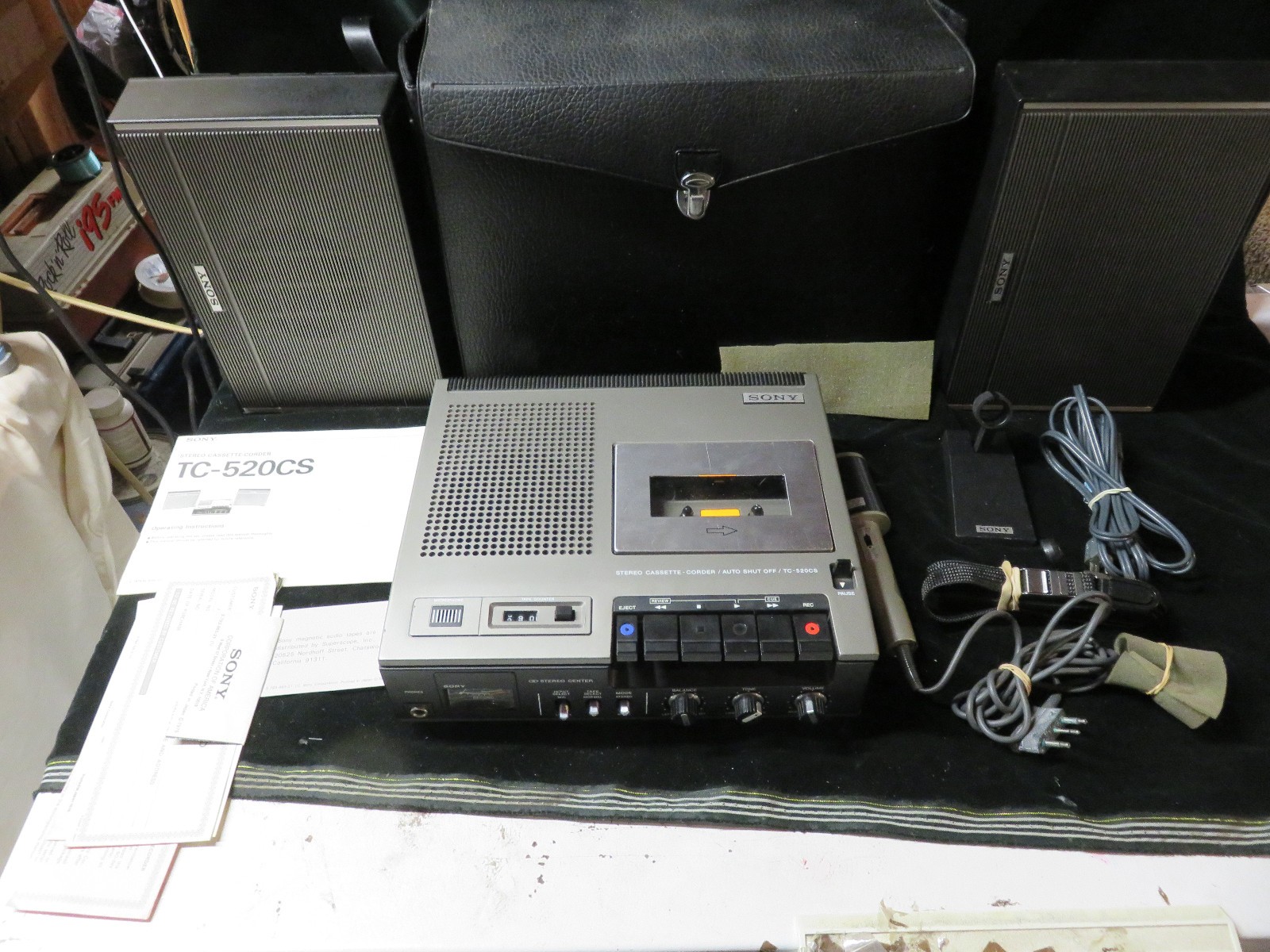
As an eBay Partner, we earn from qualifying purchases. This helps support our independent vintage technology research.
Related Models
- Sony TC-2050SD (1978)
- Sony TC-2220 (1972)
- Sony TC-FX6 (1982)
- Sony TC-K96R (1986)
- Sony TC-FX600 (1984)
- Aiwa AD-F990 (1993)
- Kenwood KX-3060 (1982)
- Stromberg-Carlson RS-404 (1975)
- Akai CS-F33R (1985)
- Akai DX-59 (1983)