Sony Tapecorder 111
Seventy-nine dollars and fifty cents bought a family a tape recorder — and Sony a foothold in the American living room.
Overview
The number that matters most on the Tapecorder 111 is the price: $79.50. Sony's own advertising, run in the pages of the hi-fi press through the early 1960s, positioned the 111 as "a popularly priced, high quality bantam recorder for everyday family fun" — and in the context of the company's own catalog, that word "bantam" was doing real work. Sitting in the same spread as the $595 Sterecorder 777-S (though sources conflict, with some listing it as high as $725) and the $399.50 Sterecorder 300, the 111 was the entry point, the machine a household bought when a professional deck was out of the question.
That advertising context is worth sitting with, because it tells you almost everything the surviving documentation tells you. The 111 appears in Sony's full-line ads placed through Superscope, the company's American distributor, and it appears consistently across several years of them. Audio (June 1962, p.37) listed the Tapecorder 111 among the "most complete line of quality tape recording equipment in the world," priced at $79.50 alongside the 262-D deck and the C-37A condenser microphone.
What the ads do not do is describe the machine in any technical depth. The 111 gets a single clause in a page otherwise devoted to professional and semi-professional gear. Collectors chasing one down today should understand that the period literature is thin on specifics: the surviving primary sources are dealer advertisements, not reviews, and no independent bench test of the 111 appears in the material available here. Anyone quoting frequency response or wow-and-flutter figures for this deck is working from something other than the contemporary record.
What can be said with confidence is where the 111 sat in Sony's hierarchy. The early-'60s Superscope line ran from the 111 at the bottom through the 101 portable, the 262-D transport, the 464-D deck, the 300 portable system, and up to the 777-S at the top. The 111's job was to get a Sony tape machine into homes that would never have considered a $400 deck, and the advertising language — "everyday family fun" — makes the intended buyer plain. This was a recorder for capturing the kids, taping off the radio, and learning what magnetic tape could do. It was not marketed to the audiophile, and it should not be judged as one.
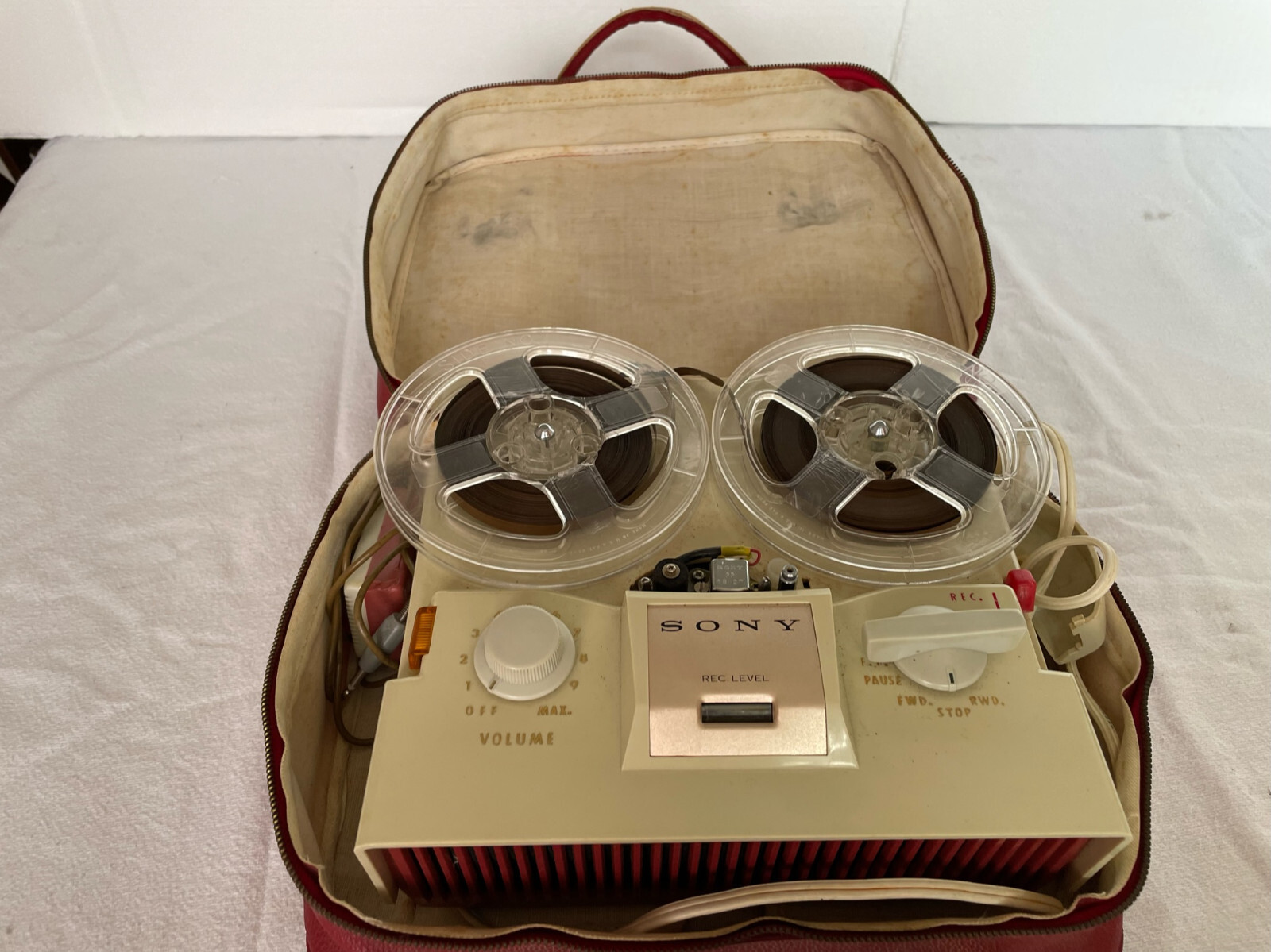
The "bantam" descriptor is the most concrete design clue in the sources, and it aligns with what the 111's place in the lineup implies: a compact, likely portable machine built to a price. Beyond that, the documentation available here simply does not support detailed claims about the transport, the head configuration, the number of speeds, or the track format. Those details existed, certainly — every tape recorder of the period had them — but they are not established by the sources in hand, and this archive would rather leave a blank than fill it with a guess.
For the collector, the Tapecorder 111 is best understood as a document of Sony's American strategy in the early 1960s rather than as a piece of high-fidelity hardware. Superscope's full-line advertising was a deliberate campaign to establish Sony as a brand that made everything from a family bantam recorder to a studio-grade professional deck, and the 111 was the rung that let ordinary buyers onto that ladder. Machines that survive tend to be interesting for that reason — they are the ones that got used, handed down, and stuck in closets, which means condition varies enormously and original packaging or documentation is scarcer than the production numbers might suggest. Buyers should expect the usual wear of a sixty-year-old consumer tape machine and should not expect the period literature to answer every question about how it was built. The honest position is that the 111 is well documented as a product of Sony's marketing and poorly documented as an engineering artifact — and anyone restoring one is working partly from the machine itself.
eBay Listings
As an eBay Partner, we earn from qualifying purchases. This helps support our independent vintage technology research.