Sony PS-10
A model number that turns up in two unrelated corners of the audio world, and neither trail leads anywhere clean.
Overview
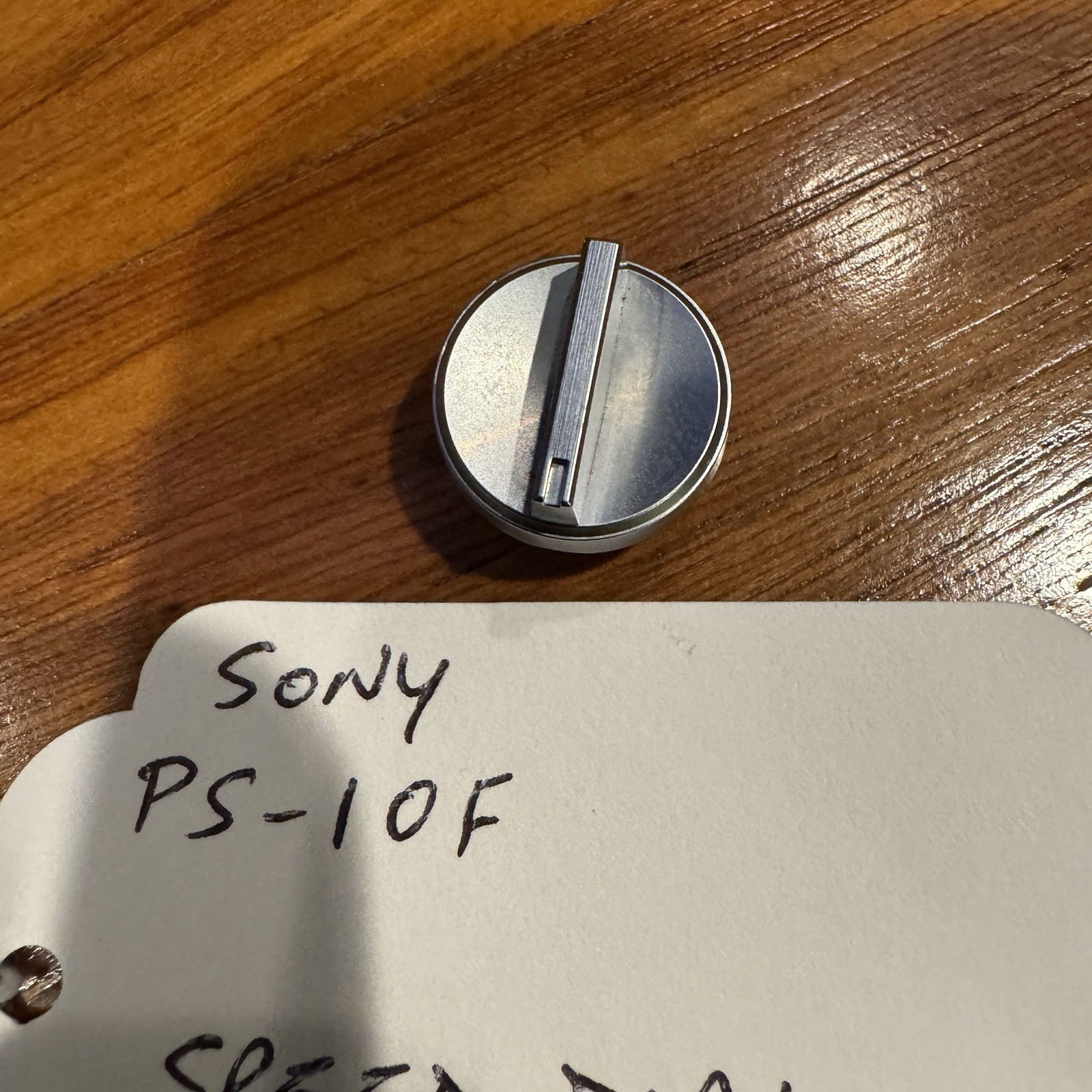
Search for "Sony PS-10" and the designation shows up attached to two different things. The archive has not been able to confirm that either one is a real, documented Sony product. One trail points toward a Sony turntable. PS is Sony's long-running code for its turntable line, and the brand catalog here is crowded with PS-series decks. The other trail is the one that actually produced documents. It points to a ten-inch loudspeaker driver called the PS-10, made by Carvin, an entirely different company, and it turns up in DIY horn-building literature from the early 2000s. Neither trail is a Sony product. Anyone chasing a "Sony PS-10" should know what they are looking at before money changes hands.
The Carvin PS-10 is the easier one to untangle, because there is real paperwork behind it. It was an OEM ten-inch woofer built for Carvin by Eminence, sold for about $60. It shows up repeatedly in a folded-horn cabinet write-up by Bill Fitzmaurice in audioXpress, the DR10a design. The author measured his own sample at an Fs of 55 Hz with a Qts of 0.5. He noted that the Qts was roughly double what conventional horn-loading practice considers acceptable. He used it anyway, having already owned one, and found that in the DR10a it outperformed both a P-Audio SN10-MB and an Eminence Kappa-Pro Ten, despite specs that would suggest otherwise. In a separate DR10a variant built around a different PS-10 sample, the driver's 50 Hz Fs was called out as lower than optimal for that box. That produced an Fs(h) of 36 Hz against a horn flare frequency of 140 Hz, and a flattening of the response curve around 80 Hz. None of this has anything to do with Sony. It is a Carvin driver in a DIY PA cabinet, and the "PS-10" name is coincidence.
On the Sony side, the archive has to be honest about what it does not know. The PS prefix is genuine Sony turntable nomenclature, and the brand catalog lists dozens of decks under it - PS-12, PS-23, PS-24, PS-25, PS-X2, PS-X3, PS-X6, PS-X30A, PS-X33, PS-X40, PS-X45, PS-X50, PS-X60, PS-X75, PS-X500, PS-X600, PS-X555ES, and on through the PS-LX and PS-FL series. A "PS-10" would sit logically near the bottom of that range, plausibly a budget belt-drive or entry-level deck. But plausible is not documented. No verified year of production, no confirmed specifications, no original price, and no independent period review have surfaced for a Sony PS-10. The magazine chunks retrieved for this entry are all cassette-deck sale listings and speaker-calibration blurbs that happen to share a page number or a catalogue context. HiFi-Stereo (October 1987, p.149) and Audio (October 1987, p.269) both carry cassette-deck discount columns, and HiFi-Stereo (April 1983, p.21) covers calibration cassettes at $140 each. None of them mention a Sony PS-10. They are not evidence of anything.
Anyone who runs into a "Sony PS-10" listing should treat the model number with suspicion until a photo of the rear panel or a serial plate confirms it. Sony's actual budget turntables from this period are well documented under other numbers, and a misread or misremembered badge is a far more likely explanation than an undocumented model. If a real Sony PS-10 does exist, it is almost certainly a low-production or region-specific deck that has never been catalogued properly.
eBay Listings



As an eBay Partner, we earn from qualifying purchases. This helps support our independent vintage technology research.