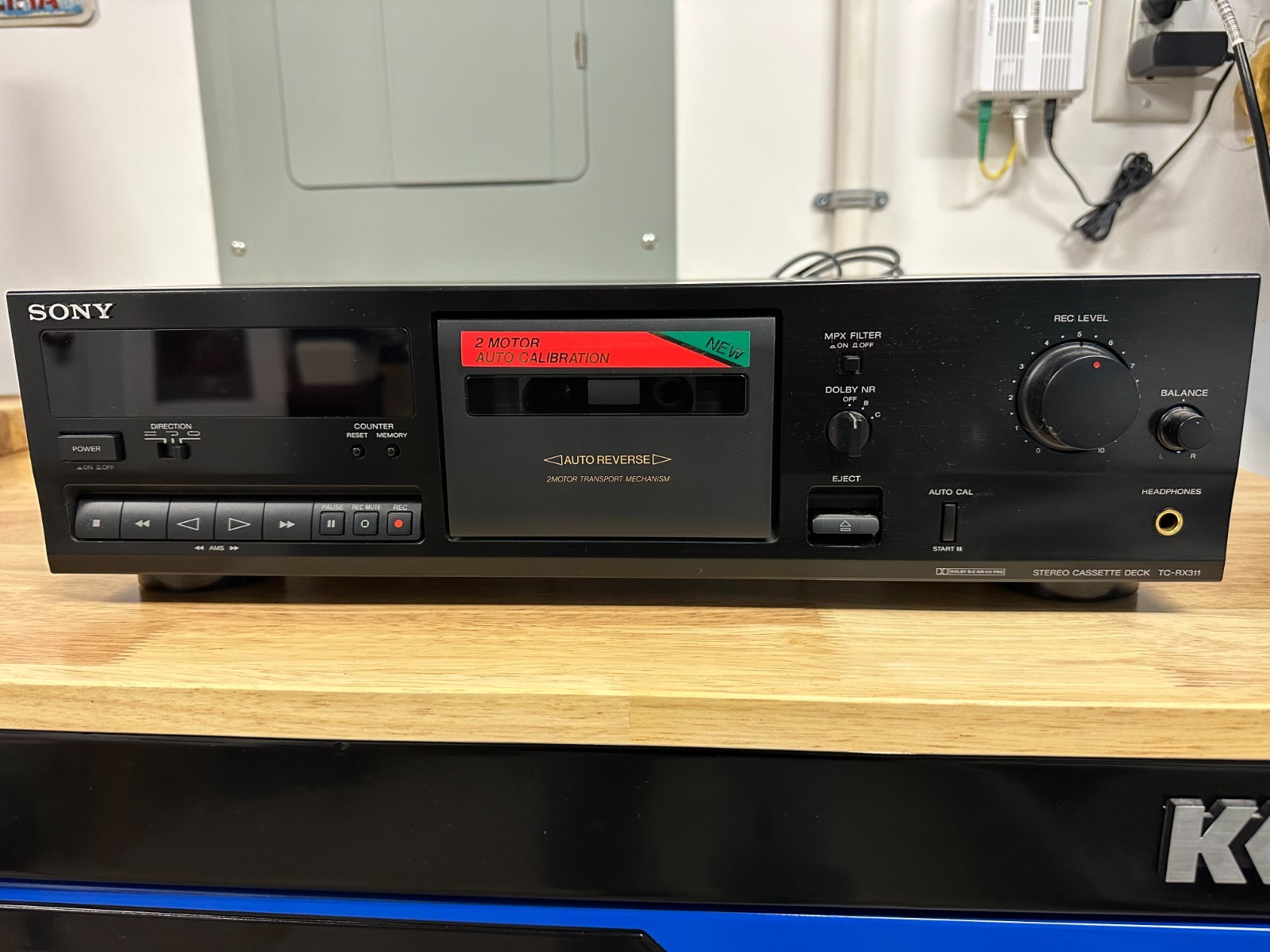
Sony TC-RX311 Cassette Deck
The Sony TC-RX311 is a double cassette deck released in the early 1990s as part of Sony's mid-tier consumer audio lineup. Designed for convenient music dubbing, timer-based recording, and everyday cassette playback, the TC-RX311 reflects the technological priorities of its era—ease of use, noise reduction, and multi-functionality for the home audio enthusiast.
Key Features
- Double cassette mechanism – Enables direct tape-to-tape dubbing without external equipment.
- Auto-reverse playback – Allows continuous playback of both sides of a cassette with automatic reversal.
- Dolby B and C noise reduction – Reduces tape hiss for cleaner audio during playback and recording.
- Tape selector and auto bias calibration – Automatically adjusts recording settings based on tape type (normal, chrome, metal) for optimal performance.
- Music search function – Fast forwards or rewinds while monitoring audio to quickly locate tracks.
- Timer recording and playback – Schedule recordings from external sources or set the deck to play at a preset time.
Specifications
| Feature | Specification |
| Year of Release | 1990 |
| Category | Double Cassette Deck |
| Playback Direction | Auto-reverse (A-B or B-A) |
| Noise Reduction | Dolby B, Dolby C |
| Tape Types Supported | Type I (Normal), Type II (Chrome), Type IV (Metal) |
| Bias Calibration | Automatic |
| Dubbing Capability | Yes (Cassette-to-Cassette) |
| Search Function | Music Search (audio-sensing skip) |
| Timer Function | Recording and Playback Timer |
| Display | LED or fluorescent display (model variant dependent) |
| Inputs/Outputs | Line In, Line Out (RCA) |
| Power Requirements | Not specified (mains powered, 120V/230V likely) |
| Dimensions (approx.) | 430 × 140 × 305 mm |
| Weight | ~7.5 kg |
Historical Context
The Sony TC-RX311 emerged during the final peak of cassette tape popularity, a time when home audio systems increasingly emphasized automation and user convenience. As compact discs began to rise in the early 1990s, cassette decks like the TC-RX311 catered to users who still relied on tapes for recording radio broadcasts, creating mixtapes, or preserving vinyl collections.
Sony positioned the TC-RX311 as a practical, feature-rich option for non-audiophile consumers. Its inclusion of Dolby C noise reduction and auto-calibration placed it above entry-level models, while its double-deck design made it ideal for tape duplication—a common use case before digital media.
Though not marketed as a high-fidelity component, the TC-RX311 delivered solid performance for casual listening and home use, embodying the balance between affordability and functionality that defined Sony’s consumer audio strategy in the 1990s.
Sound Quality
The TC-RX311 provides clean, consistent playback with effective noise suppression thanks to Dolby B and C systems. Frequency response is typical of mid-range cassette decks—adequate for pop, rock, and spoken word, with reasonable treble clarity and bass response. However, it lacks the precision, dynamic range, and wow-and-flutter stability of professional or high-end audiophile decks.
Best used with high-quality tapes (e.g., Sony HF, Maxell XLII) and properly maintained heads, the TC-RX311 can deliver enjoyable analog sound, especially when paired with a quality stereo system.
Maintenance and Common Issues
Due to its age, the TC-RX311 may require servicing to restore full functionality. Common issues include:
- Rubber belt degradation – Causes slow tape speed, transport failure, or erratic behavior.
- Idler tire wear – Leads to poor capstan drive engagement and speed instability.
- Dried-up lubrication – Results in stiff mechanisms or noisy operation.
- Potentiometer noise – Causes crackling in audio or control circuits; can be cleaned or replaced.
- Capacitor aging – Electrolytic capacitors in the power supply or signal path may leak or fail.
Maintenance Tips
1. Clean the tape path regularly – Use isopropyl alcohol and a cotton swab to clean heads, capstan, and pinch rollers.
2. Demagnetize periodically – Use a tape head demagnetizer to prevent dull or distorted playback.
3. Replace worn belts and idlers – Rebuilding the transport with new rubber parts is often necessary for reliable operation.
4. Check tape alignment – Misaligned heads can cause poor stereo imaging or high-frequency loss.
5. Store in a dry, dust-free environment – Prevents corrosion and mechanical binding.
Collectibility and Market Value
The Sony TC-RX311 is not considered a high-collectibility item, scoring around 3/10 on the vintage audio scale. It lacks the build quality or rarity of audiophile-grade decks like the TC-K770 or Technics RS-1500, but remains functional and desirable for users seeking a practical cassette dubbing solution.
- Market Value: $20–$50 USD
- Value Factors: Working condition, completeness (remote, manual), cosmetic state, and recent servicing.
While not a showpiece, the TC-RX311 is a capable representative of 1990s consumer cassette technology and a reliable choice for casual collectors or those digitizing cassette collections.
Market Value
┌──────────────────────────────────────────────────────────────────────────┐
│ SONY TC-RX311                                                   Apr 2026 │
├──────────────────────────────────────────────────────────────────────────┤
│ High      $240                                    Latest             $18 │
│ Median    $54                                     Trend           ▼ Down │
│ Low       $17                                     Volume           ~3/mo │
├──────────────────────────────────────────────────────────────────────────┤
│   $300 ┤                                                                 │
│        │                                                                 │
│        │.                   .                                            │
│   $171 ┤                                                                 │
│        │                                                                 │
│        │                                                                 │
│        │                                      .                          │
│     $0 ┤                            .              .                    .│
│        ├─────────────────────────────────────────────────────────────────│
│    vol │█                   █       █         █    █                    █│
│        └─────────────────────────────────────────────────────────────────│
│         2026-01                      2026-03                      2026-04│
└──────────────────────────────────────────────────────────────────────────┘
eBay completed sales. Excludes accessories, parts, and non-working units. Hover points for details.
eBay Listings

As an eBay Partner, we earn from qualifying purchases. This helps support our independent vintage technology research.
Related Models
- Sony TC-2050SD (1978)
- Sony TC-2130A (1974)
- Sony TC-2220 (1972)
- Sony TC-FX6 (1982)
- Sony TC-K96R (1986)
- Aiwa AD-F990 (1993)
- Kenwood KX-3060 (1982)
- Stromberg-Carlson RS-404 (1975)
- Akai CS-F33R (1985)
- Akai DX-59 (1983)