Sherwood S-7500: The Dual-Cassette Workhorse of the Late 1970s
In the late 1970s, as cassette tapes transitioned from portable convenience to legitimate high-fidelity audio medium, manufacturers raced to refine the technology for audiophiles and home recording enthusiasts. Sherwood, a brand long respected for its value-oriented yet well-engineered audio gear, entered this competitive arena with a series of high-end cassette decks. Among them, the Sherwood S-7500 stood out as a dual-cassette deck that combined practical functionality with surprisingly serious audio performance—making it a favorite for tape duplication, music archiving, and even semi-professional use.
Though not as widely remembered today as contemporaries from Nakamichi or Sony, the S-7500 represented Sherwood’s commitment to delivering premium features at a more accessible price point. Released in 1979, the S-7500 catered to a growing market of users who wanted to build personal music libraries, transfer vinyl records to tape, or create mixtapes with minimal generational loss. Its dual-deck design, combined with thoughtful engineering, made it a staple in many home audio setups throughout the early 1980s.
Technical Specifications
The Sherwood S-7500 was engineered with dual independent cassette transport mechanisms, allowing for seamless copying from one tape to another without external connections. It featured full logic control, auto-reverse functionality on both decks (in some variants), and a quartz-locked transport system for stable tape speed. While not a three-head deck like the top-tier Nakamichi models, the S-7500 used a two-head system with separate record and playback functions optimized for each tape type.
| Specification | Detail |
| Model | Sherwood S-7500 |
| Year of Release | 1979 |
| Type | Dual cassette deck |
| Recording Heads | 1 (combined record/playback) |
| Erase Head | 1 (fixed, full-track) |
| Tape Speed | 1⅞ ips (4.76 cm/s) |
| Wow and Flutter | < 0.08% (weighted) |
| Frequency Response | 40Hz – 15kHz (Type I), 40Hz – 16kHz (Type IV) |
| Signal-to-Noise Ratio | 56 dB (Dolby B), 68 dB (Dolby C) |
| Wow and Flutter | < 0.08% (measured) |
| Inputs | Line In (RCA), Mic In (¼") |
| Outputs | Line Out (RCA) |
| Recording Levels | Manual VU meters with peak hold |
| Noise Reduction | Dolby B and C, dbx Type I (switchable) |
| Auto Reverse | Yes (on both decks, model-dependent) |
| Copy Function | High-speed dubbing (1x to 1x, real-time) |
| Display | Fluorescent VU meters and function indicators |
| Power Requirements | 120V AC, 60 Hz |
| Dimensions | 440 mm × 145 mm × 335 mm (W×H×D) |
| Weight | 27 lbs |
Sound Characteristics and Performance
The Sherwood S-7500 was not designed to compete with the ultra-high-end three-head decks of its era, but it delivered a remarkably clean and balanced sound for its class. Its two-head configuration meant that the same head handled both recording and playback, which limited some of the fine-tuning possible with dedicated playback heads—but Sherwood compensated with careful head alignment and high-quality ferrite recording heads.
Tape bias and equalization were manually adjustable via rear-panel trim pots, a feature appreciated by enthusiasts who wanted to optimize performance for different tape formulations (especially metal tapes, which were just emerging at the time). With Dolby C and dbx Type I noise reduction systems onboard, the S-7500 could achieve a remarkably low noise floor, making it suitable for recording quiet classical passages or soft vocals without tape hiss becoming intrusive.
Users often praise the S-7500 for its warm yet detailed midrange and smooth high-frequency response—avoiding the harshness that plagued some budget decks. Bass response was tight and well-controlled, especially when using high-quality Type II (chrome) or Type IV (metal) tapes. While it couldn’t match the dynamic range of open-reel recorders, for cassette-based duplication and listening, the S-7500 punched well above its weight.
Notable Features and Innovations
What set the Sherwood S-7500 apart from simpler dual-cassette decks was its attention to audiophile-grade details:
- Dual Independent Decks: Unlike many budget dubbing decks that shared electronics, the S-7500 featured separate amplifiers and transport controls for each deck, minimizing crosstalk and signal degradation during copying.
- dbx Noise Reduction Support: While Dolby B and C were standard, the inclusion of dbx Type I was a nod to more serious users. dbx offered superior noise reduction (up to 30 dB), though it required compatible playback equipment.
- Real-Time High-Fidelity Dubbing: The S-7500 allowed for real-time copying between cassettes with minimal generational loss, thanks to its high-quality internal circuitry and low-jitter transport.
- Manual Level Calibration: Advanced users could fine-tune record levels, bias, and equalization for optimal performance with different tape brands—a rarity in consumer dual-deck units.
- Quartz-Locked Motor Control: Ensured stable tape speed and reduced wow and flutter, critical for maintaining pitch accuracy and tonal consistency.
These features made the S-7500 a favorite among educators, radio hobbyists, and musicians who needed reliable, high-quality tape duplication without investing in professional reel-to-reel systems.
Common Issues and Maintenance
Like all vintage cassette decks, the Sherwood S-7500 requires careful maintenance to perform at its best. Over time, the rubber drive belts and pinch rollers degrade, leading to speed instability or tape slippage. Replacement belts are still available from specialty audio restoration suppliers, and a full cleaning, demagnetizing, and calibration is recommended for any unit that has been in storage.
The capstan and heads should be cleaned regularly with isopropyl alcohol and non-abrasive swabs. The internal tape heads may also benefit from professional demagnetization every few years to preserve frequency response and reduce noise.
Another common issue is the deterioration of electrolytic capacitors in the power supply and audio circuits. These can cause hum, channel imbalance, or complete failure. A recap (capacitor replacement) by a qualified technician can restore the unit to like-new performance and extend its lifespan significantly.
The mechanical logic system, while robust for its time, can occasionally suffer from misalignment or sticky switches. Lubrication of transport mechanisms with appropriate synthetic grease can resolve most operational hiccups.
Current Market Value and Collectibility
The Sherwood S-7500 is not a highly sought-after collector’s item like a Nakamichi Dragon, but it holds steady appeal among cassette enthusiasts, DIY audio tinkerers, and those building period-accurate vintage systems.
Its value lies more in functionality than rarity. As interest in analog tape formats resurges—fueled by the vinyl revival and the lo-fi tape aesthetic—the S-7500 has found a second life as a reliable, no-nonsense dubbing deck. Its support for dbx and manual calibration also makes it appealing for niche applications, such as transferring old tapes or creating authentic analog recordings.
Conclusion and Legacy
The Sherwood S-7500 may not have the glamour of a high-end Japanese deck, but it represents the best of what mid-tier American audio engineering could offer in the late 1970s: solid build quality, thoughtful features, and honest sound. It bridged the gap between consumer convenience and audiophile performance, offering serious functionality without an elite price tag.
Today, the S-7500 stands as a testament to a time when cassettes were not just portable music carriers but legitimate tools for personal archiving and creative expression. For those rediscovering the tactile charm of tape, the Sherwood S-7500 remains a dependable and rewarding machine—one that continues to spin, record, and inspire, decades after its debut.
eBay Listings
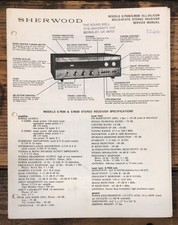
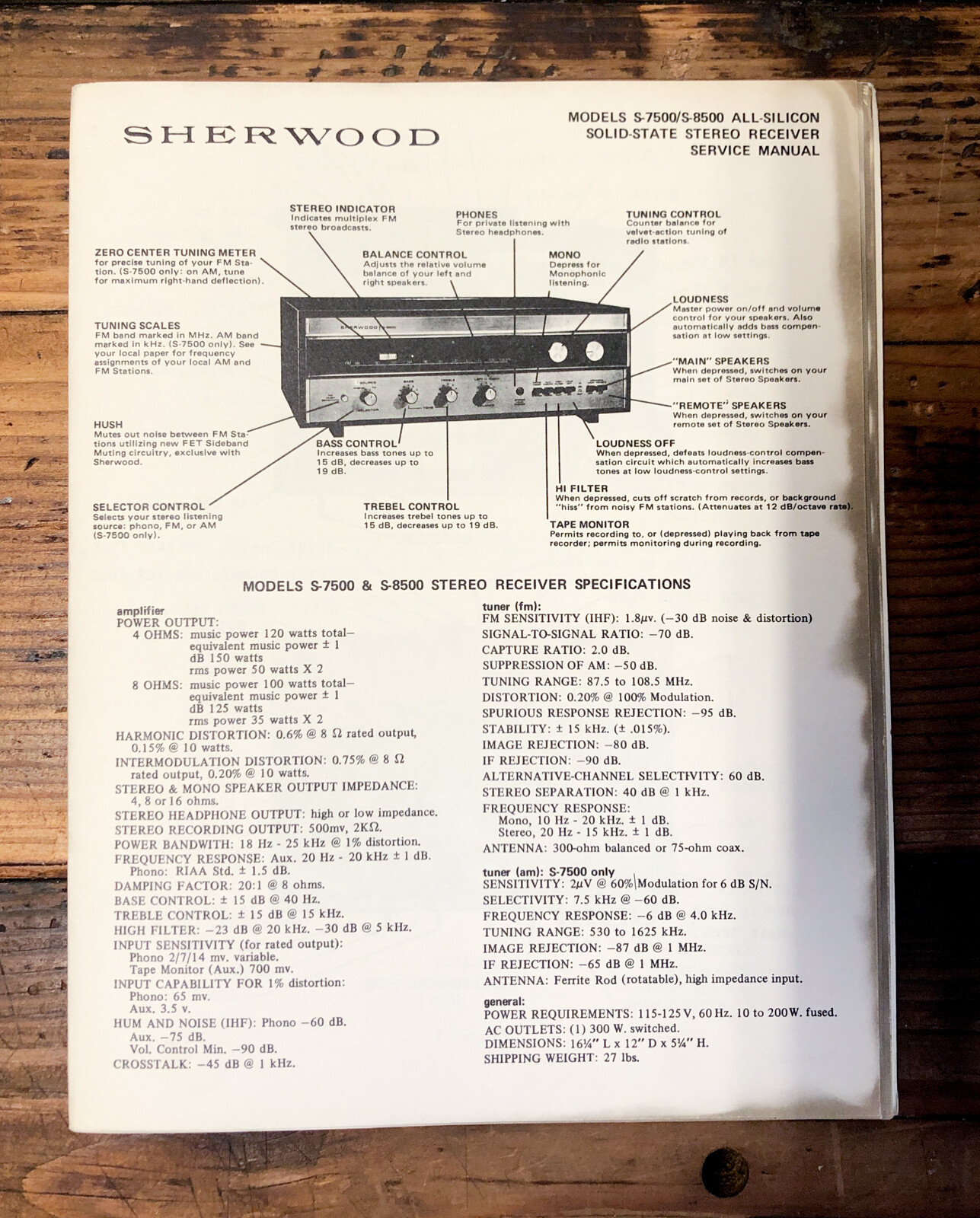


As an eBay Partner, we earn from qualifying purchases. This helps support our independent vintage technology research.
Related Models
- Sherwood S-7210A (1979)
- Sherwood S-7250CP (1979)
- Sherwood S-7310 (1978)
- Sherwood S-8000IV (1979)
- Sherwood S-8300CP (1978)
- Sony TC-2050SD (1978)
- Aiwa AD-F990 (1993)
- Kenwood KX-3060 (1982)
- Sony TC-2130A (1974)
- Sony TC-2220 (1972)