Sherwood RX-4010R: The Underrated Workhorse of Late-1970s Hi-Fi
In the golden era of analog audio—when woodgrain cabinets, large VU meters, and warm tube-like sound defined the home stereo experience—brands like Sherwood quietly carved out reputations for delivering solid performance at accessible price points. Among their lineup from the late 1970s, the Sherwood RX-4010R stands as a modest yet capable integrated receiver that exemplifies the brand’s commitment to functional design and reliable audio reproduction. While not as celebrated as contemporaries from Pioneer, Sansui, or Marantz, the RX-4010R has developed a quiet following among vintage audio enthusiasts who appreciate its balanced feature set and clean sonic character.
Released around 1978, the RX-4010R arrived during a transitional period in audio technology. Solid-state amplification had largely replaced tube-based designs, and receivers were becoming more integrated, combining AM/FM tuners, preamplifiers, and power amplifiers into single, space-saving units. Sherwood, known for its pragmatic engineering and value-driven products, positioned the RX-4010R as a mid-tier receiver for listeners who wanted quality sound without the premium price tag.
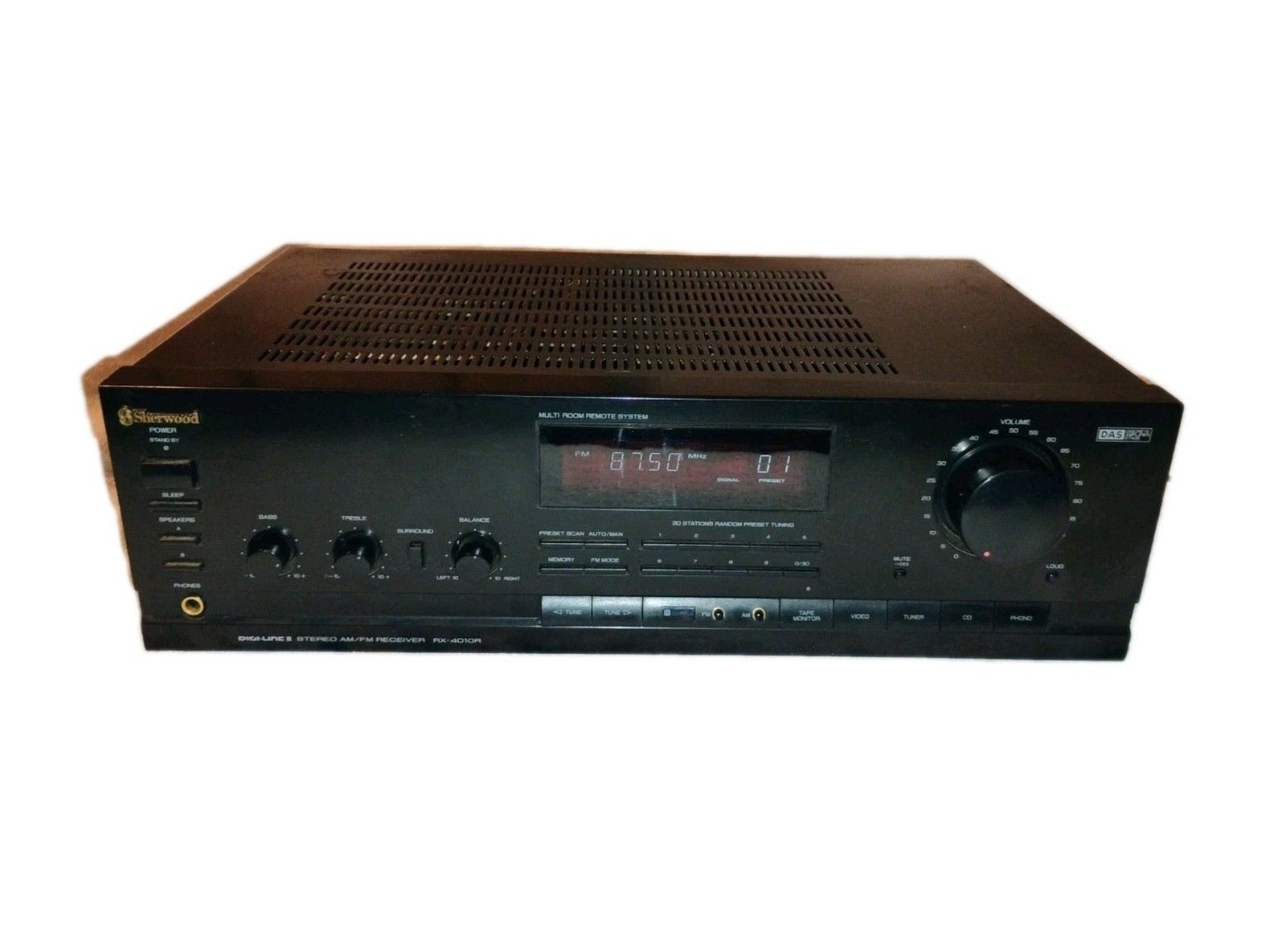
Though it never achieved the cult status of some of its peers, the RX-4010R delivers a compelling package: a clean 35 watts per channel into 8 ohms, a built-in phono preamp for turntables, AM/FM tuner with digital tuning display (a novelty at the time), and a straightforward, no-nonsense control layout. Its understated design—typically housed in a black or brushed aluminum faceplate with wood side panels—reflects the utilitarian aesthetic of the era, favoring function over flash.
Technical Specifications
The Sherwood RX-4010R was engineered to meet the needs of the average audiophile in the late 1970s, offering a balanced mix of power, inputs, and tuning capabilities.
| Specification | Detail |
| Model | RX-4010R |
| Year of Release | 1978 |
| Manufacturer | Sherwood Electronics |
| Type | Integrated Receiver (AM/FM, Phono) |
| Continuous Power Output | 35 watts per channel (8Ω, 0.5% THD) |
| Total Harmonic Distortion | <0.5% (1kHz, rated power) |
| Frequency Response | 20Hz – 20kHz (+/-1dB) |
| Input Sensitivity | 2.5mV (Phono), 150mV (Line) |
| Signal-to-Noise Ratio | >70dB (Phono), >80dB (Line) |
| Speaker Impedance | 8Ω minimum |
| Tuner Bands | AM, FM (with digital frequency display) |
| Inputs | Phono (MM), 2x Line (Aux, Tape), Mic |
| Outputs | Tape Out, Headphones (1/4") |
| Power Supply | 120V AC, 60Hz |
| Dimensions | 17" W × 5.5" H × 14" D |
| Weight | 22 lbs (10 kg) |
Notably, the RX-4010R includes a dual-level metering system—a pair of VU meters for monitoring output levels and a digital LED display for precise FM frequency readout, a feature that was still relatively advanced for consumer receivers in the late '70s. The inclusion of a tape monitor function allows users to switch between live and recorded sources seamlessly, a hallmark of the era’s emphasis on analog recording and playback.
Sound Characteristics and Performance
The RX-4010R delivers a sound signature that is best described as clean, neutral, and well-balanced. Unlike some of the more aggressively voiced receivers of the time, Sherwood opted for a transparent approach—letting the source material speak for itself. The solid-state amplifier section provides tight bass control, clear midrange articulation, and smooth highs, avoiding the harshness that plagued some budget designs.
When paired with efficient bookshelf speakers (such as AR, JBL, or Advent models of the era), the 35WPC output is more than sufficient for moderate to large listening rooms. The phono preamp is well-matched for moving magnet (MM) cartridges, offering warm, detailed vinyl playback with minimal noise when properly grounded.
FM reception is solid for its time, with good selectivity and sensitivity, though modern listeners may find the tuner less robust compared to higher-end units from Sansui or Yamaha. Still, for casual listening to local stations or nostalgic radio scanning, the RX-4010R performs admirably.
Notable Features and Innovations
While not a technological trailblazer, the RX-4010R incorporates several thoughtful features that enhance its usability:
- Digital Frequency Display: One of the early adopters of LED readouts in the mid-tier market, allowing for precise tuning and easier station identification.
- Tone Controls with Defeat Switch: Bass and treble adjustments (±12dB at 100Hz/10kHz) can be bypassed for pure signal path when desired.
- Direct Amp Input: Enables use as a power amplifier when paired with an external preamp.
- Headphone Amplifier: A dedicated 1/4" jack with its own volume control, useful for private listening.
- Tape Loop with Monitor: Full record and playback monitoring capabilities, ideal for cassette dubbing.
The front panel layout is intuitive, with large, tactile knobs for volume, input selection, and tuning, flanking the central display. The overall build quality is sturdy, with a steel chassis and reliable potentiometers, though not quite at the level of higher-end Japanese competitors.
Common Issues and Maintenance
Like any vintage electronics from the late 1970s, the Sherwood RX-4010R benefits from careful inspection and maintenance before regular use:
- Capacitor Aging: Electrolytic capacitors in the power supply and signal path may have dried out, leading to hum, low output, or channel imbalance. Replacing these is often the first step in restoration.
- Dirty Pots and Switches: Crackling sounds when adjusting volume or switching inputs are common. Cleaning with contact cleaner can resolve this, but worn pots may need replacement.
- Tuner Alignment: Over time, the FM tuner may drift or lose sensitivity. A professional alignment can restore optimal performance.
- Rubber Drive Bands: If the unit includes a cassette section (some variants do), rubber belts may have perished and require replacement.
Despite these age-related concerns, the RX-4010R is generally reliable when maintained. Its modular design makes servicing straightforward for experienced technicians or DIY enthusiasts.
Current Market Value and Collectibility
The Sherwood RX-4010R is not a high-demand collector’s item, but it holds steady appeal among budget-conscious vintage audio fans and those restoring period-correct systems. Units in good working condition typically sell for $75–$150, depending on cosmetic condition, functionality, and included accessories.
While it lacks the "cool factor" of a Marantz 2270 or a Pioneer SX-1980, the RX-4010R offers excellent value for listeners seeking a functional, vintage all-in-one receiver. Its understated design also makes it a good fit for minimalist or retro-modern setups.
Conclusion and Legacy
The Sherwood RX-4010R may not be a legend, but it is a reliable, well-rounded receiver that represents the best of Sherwood’s mid-tier engineering in the late 1970s. It delivers clean power, solid tuning, and a feature set that was competitive for its time—all in a durable, no-frills package.
For those exploring vintage audio without breaking the bank, the RX-4010R is a worthy contender. It may not shout for attention, but it plays the long game: honest sound, dependable performance, and a quiet dignity that earns respect over time. In the world of vintage hi-fi, sometimes the unsung heroes are the ones that keep the music playing—year after year.
eBay Listings


As an eBay Partner, we earn from qualifying purchases. This helps support our independent vintage technology research.
Related Models
- Sherwood RX-1010 (1978)
- Sherwood RX-2030R (1978)
- Sherwood RX-4508 (1978)
- Sherwood RX-773 (1975)
- Sherwood S-7900A (1979)
- Pioneer QX-949A (1978)
- Pioneer SX-2000 (1978)
- Pioneer SX-2500 (1978)
- Marantz SR-2000 (1999–2001)
- Onkyo TX-1500MKII (1975)