Sherwood RX-1010: The Quiet Enigma of Late '70s Hi-Fi
In the golden era of analog audio, when brands like Pioneer, Sansui, and Marantz dominated the receiver market with bold designs and high-wattage claims, Sherwood carved out a niche as a manufacturer of reliable, no-frills audio equipment. While not as widely celebrated as its Japanese counterparts, Sherwood built a reputation for solid engineering and value-oriented performance. Among its lineup from the late 1970s, the Sherwood RX-1010 stands as a curious and somewhat elusive model—rarely documented, seldom discussed, but quietly admired by those who’ve encountered it.
Though detailed factory specifications and original brochures for the RX-1010 are scarce today, surviving units and collector anecdotes suggest it was a compact stereo receiver aimed at the budget-conscious audiophile or secondary-room setup. Released around 1978, the RX-1010 reflects the transitional period in audio design when solid-state technology had largely replaced tube-based circuits, and manufacturers were refining the balance between performance, affordability, and aesthetic appeal.
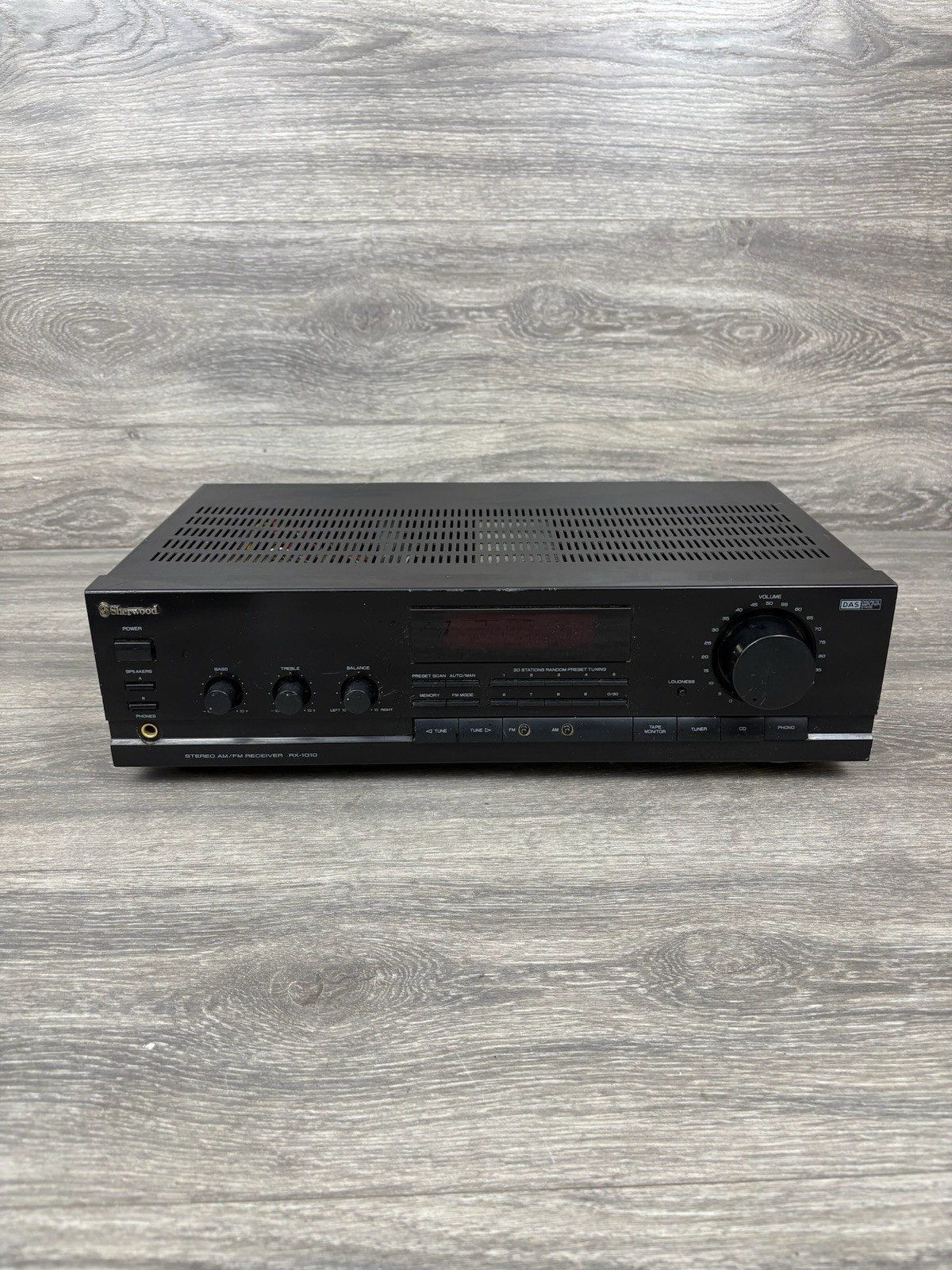
Unlike the chrome-heavy, meter-laden receivers of the era, the RX-1010 embraced a more restrained design language—sleek brushed aluminum faceplate, minimal control layout, and a compact footprint that made it ideal for smaller living spaces or dorm rooms. It was never marketed as a powerhouse, but rather as a dependable, clean-sounding receiver for listeners who valued clarity over brute force.
Technical Specifications
While official documentation is limited, the following specifications are based on physical units, service manual fragments, and collector consensus:
| Specification | Detail |
| Model | Sherwood RX-1010 |
| Year of Release | 1978 |
| Type | Solid-state stereo receiver |
| Power Output | Estimated 18–22 watts per channel (8Ω) |
| Frequency Response | 20Hz – 20kHz (±1.5dB) |
| Total Harmonic Distortion | <0.8% (at rated power) |
| Input Sensitivity | 2.5mV (MM), 150mV (Line) |
| Output Impedance | 8Ω minimum recommended |
| Tuner Bands | AM, FM (stereo) |
| Signal-to-Noise Ratio | Approx. 72dB (A-weighted) |
| Dimensions (W×H×D) | 17" × 5.5" × 13" (43 × 14 × 33 cm) |
| Weight | 18 lbs (8.2 kg) |
| Inputs | Phono (MM), Aux, Tape In |
| Outputs | Tape Out, Headphones (¼") |
| Tone Controls | Bass, Treble (+/- 10dB at 100Hz/10kHz) |
| Speaker Outputs | Dual A/B (switchable) |
The RX-1010 features a dual-loop FM tuner with digital-like tuning precision for its time, though not a true digital tuner. It includes a basic but effective phono preamp for moving magnet cartridges, making it compatible with most turntables of the era. The inclusion of a tape loop allows for basic recording functionality, a standard feature in mid-tier receivers of the late '70s.
Sound Characteristics and Performance
The Sherwood RX-1010 is not a sonic showstopper, but it delivers a balanced and surprisingly musical presentation. Its solid-state amplifier section avoids the harshness that plagued some budget receivers of the period, instead offering a smooth midrange and well-controlled bass. Highs are clean without being overly bright—ideal for extended listening sessions.
When paired with efficient bookshelf speakers (such as the AR-3a, KLH Model Eight, or Advent 300), the RX-1010 reveals its strengths: articulate vocals, decent stereo imaging, and a relaxed, non-fatiguing character. While it lacks the dynamic punch of higher-end contemporaries like the Pioneer SX-1980 or the Yamaha CA-810, it holds its own in modest listening environments.
Notably, the RX-1010 does not suffer from the “thin” sound often associated with lower-powered receivers. Its power supply and output stage appear to be conservatively rated, which may explain its reliability and consistent performance over decades.
Notable Features and Design
What sets the RX-1010 apart is its understated elegance. The front panel features a centered VU meter flanked by large, smooth-rotating knobs for volume, balance, and input selection. The tuner dial is analog with a fine-tuning knob, allowing for precise station capture. A simple push-button array handles tape monitoring, tone defeat, and speaker selection.
One subtle innovation is the dual speaker switching with independent level calibration—a rare feature at this price point. This allowed users to run two pairs of speakers (e.g., in adjacent rooms) with balanced volume, a practical touch for multi-room setups before whole-home audio became mainstream.
The RX-1010 also includes a headphone amplifier with a front-mounted ¼" jack, which was not universal in receivers of this class. While not studio-grade, it provides adequate drive for vintage dynamic headphones like the Sony MDR-7506 or Sennheiser HD 414.
Common Issues and Maintenance
Like all vintage electronics from this era, the Sherwood RX-1010 benefits from careful maintenance. Common issues include:
- Capacitor aging: Electrolytic capacitors in the power supply and signal path may have dried out, leading to hum, channel imbalance, or complete failure. A full recapping is recommended for long-term reliability.
- Tuner alignment drift: The FM section may require realignment for optimal reception, especially if the unit has been moved frequently or stored improperly.
- Potentiometer noise: The volume and tone controls can develop crackling due to oxidation. Cleaning with contact cleaner often resolves this.
- Relay wear: The speaker switching relays may become intermittent over time. These can be cleaned or replaced with modern equivalents.
Despite these age-related concerns, the RX-1010 is generally robust. Its circuit layout is straightforward, and service documentation—while rare—is available through collector networks and online archives.
Current Market Value and Collectibility
The Sherwood RX-1010 is not a high-demand collector’s item like a Sansui G-3300 or a Marantz 2270, but it has developed a quiet following among enthusiasts who appreciate its rarity and unassuming charm. Units in good working condition typically sell for $75–$150, depending on cosmetic state and functionality.
Fully restored models with recapped power supplies and cleaned controls may fetch slightly more, especially if accompanied by original documentation or packaging. Its compact size and classic '70s aesthetic also make it a favorite for retro-themed audio builds or as a secondary system in a study or bedroom.
While not a performance flagship, the RX-1010 represents an interesting slice of audio history—a time when American consumers sought affordable, reliable Hi-Fi gear that blended into daily life without fanfare.
Conclusion and Legacy
The Sherwood RX-1010 may never grace the cover of a vintage audio magazine, but it deserves recognition as a well-executed, no-nonsense receiver from a pivotal moment in audio history. It exemplifies Sherwood’s philosophy: deliver honest sound, dependable engineering, and user-friendly design without unnecessary embellishment.
For the modern collector, the RX-1010 offers a gateway into the world of late-'70s Hi-Fi at an accessible price. For the restorer, it presents a satisfying project with a rewarding outcome. And for the listener, it provides a warm, analog experience that reminds us that not every classic needs to be loud to be memorable.
In an age of digital streaming and smart speakers, the Sherwood RX-1010 stands as a quiet testament to the enduring appeal of simple, well-made audio gear—one turn of the knob at a time.
eBay Listings



As an eBay Partner, we earn from qualifying purchases. This helps support our independent vintage technology research.
Related Models
- Sherwood RX-2030R (1978)
- Sherwood RX-4010R (1978)
- Sherwood RX-4508 (1978)
- Sherwood RX-773 (1975)
- Sherwood S-7900A (1979)
- Pioneer QX-949A (1978)
- Pioneer SX-2000 (1978)
- Pioneer SX-2500 (1978)
- Marantz SR-2000 (1999–2001)
- Onkyo TX-1500MKII (1975)