Sansui SR-1050 (1970–1975)
It’s not flashy, but the moment you lower the arm, you feel it—this thing means business.
Overview
The Sansui SR-1050 isn’t the kind of turntable that grabs you with chrome trim or a flashy pitch control. It doesn’t auto-return or even auto-start. But if you’ve spent time with gear that tries to do everything, this one hits different. It’s a manual belt-drive deck built like a lab instrument, with the kind of deliberate, no-nonsense engineering that makes you forget you’re listening to a consumer model. Owners report it was designed to bring professional transcription performance into the living room—no small claim in the early '70s, when most home turntables were still chasing convenience over precision.
Introduced in 1970 (with the SR-1050C variant documented as late as 1975), this was Sansui’s statement that high-end wasn’t just for studios. At ¥26,900, it wasn’t cheap, but it wasn’t priced like exotic gear either. It split the difference: serious specs without the stratospheric cost. And unlike later Sansui decks that lightened the build to cut costs, the SR-1050 feels dense, grounded. The 7.7kg weight isn’t just from the 1.2kg die-cast aluminum platter—every component, from the zinc die-cast accessory base to the gold-plated terminals, suggests they didn’t sand down the corners.
It’s also a manual-only machine, derived from the semi-automatic SR-2050. That means no auto-lift, no cueing solenoid, no magic tricks. You lift, you place, you play. But what it lacks in automation, it makes up for in thoughtful touches: a feather-touch start lever, a slow-acting oil-damped arm lifter that moves like it’s underwater, and a push-button speed switch that’s satisfyingly tactile. This isn’t gear for the impatient. It’s for the kind of listener who enjoys the ritual as much as the music.
And yes, it was used as the reference front end for Sansui’s world premiere quadraphonic demo in Dusseldorf—no small endorsement. Paired with the legendary AU-999 amplifier, the SR-1050C wasn’t just playing records; it was demonstrating the future. That alone tells you where Sansui positioned it: not as a mid-tier player, but as a precision tool in their high-end ecosystem.
Specifications
| Manufacturer | Sansui Electric Co., Ltd. |
| Drive system | Belt drive |
| Motor | 4-pole synchronous type |
| Rated speeds | 33 1/3, 45 rpm |
| Operation type | Manual |
| Signal-to-noise ratio | 40 dB or more |
| Wow and flutter | Not more than 0.07% |
| Arm type | Static balanced type pipe arm (TA2050 transcription tonearm) |
| Effective arm length | 220mm |
| Overhang | 15mm |
| Tracking error | ± 1.5 ° |
| Needle pressure variable range | 0 ~ 5g (Direct Reading) |
| Included cartridge | Sansui Induced Magnet cartridge (MM Type) |
| Cartridge frequency characteristic | 20 Hz to 20 kHz |
| Cartridge output voltage | 5mV |
| Cartridge crosstalk | 25 dB or more |
| Cartridge proper needle pressure | 2.0g |
| Cartridge needle tip | 0.5 mil diamond needle |
| Cartridge compliance | 7x10^-6 cm/dyne |
| Cartridge standard load resistance | 50k Ω |
| Turntable diameter | 301 mm φ |
| Turntable material | Aluminum Alloy Die-cast |
| Turntable weight | 1.2 kg |
| Power | 100 VAC, 50Hz/60Hz (voltage adjustable via selector) |
| Power consumption | 20W |
| External dimensions | Width 440 x Height 190 x Depth 350 mm |
| Weight | 7.7kg |
Key Features
Transcription-Grade Tonearm
The TA2050 static balanced pipe arm isn’t just borrowed from pro gear—it is pro gear, adapted for home use. With a 220mm effective length and ±1.5° tracking error, it’s geometrically optimized to minimize distortion across the record surface. The lateral balancer helps stabilize the arm during playback, especially useful on warped discs, and the universal lightweight shell means you’re not locked into the stock Sansui cartridge. That’s a big deal: swap in a modern MM, and you can extract even more detail from the groove. The 0.5 mil elliptical diamond tip on the included Induced Magnet cartridge was competitive for its time, offering better high-frequency retrieval than the spherical needles common on budget decks.
Oil-Damped Precision
One of the standout features is the slow-acting oil elevation mechanism. Unlike the spring-loaded lifters that jerk arms up and down, this one descends and rises with a deliberate, viscous smoothness. It’s linked to the power switch, so turning the unit on or off triggers the arm movement—no extra buttons, no fumbling. And because it’s oil-damped and designed to resist temperature changes, it doesn’t stiffen up in a cold room or get sloppy in summer. Owners note it feels “expensive” in motion, like the arm is being cradled rather than manipulated.
Built to Last, Not to Impress
The cabinet’s open-grain walnut finish isn’t showy, but it’s honest. It hides fingerprints, doesn’t glare under lights, and ages gracefully. The removable smoke-colored dust cover is simple but effective, and the zinc die-cast accessory base adds rigidity—no flimsy plastic here. Gold-plated terminals ensure clean signal transfer, and the belt protection mechanism with pilot lamp gives you visual confirmation that the drive system is intact. The power supply check lamp is a small touch, but it tells you at a glance whether the unit is live—handy when troubleshooting.
Manual Simplicity, Thoughtful Execution
There’s no auto-play, no memory cue, no gimmicks. But the feather-touch start lever makes engagement smooth and repeatable, reducing belt stress. Speed switching is handled by a push-button—no need to lift the platter or move a belt manually. And the 4-pole synchronous motor, paired with a spare pulley for 60Hz operation, ensures rock-solid speed stability. The 0.07% wow and flutter figure is impressive for a belt-drive unit of this era, rivaling some direct-drive decks that came years later.
Historical Context
The SR-1050 arrived during Sansui’s golden era of audio component design—the 1970s—when the company was pushing boundaries in both stereo and quadraphonic sound. It was positioned as the manual counterpart to the semi-automatic SR-2050C, sitting below high-end models like the SR-929 and SR-838. But despite its “base model” status, it shared DNA with professional transcription units, reflecting Sansui’s claim that it brought studio-grade performance within reach of the average enthusiast.
The SR-1050C variant, in particular, played a pivotal role: it was used as the reference front end for Sansui’s world premiere demonstration of their quadraphonic system in Dusseldorf and during the launch of the AU-999 amplifier. That wasn’t just marketing—it was a statement of confidence in the deck’s accuracy and consistency. Variants like the SR-1050E (without cartridge) and SR-1050K (without cartridge or base/dust cover) suggest Sansui anticipated use by audiophiles who wanted to pair it with their own cartridges or integrate it into custom setups.
Collectibility & Value
The SR-1050 is considered rare and well-built, especially compared to later Sansui turntables that used lighter materials and simplified mechanics. It’s the kind of deck that shows up at garage sales for “around $20,” as one owner reported, only to be quietly snatched up by someone who knows what they’re seeing. But condition is everything: transit bolts must be removed before use, or the suspension can be damaged. The original oil applicator may still be present but is often empty—owners should plan to relubricate the spindle bearing if the deck has been idle.
A replacement belt is readily available on eBay under “Sansui SR 1050c Turntable Belt,” and servicing typically involves cleaning old grease, reworking the spindle bearing, and reapplying proper turntable grease. There’s no current market price data, but anecdotal evidence suggests unrestored units are still affordable, while fully serviced examples command respect among vintage Sansui collectors. It’s not a flashy investment, but for those who value engineering over nostalgia, it’s a sleeper hit.
eBay Listings

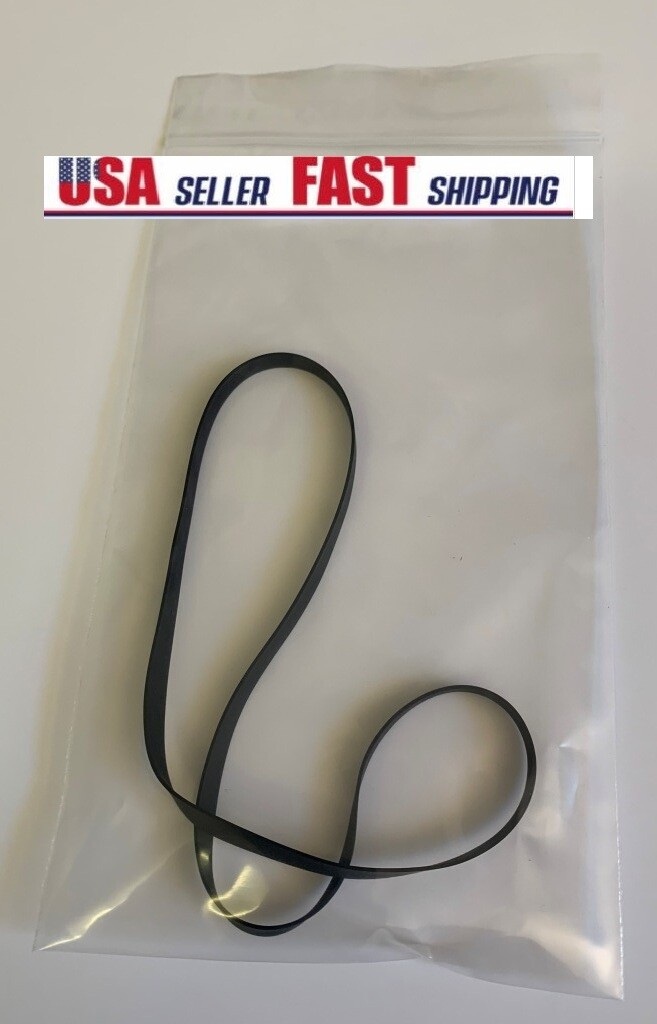


As an eBay Partner, we earn from qualifying purchases. This helps support our independent vintage technology research.
Related Models
- Sansui sax-200 (Late 1970s)
- Sansui sax-600 (Late 1970s)
- Sansui sr-222 (1973-1975)
- Sansui sr-717 (1974-1976)
- Sansui sr-2050c (1975-1977)
- Sony ps-5550 (1978-1980)
- Sony ps-lx5r (1983-1985)
- Sony ss-7220a (1970s)
- Sony ss-97 (Late 1970s (approximately 1977-1979))
- Sony ss-999 (Late 1970s (approximately 1977-1979))