Sansui SP-7500 (1979–1982)
A floor-slamming, horn-loaded giant from the tail end of the 70s that demands space, patience, and a strong back—but rewards with startling clarity and bass you can feel in your ribs.
Overview
If you’ve ever walked into a room and felt the air thicken before a note even played, you might’ve been standing too close to a pair of Sansui SP-7500s. These aren’t speakers you casually place in a living room—they’re architectural elements, nearly two feet deep and tipping the scales at over 90 pounds each when fully packed. Built in Japan between 1979 and 1982, the SP-7500 was Sansui’s no-apologies statement in the era of big, bold stereo systems, where "hi-fi" meant something you could feel as much as hear. At an original price of around $290—a serious investment back then—they weren’t cheap, but they weren’t trying to be. This was premium gear for people who wanted concert-hall scale in their den, with a 4-way driver array that throws sound like a live horn section caught in a thunderstorm.
And yes, that horn is *right there* in the mix. Owners report a soundstage that opens wide and deep, but only if you give it room—ideally more than 15 feet of listening distance. Up close, the horn dominates, sometimes to a fault, giving vocals and brass an almost theatrical presence. But step back, let the drivers breathe, and suddenly you’re not just hearing the music, you’re inside it. The bass, driven by a massive 16" woofer in a bass reflex cabinet, is shockingly authoritative for vintage gear. It’s not tight like modern sealed subs—it’s big, room-filling, and slightly loose, the kind of low end that makes floorboards hum and picture frames tremble.
Still, these aren’t magic. They’re products of their time, with all the quirks that implies. The vinyl wrap finish, typically in walnut, peels over decades of sun exposure, and the lattice grilles—while handsome—offer little protection to the delicate horn super tweeter, which is often found pushed in or damaged. Refurbishment is common, and often necessary. Capacitors dry out, connections corrode, and drivers fatigue. But when they’re working? They sound like a time machine set to 1980, cranked to eleven.
Specifications
| Manufacturer | Sansui Electric Co., Ltd. |
| Type | 4-way, 4-speaker system |
| Power Handling | 50 watts |
| Impedance | 8Ω |
| Sensitivity | 98dB |
| Woofer size | 16" (380mm cone) |
| Midrange size | 6.5" (165 mm cone) |
| Tweeter | 80 mm cone |
| Super Tweeter | horn |
| Enclosure type | bass reflex |
| Frequency response | 20 to 20,000 Hz |
| Crossover frequency | 500, 2500, 6000 Hz |
| Dimensions (W x H x D) | 750 x 420 x 380 mm |
| Weight | 43.0 kg |
| Made in | Japan |
| Color | Wood, Walnut |
| Cabinet finish | vinyl wrap |
| Grille type | lattice |
Key Features
Four-Way Driver Array with Horn Loading
The SP-7500’s most defining trait is its four-driver, four-way design, which splits the audio spectrum across specialized components. The 16" cloth-surround woofer handles the thunder, while the 6.5" midrange (also with cloth surround) delivers vocals and instruments with a smooth, slightly warm character. Above that, an 80mm cone tweeter takes over the upper mids and lower highs, but it’s the horn super tweeter that gives these speakers their signature bite. Horns are efficient—they project sound farther with less power—but they’re also unforgiving. If the recording’s bright, the SP-7500 will let you know. But in good condition, with the right placement, that horn adds a startling sense of air and presence, especially on acoustic instruments and live recordings.
Bass Reflex Cabinet with High Sensitivity
With a sensitivity rating of 98dB, the SP-7500 is easy to drive—most vintage receivers from the era can push them to room-filling levels without strain. That efficiency, combined with the bass reflex design, means deep, resonant low end even at moderate power. The ported cabinet enhances the output around the lower frequencies, giving the 16" woofer extra punch. It’s not the fastest bass you’ll ever hear, but it’s full-bodied and immersive, the kind that makes kick drums feel like they’re hitting your chest.
Build and Aesthetic
These are not subtle speakers. The tall, wide cabinet in walnut vinyl wrap gives them a stately, almost furniture-like presence. The lattice grilles add a touch of classic hi-fi elegance, but don’t be fooled—they’re more decorative than protective. The finish, while durable for its time, is prone to peeling, especially along edges and in direct sunlight. Finding a pair in truly mint condition is rare; most on the market show some wear, from small tears in the vinyl to scuffed grilles. But for restorers, that’s part of the appeal—a full refurb, with fresh caps, refoamed surrounds, and a careful touch-up, can bring these beasts back to life with both sonic and visual impact.
Historical Context
The SP-7500 arrived late in the 1970s hi-fi boom, hitting the market between 1979 and 1982, when home stereo systems were at their peak in size and ambition. This was the era of stackable components, giant speakers, and the belief that bigger meant better. Sansui, already respected for their amplifiers and tuners, used the SP-7500 to stake a claim in the high-end speaker market. Brochure materials from the time list it alongside models like the SP-1500 X, SP-2500 X, and SP-5500 X, suggesting it was positioned as a flagship or near-flagship offering. There’s no record of direct competitors or design goals, but the specs speak for themselves: this was a speaker built to impress, to fill large rooms, and to showcase the full dynamic range of vinyl at a time when many were still playing records on console stereos.
Collectibility & Value
Today, the SP-7500 trades in a narrow but passionate market. Asking prices vary widely by region and condition: $475 on US Audio Mart, €380 on Subito (as of August 2025), NOK 8,500 in Norway (November 2024). A Reverb listing from years ago asked $900 plus $200 shipping, suggesting that well-preserved, fully documented pairs can command premium prices—especially if they come with original boxes, manuals, and hookup wire, as one listing claimed.
But most pairs need work. Common issues include non-functional drivers, damaged horn tweeters (often dented from careless handling), peeling vinyl, and aging internal components. Capacitors in the crossover network are a known failure point and often require replacement during restoration. Because official service manuals and schematics are unavailable, repairs rely on owner经验 and reverse engineering. Still, the driver sizes and crossover frequencies are well-documented enough that skilled technicians can rebuild them confidently.
Buyers should approach with realistic expectations. These aren’t going to outperform a modern bookshelf speaker in midrange clarity or high-frequency detail—owners note they can be outshined in those areas by current designs. But for sheer scale, presence, and vintage character, especially with rock, jazz, or orchestral music, the SP-7500 delivers a experience that’s hard to replicate. They’re not for apartments or small rooms, and they’re not for the faint of heart. But if you’ve got the space and the stamina, they’re a roaring reminder of when hi-fi meant *big*.
eBay Listings


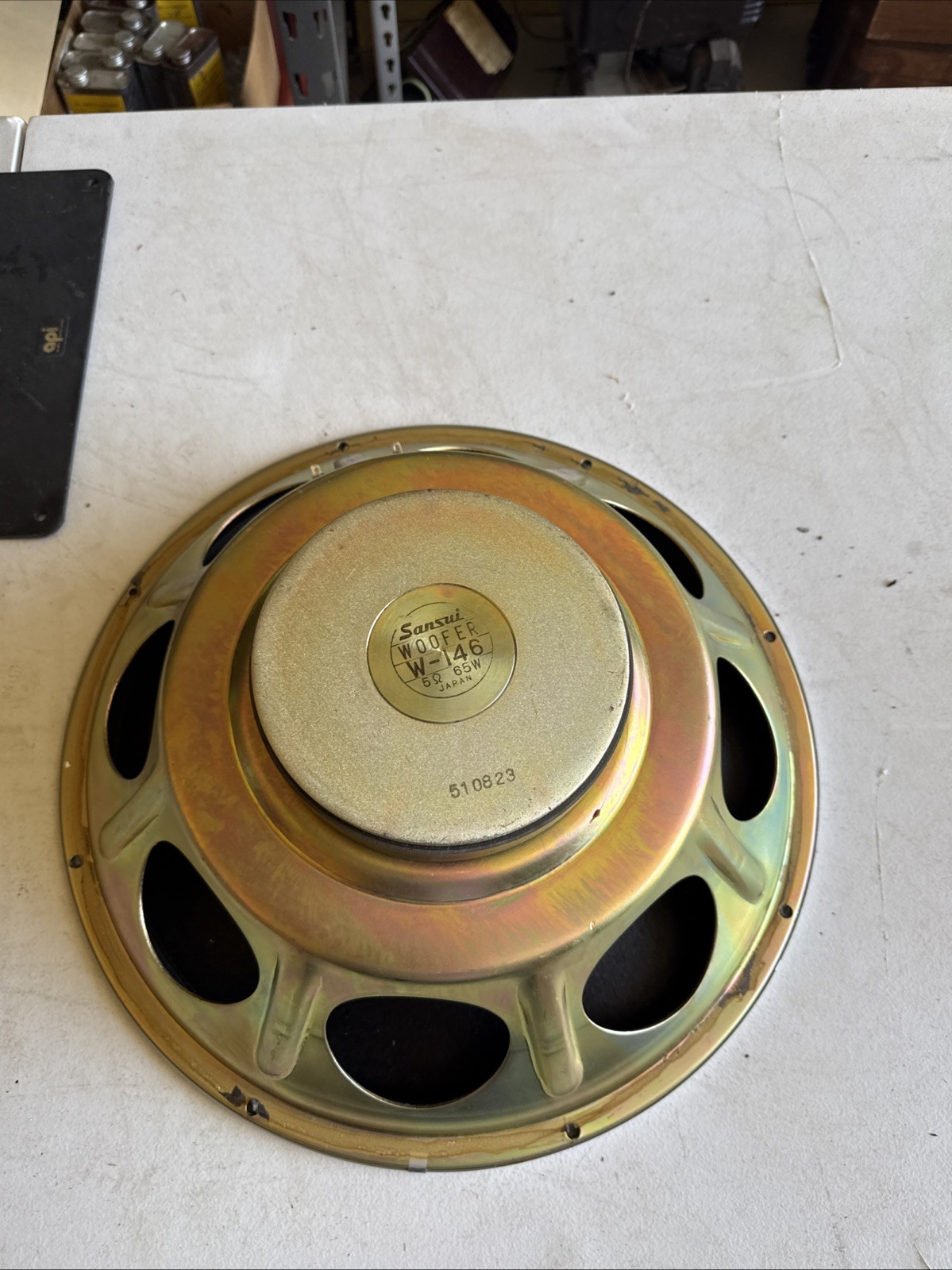
As an eBay Partner, we earn from qualifying purchases. This helps support our independent vintage technology research.
Related Models
- Sansui sax-200 (Late 1970s)
- Sansui sax-600 (Late 1970s)
- Sansui sr-222 (1973-1975)
- Sansui sr-717 (1974-1976)
- Sansui sr-2050c (1975-1977)
- Sony ps-5550 (1978-1980)
- Sony ps-lx5r (1983-1985)
- Sony ss-7220a (1970s)
- Sony ss-97 (Late 1970s (approximately 1977-1979))
- Sony ss-999 (Late 1970s (approximately 1977-1979))