Sansui Six (1973–1975)
The receiver that proved Sansui's mid-priced sweet spot could deliver the Eight's pedigree without the flagship price.
Overview
At $439.95 new, the Sansui Six occupied a fascinating position in the company's early-1970s lineup: not the flagship, but far from an entry point. This is a receiver that asks to be judged on its own merits, and owners report it delivers accordingly.
The Six produces 47 watts per channel into 8Ω, a figure that Studio Sound (April 1973, p.25) highlighted as part of Sansui's "three new bold moves" alongside the EIGHT and SEVEN — the company positioning these receivers as uniting "the outstanding characteristics of different type components" for the first time. That power rating was honest and usable, with frequency response rated at 20Hz–20kHz ±1dB and power bandwidth stretching from 15Hz–40kHz. The 47W figure wasn't bragging rights material in an era of 100W-plus monsters, but it was genuinely musical power, capable of driving most domestic speakers of the period to satisfying levels.
What makes the Six interesting decades later is how complete a package it was. THD rated at 0.3%, signal-to-noise at 60dB, damping factor of 30 — these are solid, respectable numbers that don't embarrass themselves against receivers costing considerably more. The FM section, with sensitivity rated at 1.8µV, earned particular praise. As one period reviewer put it, the Six was "a solid, good-sounding receiver with a strong FM section and enough power for most speakers." That assessment has aged well.
Key Features
All-Stage Transistor Amplifier Design
Sansui's brochure language described the Six as an "all stage transistor amplifier," and the design philosophy shows in how the sections were treated. Rather than a single compromise circuit, the Six used newly-designed power amplifier, preamplifier, and control amplifier sections — each given its own attention. This wasn't marketing fluff; the separation of functions within a single chassis was a genuine engineering choice that paid dividends in measured performance and, more importantly, in how the receiver sounded with real music.
Distortion-Canceling Circuit with Darlington Outputs
The power amplifier section incorporated a distortion-canceling circuit alongside a 3-stage Darlington power transistor configuration. This was Sansui applying lessons from their separates line to an integrated receiver, and it shows in the listening. The amp is direct-coupled, with a diode in the circuit path designed to prevent thermal runaway — a thoughtful touch that addressed one of the real failure modes of early solid-state designs.
Direct-Coupled Output Stage
The direct-coupled design wasn't just a technical checkbox. Combined with the newly-designed power transformer and heat sink, it gave the Six the kind of stable, controlled bass response that many receivers of this vintage struggle with. Owners report the amplifier section holds up well even with speakers that dip below the nominal 8Ω load, and the 4–16Ω speaker impedance rating gives some flexibility in partner selection.
Two-Stage Tone Control Amplifier
The preamp section used a 2-stage tone control amplifier, which gave the bass and treble controls more authority than the single-stage designs found in lesser receivers. This matters in real-world use: the controls actually do something musical rather than merely tilting the response in ways that degrade the signal. The phono stage, with input sensitivity of 2.5mV for MM cartridges, earned consistent praise from owners — "the phono stage is very good" being a recurring sentiment.
FET Front End with Ceramic IF Filters
The FM tuner section was built around a FET RF amplifier in the front end, feeding a 4-gang tuning capacitor and ceramic filters in the IF section. This combination delivered the 1.8µV sensitivity that made the Six a strong FM performer. In practice, this means the tuner pulls in stations that weaker front ends miss, and the ceramic filters give good selectivity when you're trying to separate closely-spaced stations.
Rugged Power Supply
Sansui specified a new rugged SCR-type 3-leg bridge diode for the power supply — a component choice that speaks to reliability. The receiver draws 300 watts at full tilt, and the power supply was designed to handle that draw without strain. Two switched AC outlets on the back let you build a simple system without a separate power strip, a convenience feature that's genuinely useful.
A/B Speaker Switching
The Six includes A/B speaker switching, allowing connection of two pairs of speakers with independent selection. This was a practical feature for the era, letting owners compare speakers or drive different rooms from the same receiver.
Historical Context
The Six arrived at a specific moment in Sansui's evolution. The company had released the Eight in 1971, and the Six was essentially the next model down from that flagship — positioned between the Eight above and the 2000A below in the lineup. Sansui's own marketing framed the Six as a "step-up" from the 2000A, delivering 50% more power than that model. It was released in 1973, riding the wave of Sansui's reputation for building serious audio equipment at a time when Japanese receivers were fundamentally reshaping the hi-fi market.
The timing mattered. This was the period when the receiver became the centerpiece of the typical American stereo system, and Sansui was competing fiercely with other Japanese manufacturers for that living-room real estate. The Six was Sansui's answer to the question of what you got when you stepped up from entry-level but weren't ready for flagship pricing — and it was a compelling answer.
Collectibility & Value
The Sansui Six has developed a loyal following among vintage audio enthusiasts, and current market prices reflect that — expect to pay approximately $200–$400 depending on condition. That's a remarkably accessible price point for a receiver of this quality, particularly one with a strong FM section and a phono stage that owners consistently praise.
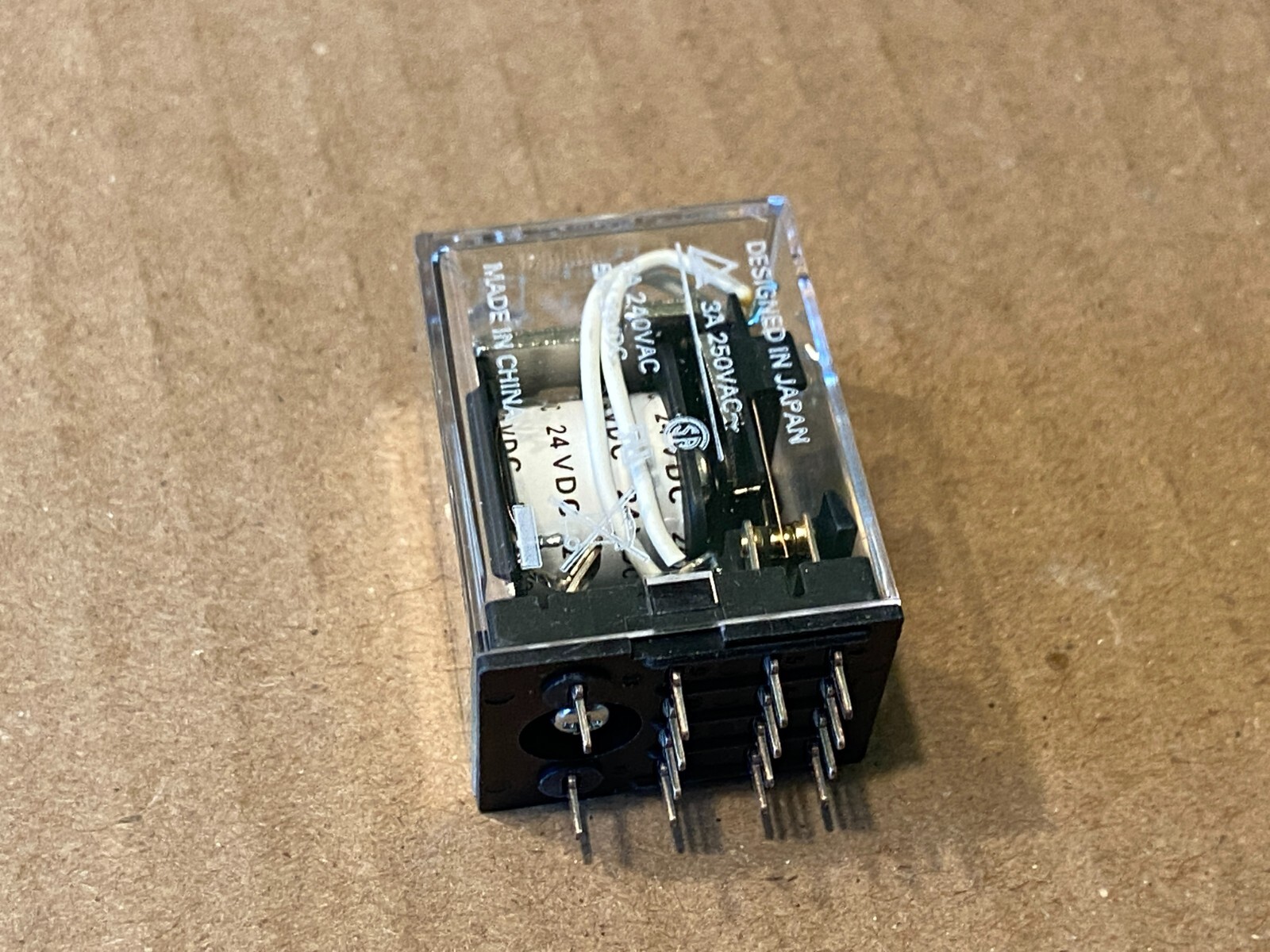
The most commonly reported issue is the protection relay, which owners describe as "a bit finicky." This is a known quirk rather than a dealbreaker — the relay can be cleaned or replaced without excessive difficulty, and it shouldn't deter a buyer if the rest of the unit is sound. Beyond that, the Six has a reputation for reliability, with no widespread reports of the kind of catastrophic failures that plague some contemporaries.
Owner feedback consistently lands in the same territory: "Great receiver — the phono stage is very good, and the FM sounds great." Another owner sums it up as "not quite as powerful as the Eight, but a very nice receiver." That's the Six in a nutshell — a receiver that doesn't try to be the biggest or the boldest, but delivers a complete, musical package at a price that makes it one of the better values in vintage Sansui today.
For the buyer looking at a Six, the advice is straightforward: check the protection relay, make sure the FM section pulls in stations cleanly, and verify that both channels are working at full output. A well-maintained Six will reward you with years of reliable service — and at $200–$400, it's one of the smarter purchases in vintage audio.
eBay Listings


As an eBay Partner, we earn from qualifying purchases. This helps support our independent vintage technology research.