Sansui SC-3100
Overview
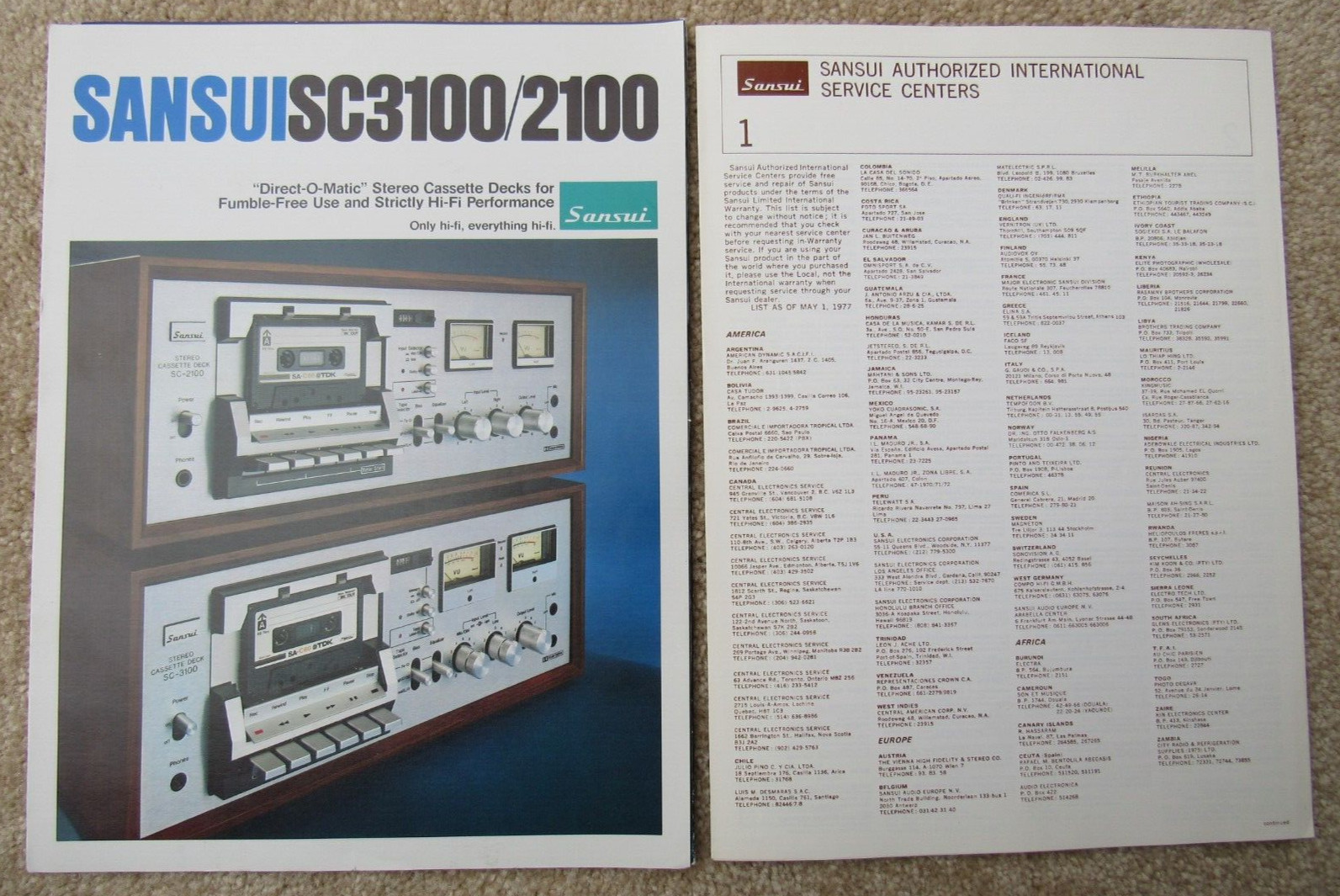
When cassette decks weren’t just for mixtapes but serious high-fidelity listening, Sansui stood at the forefront—and the SC-3100 was one of their statement pieces. Built in the late 1970s, this deck arrived when analog engineering was peaking, and every detail mattered. It wasn’t just a tape player; it was a precision instrument, designed for audiophiles who demanded studio-grade performance from their living rooms.
Specifications
| Specification | Value |
| Year of Production | Late 1970s (approximately 1977-1979) |
| Power Specifications | N/A (Cassette deck, not an amplifier) |
| Impedance | N/A (Cassette deck, not an amplifier) |
| Sensitivity | N/A (Cassette deck, not an amplifier) |
| Current Market Value | $150-$300 depending on condition and functionality |
| Collectibility Rating | 6/10 |
Key Features and Technologies
The SC-3100 wasn’t built to cut corners. Its 3-head design separates record, playback, and erase duties for maximum clarity and minimal crosstalk. Dolby B noise reduction tames tape hiss without dulling the highs, while peak reading meters give real-time feedback for precise level calibration. Solenoid-driven transport controls deliver that satisfying, mechanical precision tape lovers crave. It handles metal tapes with ease, and onboard bias and EQ adjustments let you fine-tune for any tape formulation. Auto-stop protection keeps your tapes—and your machine—safe at the end of a reel.
Historical Significance
During the golden age of cassette audio, high-end decks became battlegrounds for engineering prestige. The SC-3100 placed Sansui firmly in the elite tier, showcasing their mastery of tape transport dynamics and signal path refinement. It shared DNA with other flagship models of the era, embodying a time when manufacturers pushed the limits of what compact cassette could achieve—long before digital made analog a niche pursuit.
Sound Signature
Smooth, articulate, and remarkably quiet for its format. The SC-3100 delivers a balanced frequency response with tight bass, clear mids, and extended highs. Wow and flutter are impressively low, contributing to a stable, immersive soundstage. Dynamic range is generous, especially when using metal tapes and Dolby B. Whether you're replaying vintage recordings or making your own dubs, the fidelity feels startlingly alive—proof that cassettes, in the right hands, could rival other formats.
Common Issues and Maintenance
Like any vintage machine, the SC-3100 demands care. Belts dry out and crack over time, and idler tires often harden, leading to speed instability. Potentiometers can develop crackles—especially in volume and balance controls—so periodic cleaning is wise. Head alignment can drift, affecting stereo imaging and high-frequency response, so a professional calibration goes a long way. And while the deck itself doesn’t amplify, its internal power supply sections may suffer from aging capacitors, particularly if the unit has been powered after decades of dormancy.
Conclusion
The Sansui SC-3100 is more than a relic—it’s a working testament to analog craftsmanship. With its 3-head configuration and metal tape support, it remains a favorite among cassette purists and collectors hunting for authentic 1970s high-fi performance. If you find one in good condition, it’s not just a purchase. It’s a direct line to the golden era of tape.
Note: This page was automatically generated from existing data. Additional content and details may be added in the future.
eBay Listings


As an eBay Partner, we earn from qualifying purchases. This helps support our independent vintage technology research.
Related Models
- Sansui SC-5300 (1970)
- Sansui SC-2100 (1979)
- Sansui SC-2300 (1977)
- Sony TC-2050SD (1978)
- Aiwa AD-F990 (1993)
- Kenwood KX-3060 (1982)
- Sony TC-2130A (1974)
- Sony TC-2220 (1972)
- Sony TC-FX6 (1982)
- Sony TC-K96R (1986)