Sansui SC-2100 (1977–1979)
The SC-2100 weighs 9.5 kg. It is solid, serious, and built to last, like most late-1970s Japanese gear.
Overview
The Sansui SC-2100 is a stereo cassette tape deck made in Japan by Sansui Electric Co., Ltd. between 1977 and 1979. It belongs to Sansui's component audio lineup from the golden era of high-fidelity cassette reproduction. Owners report a no-nonsense front panel with tactile controls and a prominent fluorescent display. Function comes ahead of flash. It was built to give consistent, high-quality tape performance with minimal user intervention. It sits in the upper tier of mid-range decks from the period, but it doesn't reach the level of flagship 3-head models from Nakamichi or Revox.
Specifications
| Manufacturer | Sansui Electric Co., Ltd. |
| Product type | Stereo Cassette Tape Deck |
| Year of Production | 1977–1979 |
| Made in | Japan |
| Weight | 9.5 kg |
| Dimensions (W×H×D) | 456 × 198 × 322 mm |
| Power consumption | 14.5 W |
| Original price | Approx. $330 USD / 1,000 DM |
| Motors | 2 |
| Heads | 2 |
| Track System | 4/2 |
| Tape Speed | 4.8 cm/s |
| Frequency response | 30–16,000 Hz |
| Wow and Flutter | 0.08% |
| Signal-to-Noise Ratio | 58 dB |
| Inputs | MIC × 2 |
| Outputs | LINE OUT, HEADPHONE |
Key Features
3-Digit Fluorescent Peak Level Meter
The SC-2100 has a bright, easy-to-read 3-digit fluorescent peak level meter. That is a notable step up from the needle VU meters on many contemporary decks. It gives accurate visual feedback during recording, so users can set input levels precisely and avoid tape saturation. Collectors note that the display stays legible in low light, but the fluorescent tubes can dim or fail over decades of use, and replacements are increasingly rare.
Memory Rewind
Memory rewind was a premium convenience feature in the late 1970s, and the SC-2100 includes it as standard. When engaged, the deck remembers the playback position and returns to it after rewinding or fast-forwarding. That helps with tape editing and repeated listening, especially for musicians or audiophiles analyzing recordings. The mechanism is solenoid-driven and generally reliable, though long-term operation may require cleaning or lubrication of internal linkages.
Tape Selector
A dedicated tape selector switch lets the user choose between normal, chrome, or metal tape formulations, which sets the proper bias and equalization for recording. The SC-2100 has no automatic tape sensing. The manual selector gives experienced users full control over calibration. Owners report that misalignment of this switch can lead to poor high-frequency response, so it needs periodic maintenance.
Separate Left and Right Recording Level Controls
Many cassette decks use a single dual-gang potentiometer for both channels. The SC-2100 instead has independent left and right recording level controls. This allows precise channel balancing, which helps when transferring stereo sources with uneven output. Over time these potentiometers may develop scratchiness, but the individual design makes troubleshooting and replacement more straightforward than with integrated units.
Collectibility & Value
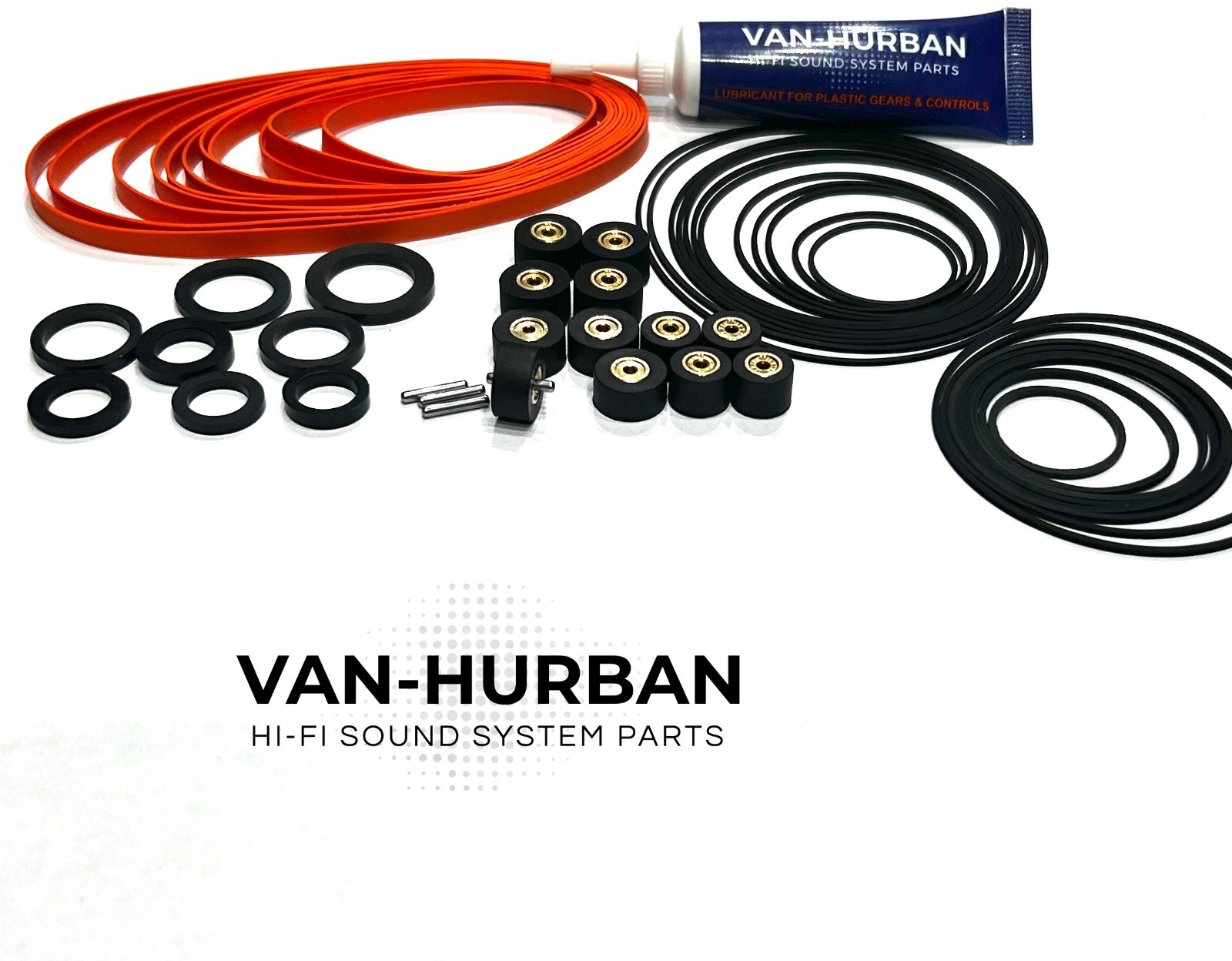
The Sansui SC-2100 is not widely documented in collector circles, and no current market value data is available. Accessories suggest niche demand: a pinch roller replacement kit is commercially available, and 3D-printed replica rack handles have been produced, which points to active restoration. Original belts are prone to disintegration - a common failure noted across similar Sansui models - and sourcing correct replacements is essential for reliable operation. The original dustcover is described as “hard to find,” which suggests scarcity and potential value for complete units. It is not a blue-chip collectible, but it appeals to enthusiasts restoring period-correct Sansui systems or seeking a serviceable cassette transport.
eBay Listings



As an eBay Partner, we earn from qualifying purchases. This helps support our independent vintage technology research.
Related Models
- Sansui SC 1100
- Sansui SC 1110
- Sansui SC 2110
- Sansui SC-2300 (1977)
- Sansui SC 3110
- Akai CS-M40R (1983)
- Akai GX-7 (1970)
- Akai GX-8 (1975)
- Akai GX-F44R (1979)
- Akai GX-F71 (1982)