Sansui D-M7 (1982–1983)
A compact, no-frills cassette deck that punches above its weight—especially if you can find one with fresh belts and a clean head.
Overview
You know that moment when you fire up a forgotten cassette deck and the VU LED meters flicker to life like embers rekindled? That’s the Sansui D-M7 in a nutshell—unassuming, analog, and quietly capable. Built during the last gasp of cassette’s reign, this little deck wasn’t trying to compete with the high-end beasts of the early '80s. Instead, it carved out a niche as a reliable, space-saving workhorse for folks who wanted decent sound without breaking the bank. Owners remember it fondly, one calling it a “wonderful cassette deck” despite its modest specs and price point. And that’s the charm: it doesn’t pretend to be something it’s not.
Measuring in at around 13 to 14 inches wide, the D-M7 fits neatly into smaller setups where a full 17-inch component would feel like overkill. It’s part of a naming family that suggests a coordinated system—owners have noted the T-M7 tuner, A-M7 amplifier, and P-M7 turntable as potential siblings—though whether they were marketed as a matched set remains unclear. What *is* clear is that the D-M7 was designed to integrate smoothly into a Sansui-based system of the era, offering metal tape capability and Dolby B noise reduction to keep things sounding clean, even on longer recordings.
It wasn’t a luxury item. One user put it plainly: “It wasn’t expensive and it isn’t that big, so it can fit in limited spaces.” That practicality still resonates today, especially for collectors trying to recreate a period-correct setup without dedicating an entire shelf to one oversized component. And while it’s been called “not very high end,” that’s not a death sentence—it just means you’re getting honest, functional engineering, not audiophile theater.
Specifications
| Manufacturer | Sansui |
| Product type | Stereo Cassette Deck |
| Production years | 1982-83 |
| Tape Type | type I, CrO2, Metal |
| Noise Reduction | Dolby B |
| Frequency Response | 20Hz to 17kHz (Metal tape) |
| Signal to Noise Ratio | 68dB (dolby B) |
| Wow and Flutter | 0.05% |
| Input | 145mV (line) |
| Output | 0.25V (line) |
| Transport | electronically controlled DC |
Key Features
Dolby B & Metal Tape Support
The inclusion of Dolby B noise reduction wasn’t just a checkbox—it was essential for making cassette recordings listenable, especially on the noisier Type I tapes. Paired with metal tape capability, the D-M7 could handle the full spectrum of cassette media available in the early '80s, from budget ferric to high-coercivity metal formulations. That 20Hz–17kHz frequency response, specified for metal tape, suggests it was tuned to take advantage of the format’s extended range, even if it didn’t quite hit the lofty standards of the top-tier decks.
Electronically Controlled DC Transport
Gone are the clunky mechanical linkages of earlier designs. The D-M7 uses an electronically controlled DC motor system, which means smoother operation, more consistent tape speed, and less wear over time—assuming the electronics hold up. This was a step up from purely mechanical transports, offering better speed stability than many budget decks of the time, as evidenced by the impressively low 0.05% wow and flutter rating.
Compact Design with Visual Feedback
At 13–14 inches wide, it’s a space-saver, but Sansui didn’t skimp on the satisfying details. The VU LED meters give a bright, responsive visual pulse with the music—pure analog theater. And while the exact layout isn’t confirmed by a manual, a user report notes that an “almost similar” model includes a stereo microphone input with its own volume control, suggesting the D-M7 might offer basic recording flexibility beyond just line-level sources.
Collectibility & Value
The D-M7 isn’t a blue-chip collectible, and that’s fine. It was never meant to be. But for those building out a complete Sansui system or restoring a period-correct setup, it’s a functional and affordable piece. One owner’s advice stands out: “It is worthwhile to get it serviced, change belts etc. If you are lucky you may get replacement pitch roller and head too!” That’s the reality of any deck this age—mechanical wear is the enemy, and fresh belts are non-negotiable. A replacement belt kit (containing one flat and one square belt) is available for 290 Czk, which helps keep restoration costs manageable. Just don’t expect miracles: it’s “not very high end,” as one user put it, but for what it is, it delivers solid performance in a compact, unobtrusive package.
eBay Listings
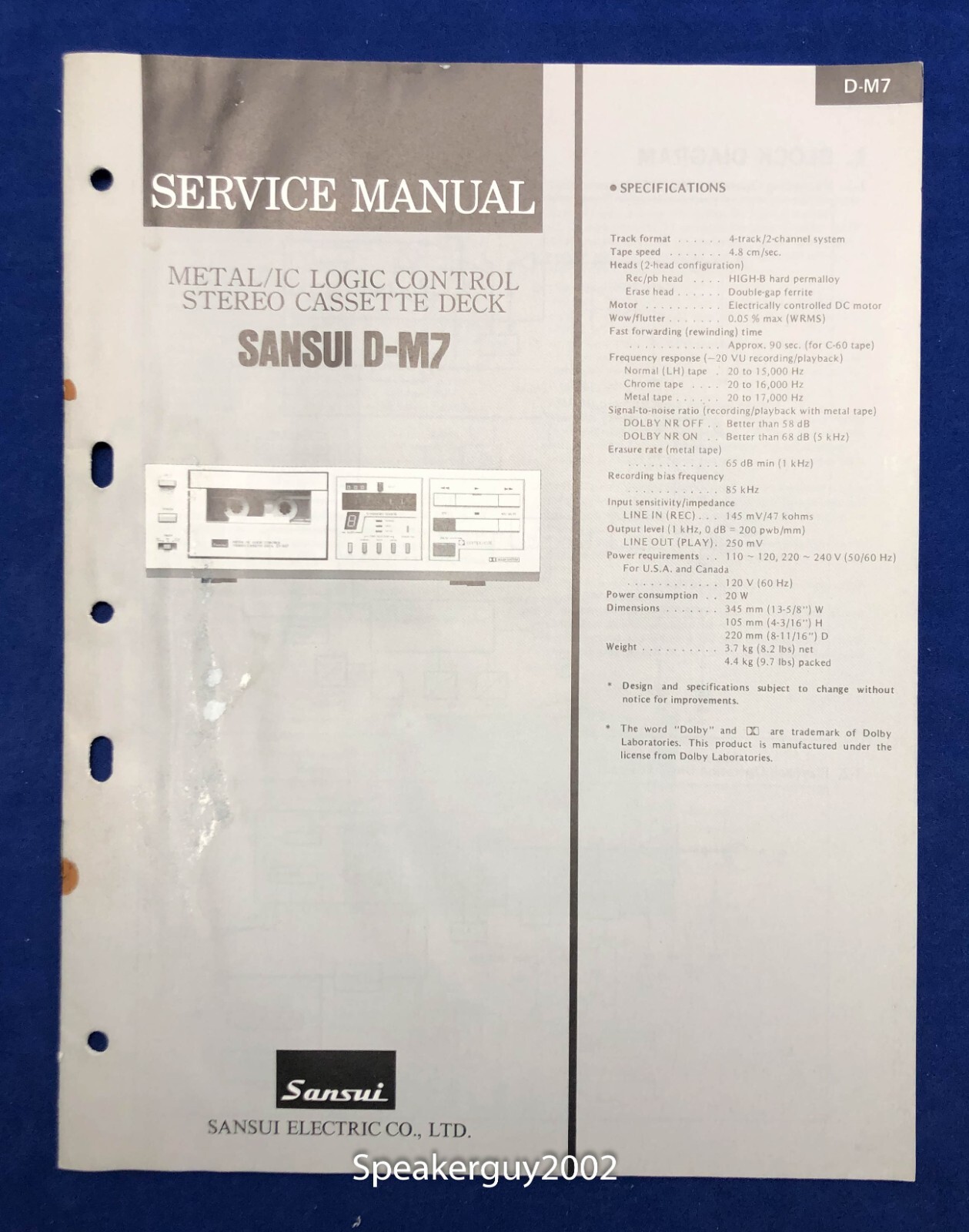

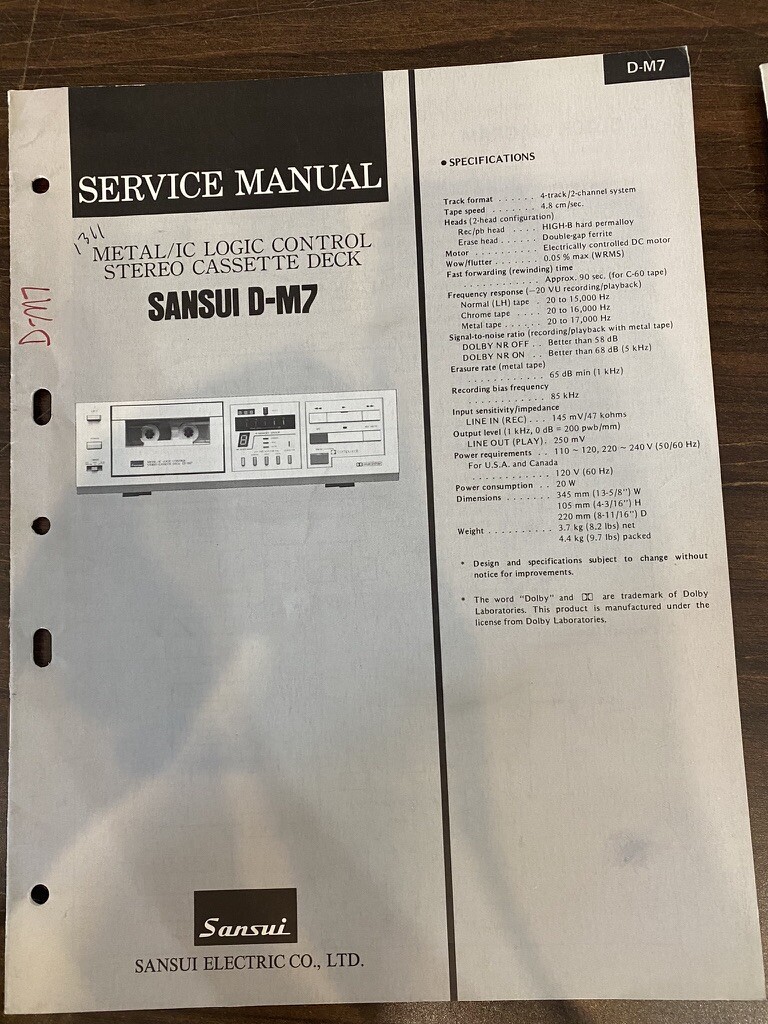
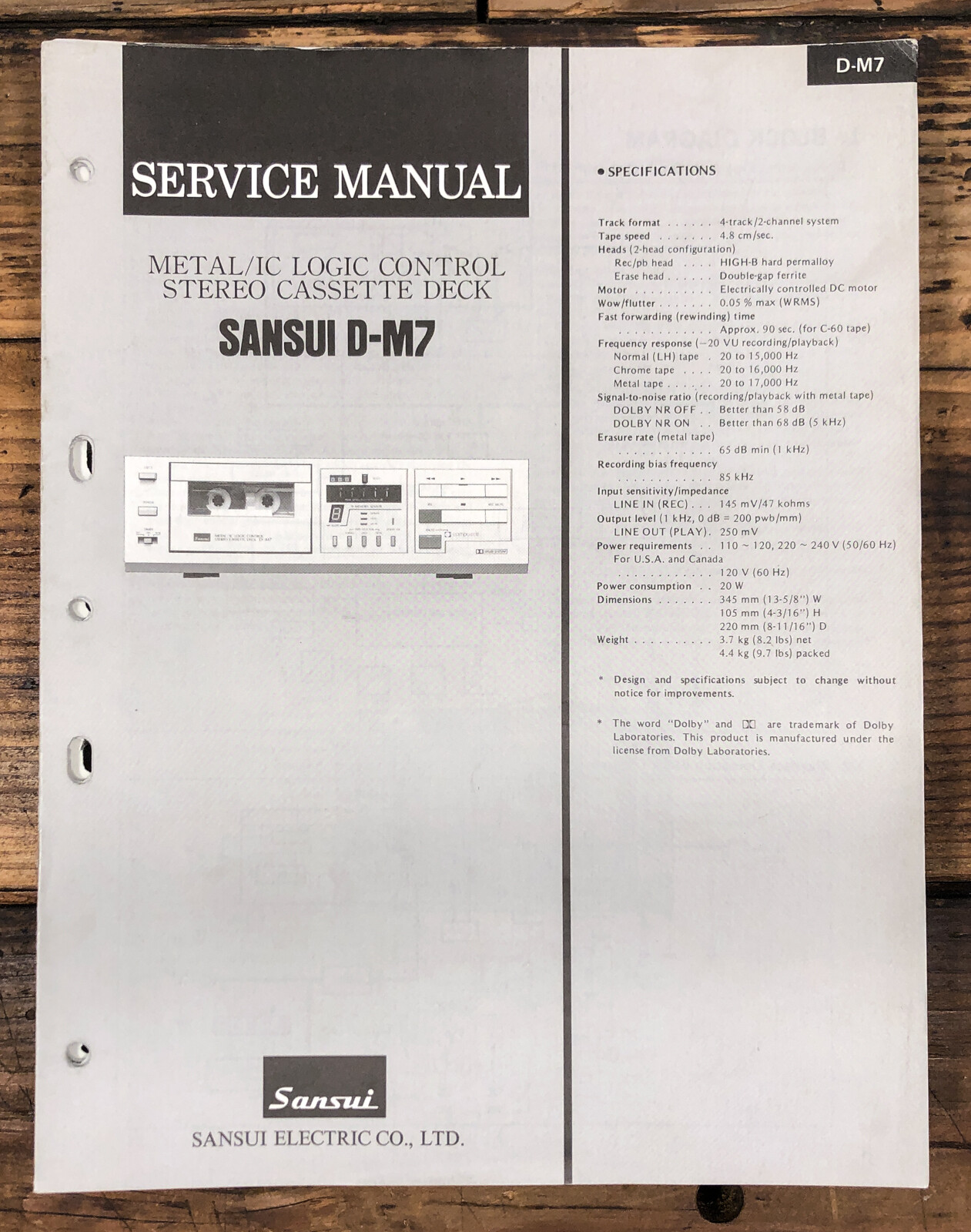
As an eBay Partner, we earn from qualifying purchases. This helps support our independent vintage technology research.
Related Models
- Sansui sax-200 (Late 1970s)
- Sansui sax-600 (Late 1970s)
- Sansui sr-222 (1973-1975)
- Sansui sr-717 (1974-1976)
- Sansui sr-2050c (1975-1977)
- Sony ps-5550 (1978-1980)
- Sony ps-lx5r (1983-1985)
- Sony ss-7220a (1970s)
- Sony ss-97 (Late 1970s (approximately 1977-1979))
- Sony ss-999 (Late 1970s (approximately 1977-1979))