Realistic STA-65B: The RadioShack Workhorse of 1970s Hi-Fi
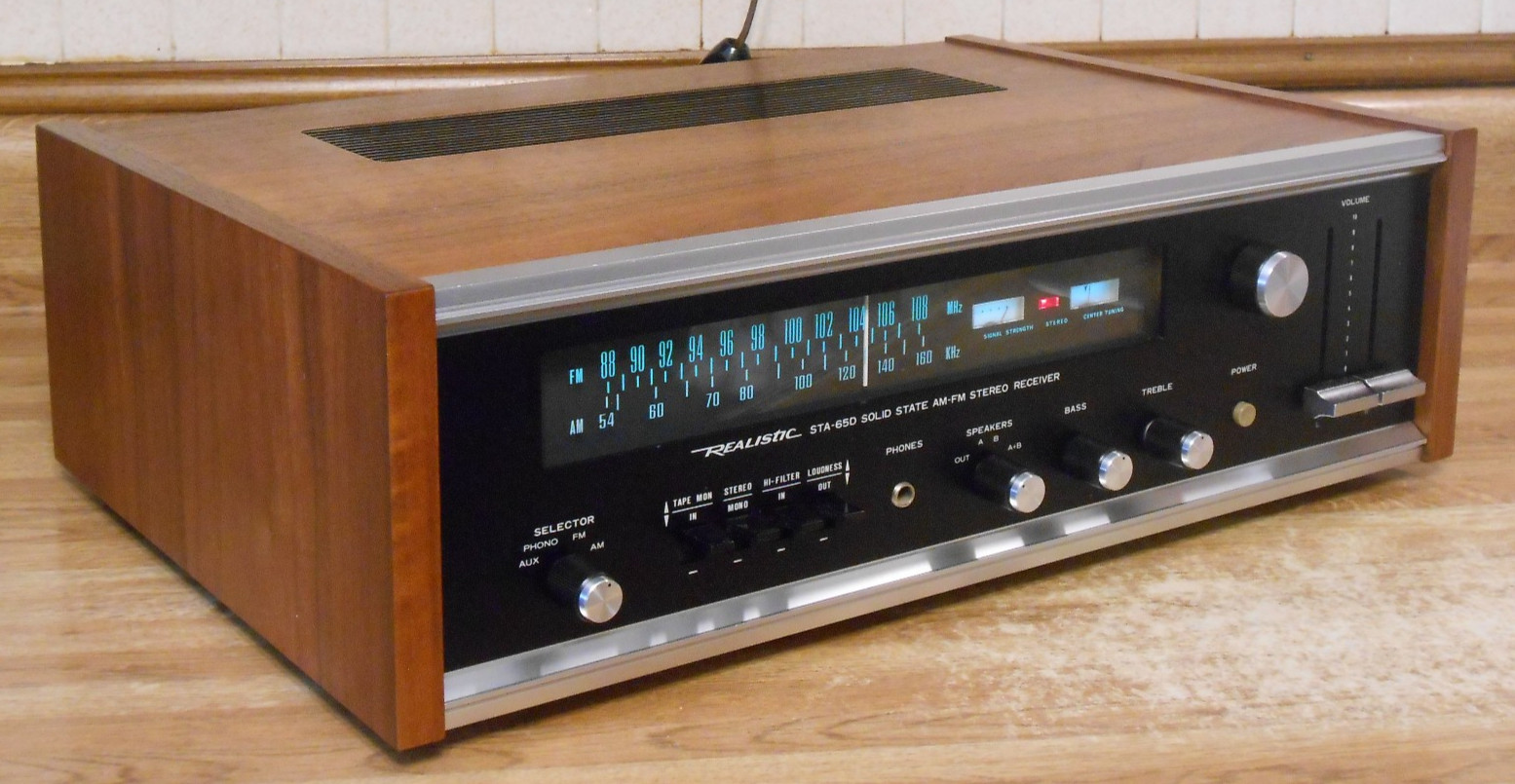
In the golden era of analog audio, when home stereo systems were becoming household staples, RadioShack stood as a surprising but trusted gateway into high-fidelity sound. Under its house brand Realistic, the company offered a wide range of audio gear that balanced affordability with respectable performance. Among these offerings, the Realistic STA-65B emerged as a standout model — a mid-tier stereo receiver that brought serious power and functionality to budget-conscious audiophiles and casual listeners alike.
Released in 1975, the STA-65B was part of a broader wave of integrated receivers that combined AM/FM tuner, preamplifier, and power amplifier sections into a single chassis. At a time when separates were still the domain of serious enthusiasts, integrated receivers like the STA-65B made high-quality audio accessible to the average consumer. With its 65 watts per channel into 8 ohms, the STA-65B was no slouch in an age when many competitors offered half that power — making it a favorite for driving popular bookshelf and floor-standing speakers of the era.
Though not as revered today as some of its Japanese counterparts from Pioneer, Sansui, or Sony, the STA-65B holds a quiet legacy as a reliable, no-frills performer that helped bring stereo sound into American living rooms through RadioShack’s vast retail network.
Technical Specifications
The STA-65B was engineered to deliver solid performance across all core audio functions. While it may not have featured the exotic components or cutting-edge circuitry of high-end models, its specifications reflect a well-balanced design for its time and price point.
| Specification | Detail |
| Model | Realistic STA-65B |
| Manufacturer | Tandy Corporation (sold via RadioShack) |
| Year Introduced | 1975 |
| Category | Integrated Stereo Receiver |
| Power Output | 65 watts per channel (RMS, 8Ω) |
| Total Harmonic Distortion | <0.8% (at full power) |
| Frequency Response | 20Hz – 20kHz (±1dB) |
| Input Sensitivity | 3.5mV (Phono), 180mV (Line) |
| Output Level | 1V (Preamp Out) |
| Signal-to-Noise Ratio | 70dB (Phono), 80dB (Line) |
| Tuner Bands | AM, FM |
| FM Tuning Range | 88–108 MHz |
| Speaker Impedance | 8Ω minimum |
| Inputs | Phono (MM), Tape, Aux, Tuner |
| Outputs | Tape Out, Preamp Out, Speaker A/B |
| Dimensions | 17" W × 6" H × 14" D |
| Weight | 24 lbs (10.9 kg) |
| Power Requirement | 120V AC, 60Hz, 300 watts |
Notably, the STA-65B included a dual speaker selector (A/B), allowing users to switch between two sets of speakers — a feature uncommon in budget receivers of the time. It also featured a tape monitor function, enabling easy integration with cassette decks, which were rapidly gaining popularity in the mid-1970s.
Sound Characteristics and Performance
The STA-65B’s sonic signature is best described as clean, balanced, and dynamic for its class. While it lacks the lush warmth of some tube-influenced designs or the hyper-detailed presentation of later solid-state models, it delivers a faithful reproduction of the source material with commendable clarity.
The 65WPC output provides ample headroom for most 8-ohm speakers, including classics like the AR-3, Advent 300, or KLH Model Eight. It handles bass with authority — a notable achievement for a mid-tier receiver — and the midrange is clear and present, making vocals and acoustic instruments sound natural. High frequencies are extended without harshness, though some listeners may find them slightly rolled off compared to higher-end contemporaries.
The phono stage is designed for moving magnet (MM) cartridges, which were standard at the time. While not as quiet or detailed as dedicated phono preamps, it performs admirably with cartridges like the Shure M97xE or Audio-Technica AT1001. The FM tuner, while not matching the sensitivity of high-end units, delivers solid reception with decent stereo separation and minimal drift.
Notable Features and Innovations
What made the STA-65B stand out in RadioShack’s lineup was its combination of power, features, and reliability at a competitive price. Key features include:
- High power output for its class – 65WPC was impressive in 1975, especially from a non-Japanese brand.
- Dual speaker switching – A practical feature for multi-room listening.
- Tape monitoring and through-connection – Allowed for easy recording and playback from cassette decks.
- Solid build quality – Steel chassis, quality potentiometers, and durable input selectors.
- User-friendly layout – Clearly labeled controls and intuitive operation, ideal for novice users.
Unlike many budget receivers that cut corners on power supply design, the STA-65B used a robust transformer and capacitor bank to support its output, contributing to its stable performance under load.
Common Issues and Maintenance
Like any vintage electronics from the 1970s, the Realistic STA-65B can suffer from age-related wear. However, it is generally considered reliable and serviceable, thanks to its straightforward solid-state design and widespread availability of replacement parts.
Common issues include:
- Capacitor degradation – Electrolytic capacitors in the power supply and audio path may dry out, leading to hum, reduced output, or channel imbalance. Replacing these (recapping) is often the first step in restoration.
- Dirty controls – Pots and switches can become noisy over time. Cleaning with contact cleaner usually resolves crackling sounds.
- Tuner alignment drift – The FM section may require realignment for optimal reception.
- Fuse issues – The main fuse can blow if the unit is overloaded or if capacitors short. Always check and replace with the correct rating.
Because the STA-65B used common transistors and op-amps (many of which were industry-standard types), replacements are readily available. Its service manual, while not as widely circulated as those for Pioneer or Sony, can still be found in vintage audio archives and enthusiast forums.
Current Market Value and Collectibility
The Realistic STA-65B is not a high-value collector’s item, but it holds steady appeal among vintage audio hobbyists, especially those restoring period-correct systems or seeking affordable entry points into analog sound.
As of 2024, a working STA-65B typically sells for $75–$150, depending on condition, cosmetics, and whether it has been serviced. Units with original packaging, manuals, or matching-number components may fetch slightly more from nostalgic collectors.
Its value lies not in rarity, but in functionality and nostalgia. For under $100, a recapped STA-65B can serve as the heart of a vintage setup, driving classic speakers with authentic 1970s character. It’s also popular in DIY circles for repurposing into custom audio projects.
Conclusion and Legacy
The Realistic STA-65B may not have the name recognition of a Pioneer SX-1980 or a Marantz 2270, but it represents something equally important: democratized high-fidelity audio. Sold through thousands of RadioShack stores across America, it brought powerful, feature-rich stereo sound to middle-class homes at a time when such technology was still considered a luxury.
Built with care, designed for durability, and capable of delivering engaging sound, the STA-65B exemplifies the strength of private-label audio during the 1970s. While overshadowed by flashier imports, it remains a testament to the idea that great sound doesn’t have to come from a famous brand.
Today, the STA-65B is a quiet gem for vintage audio enthusiasts — a reliable, powerful, and affordable gateway into the warm, analog world of 1970s hi-fi. Whether you're building a retro setup or just curious about the roots of home audio, the Realistic STA-65B deserves a spot on your shelf — and a spin on your turntable.
eBay Listings


As an eBay Partner, we earn from qualifying purchases. This helps support our independent vintage technology research.
Related Models
- Realistic STA-2250 (1975)
- Realistic STA-2290 (1977)
- Realistic STA-720 (1975)
- Realistic TR-169 (1975)
- Realistic STA-2080 (1978)
- Pioneer QX-949A (1978)
- Pioneer SX-2000 (1978)
- Pioneer SX-2500 (1978)
- Marantz SR-2000 (1999–2001)
- Onkyo TX-1500MKII (1975)