Realistic STA-2280: The RadioShack Powerhouse of the Late 1970s
In the late 1970s, when high-fidelity audio was transitioning from tube warmth to solid-state precision, RadioShack’s house brand, Realistic, made a bold statement with the STA-2280. Marketed under the Realistic name, this receiver was one of the most powerful and technically advanced models the company ever offered. Positioned as a premium product in RadioShack’s audio lineup, the STA-2280 aimed to compete with better-known brands like Pioneer, Sony, and Sansui—offering audiophiles a high-performance receiver at a more accessible price point.
The STA-2280 emerged during a golden era for stereo receivers. The late '70s saw a surge in demand for all-in-one audio solutions that combined AM/FM tuners, preamplifiers, and power amplifiers in a single chassis. The STA-2280 stood out not just for its impressive 100 watts per channel output, but also for its comprehensive feature set and solid build quality—unusual for a brand typically associated with budget electronics.
Technical Specifications
| Specification | Detail |
| Model | Realistic STA-2280 |
| Year Introduced | 1979 |
| Manufacturer | Tandy Corporation (via Realistic) |
| Category | Stereo Receiver |
| Power Output | 100W per channel (8Ω, RMS, both channels driven) |
| Total Harmonic Distortion | <0.1% (at rated power) |
| Frequency Response | 20Hz – 20kHz (±1dB) |
| Input Sensitivity | 3.5mV (MM), 180mV (Line) |
| Output Impedance | 8Ω minimum recommended |
| Signal-to-Noise Ratio | >80dB (A-weighted) |
| Tuner Bands | AM, FM |
| FM Tuning Range | 87.5 – 108 MHz |
| Speaker Outputs | A/B, Bi-wire capable |
| Inputs | Phono (MM), Tape 1, Tape 2, Aux, Tuner |
| Outputs | Tape 1, Tape 2, Preamp Out |
| Dimensions | 17" W × 6" H × 15" D (approx.) |
| Weight | 28 lbs (12.7 kg) |
| Power Requirement | 120V AC, 60Hz, 450W |
Sound Characteristics and Performance
The Realistic STA-2280 was engineered to deliver a dynamic and balanced sound signature. With its 100WPC RMS output, it could drive a wide range of speakers, including more demanding floor-standing models of the era. The amplifier section used discrete transistor circuitry (not integrated circuits), contributing to a clean, punchy sound with tight bass and clear midrange.
Many users report that the STA-2280 has a slightly warm and musical tonal balance, likely due to careful component selection and circuit design. The FM tuner, while not quite on par with high-end separates, performed admirably for its time, offering good sensitivity and stereo separation. The AM section was also robust, benefiting from a built-in ferrite bar antenna and effective filtering.
The phono preamp was designed for moving magnet (MM) cartridges, making it compatible with most turntables of the late '70s and early '80s. While it lacks the ultra-low noise of some dedicated phono stages, it delivers a satisfying vinyl experience with minimal hum or hiss when properly grounded.
Notable Features and Innovations
What set the STA-2280 apart from other budget-friendly receivers was its feature-rich design and high power rating—a rare combination in the Realistic lineup.
- Dual Speaker Outputs (A/B): Allowed users to switch between two sets of speakers or run them simultaneously, ideal for multi-room setups.
- Bi-Wiring Capability: A forward-thinking feature for the time, enabling improved speaker cable management and potential sonic benefits.
- Tape Monitor Function: Let users route any input through the tape record outputs, useful for recording from external sources.
- Loudness Compensation: A bass and treble boost at lower volumes to maintain perceived fullness—common in the era, though often overused.
- Direct Amp Mode: Bypassed tone and loudness controls for a purer signal path.
- Dual-Level Tuning Meter: Provided visual feedback for both AM and FM tuning, enhancing precision.
- Large VU Meters: The STA-2280 featured prominent analog VU meters that not only looked impressive but also helped users monitor output levels and balance.
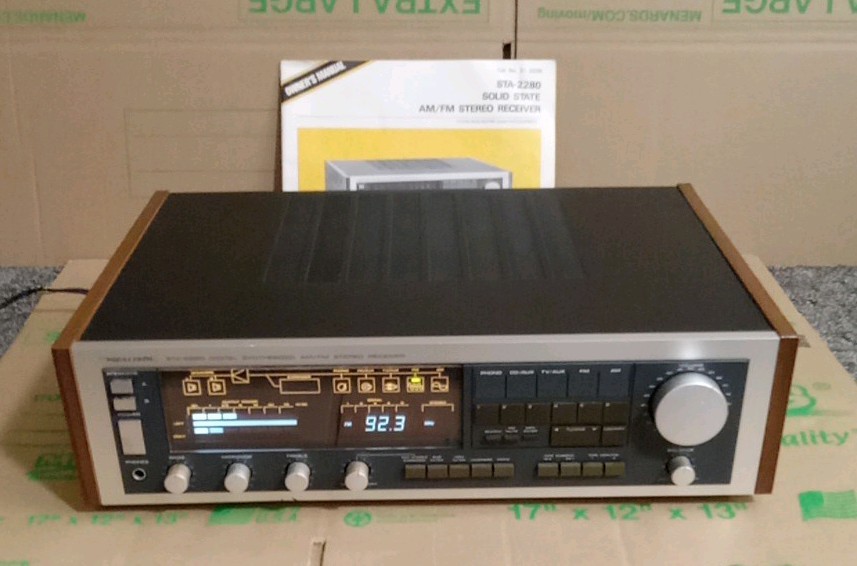
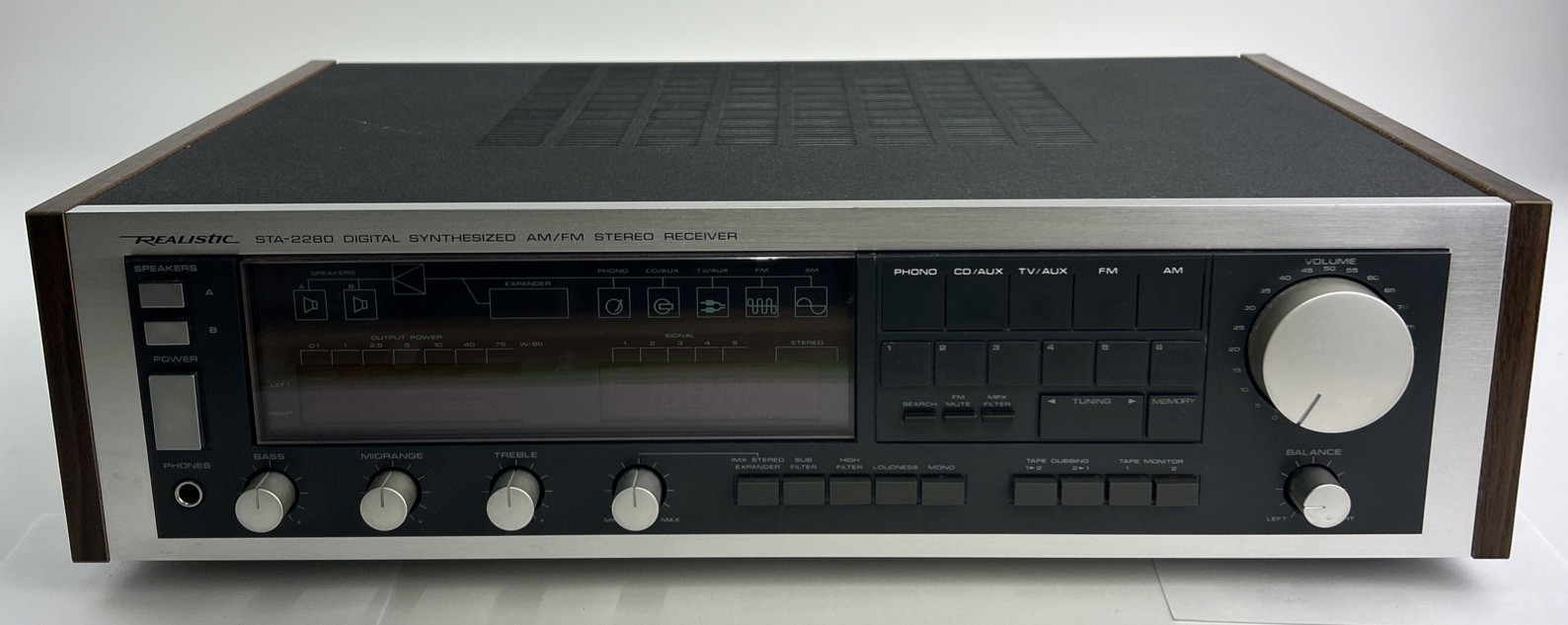
Despite being a RadioShack product, the build quality was surprisingly robust. The chassis used a heavy-gauge steel frame, and the front panel featured a brushed aluminum finish with large, tactile knobs and a clear, easy-to-read display.
Common Issues and Maintenance
Like any vintage electronics from the late 1970s, the Realistic STA-2280 is prone to age-related wear and component degradation. However, it is generally considered reliable if properly maintained.
- Capacitor Aging: Electrolytic capacitors in the power supply and signal path may dry out over time, leading to hum, reduced power, or channel imbalance. Replacing these (recapping) is often the first step in restoring an STA-2280.
- Tuner Issues: The FM section may suffer from weak reception or stereo crosstalk due to aging varactor diodes or misaligned coils. A professional alignment can restore performance.
- Potentiometer Noise: The volume and tone controls may develop crackling or scratchiness. Cleaning with contact cleaner can help, but replacement may be necessary.
- Fuse and Power Switch: The main power switch can become brittle or oxidized. Checking continuity and cleaning contacts is recommended before powering up a long-dormant unit.
- Bias Drift: Over time, the output transistor bias may drift, causing overheating or distortion. Adjusting bias during servicing is crucial for safe operation.
Because the STA-2280 used standard components and a relatively straightforward design, it is repairable by experienced technicians. Schematics and service manuals are available online, which is a major plus for restorers.
Current Market Value and Collectibility
The Realistic STA-2280 is not as widely collected as Japanese receivers from Pioneer or Sansui, but it has developed a loyal following among vintage audio enthusiasts who appreciate its value and performance.
- Working Condition: $100–$180
- Excellent/Restored Condition: $180–$250
- Non-Working/Parts Units: $40–$75
Its value is driven more by functionality than rarity. Collectors often seek it out as a budget-friendly entry into high-power vintage receivers, especially those restoring classic speaker systems that demand serious drive.
While not a "holy grail" item, the STA-2280 is increasingly recognized for punching above its weight. Its combination of power, features, and solid construction makes it a sleeper hit in the vintage audio world.
Conclusion and Legacy
The Realistic STA-2280 represents a fascinating chapter in American audio history. At a time when most consumers associated RadioShack with cables and batteries, the STA-2280 proved that the Realistic brand could deliver serious high-fidelity performance. It may not have carried the prestige of Japanese counterparts, but it offered comparable power and features at a more accessible price.
Today, the STA-2280 stands as a testament to the democratization of high-end audio in the 1970s. It brought powerful, feature-rich stereo sound into suburban living rooms across America—often via a trip to the local RadioShack.
For the vintage audio enthusiast, the STA-2280 is more than just a nostalgic curiosity. It’s a capable, repairable, and sonically satisfying receiver that continues to deliver joy to those who appreciate the golden age of analog sound. Whether you're building a period-correct setup or just want a powerful vintage receiver without breaking the bank, the Realistic STA-2280 deserves a second look—and a second life.
eBay Listings


As an eBay Partner, we earn from qualifying purchases. This helps support our independent vintage technology research.
Related Models
- Realistic STA-2250 (1975)
- Realistic STA-2290 (1977)
- Realistic STA-720 (1975)
- Realistic TR-169 (1975)
- Realistic STA-2080 (1978)
- Pioneer QX-949A (1978)
- Pioneer SX-2000 (1978)
- Pioneer SX-2500 (1978)
- Marantz SR-2000 (1999–2001)
- Onkyo TX-1500MKII (1975)