Realistic STA-2080: The Affordable Powerhouse of the Late '70s
In the late 1970s, when high-fidelity audio was transitioning from tube warmth to solid-state precision, RadioShack’s Realistic brand emerged as a go-to for budget-conscious audiophiles and casual listeners alike. Among its most notable offerings was the Realistic STA-2080, a stereo receiver that combined respectable power output, solid build quality, and a feature set that punched above its price point. Though not a name that often appears in high-end vintage audio circles, the STA-2080 earned a loyal following for its reliability, clean sound, and accessibility—making it a quintessential example of mass-market American hi-fi during the golden age of stereo.
Overview and Historical Context
Released around 1978, the Realistic STA-2080 was part of a broader push by Tandy Corporation (RadioShack’s parent company) to offer complete, affordable home audio systems through its nationwide retail network. At a time when major Japanese brands like Pioneer, Sony, and Yamaha were dominating the higher end of the market, Realistic carved out a niche by delivering capable, no-frills electronics to middle-class households, college students, and first-time stereo buyers.
The STA-2080 stood out in the Realistic lineup as one of its more powerful receivers, boasting 80 watts per channel into 8 ohms—a significant figure for its era and price range. It was designed to drive a wide range of speakers, from bookshelf models to larger floor-standing cabinets, and was often paired with Realistic’s own speaker lines like the Concert Series or Capri models.
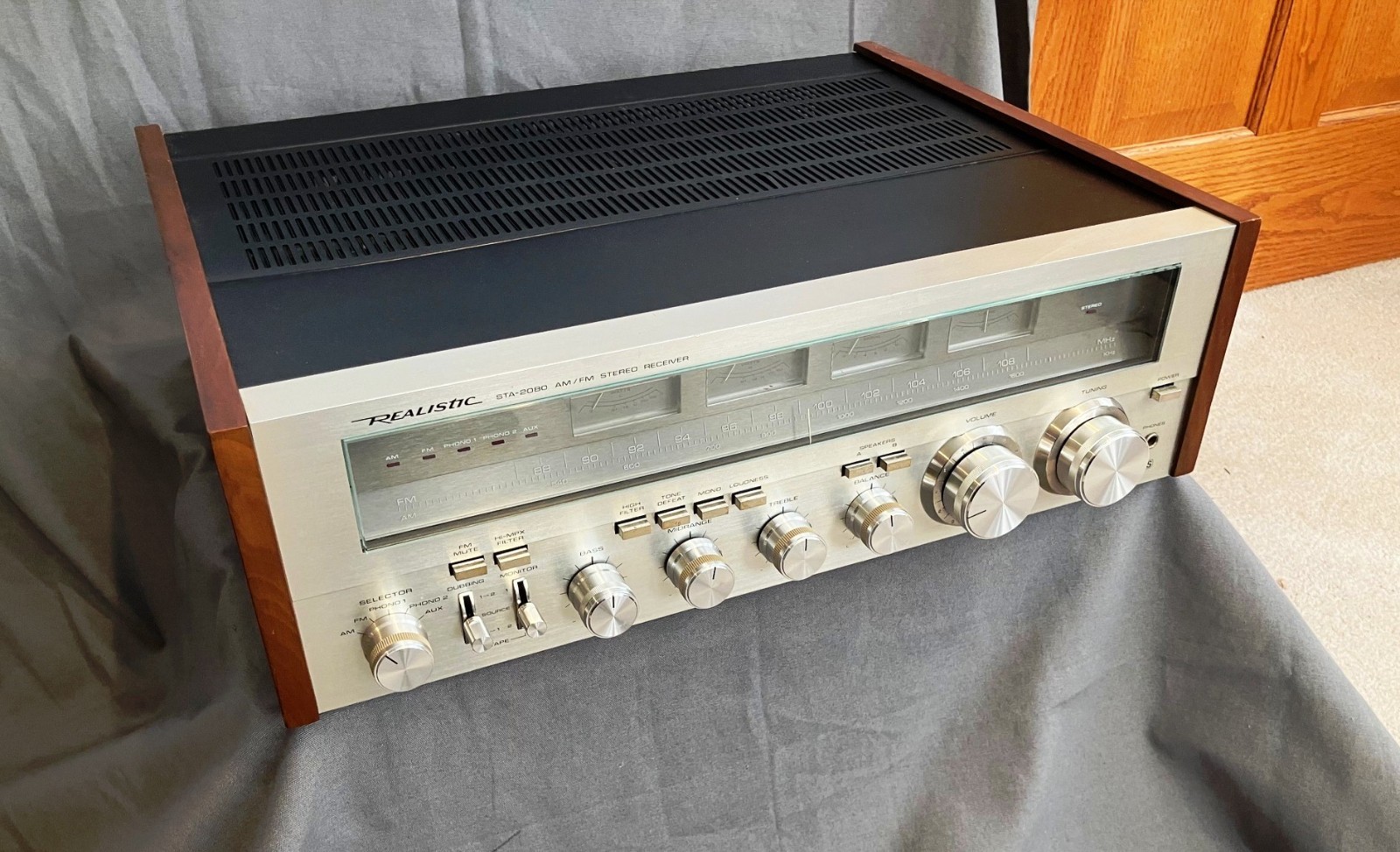
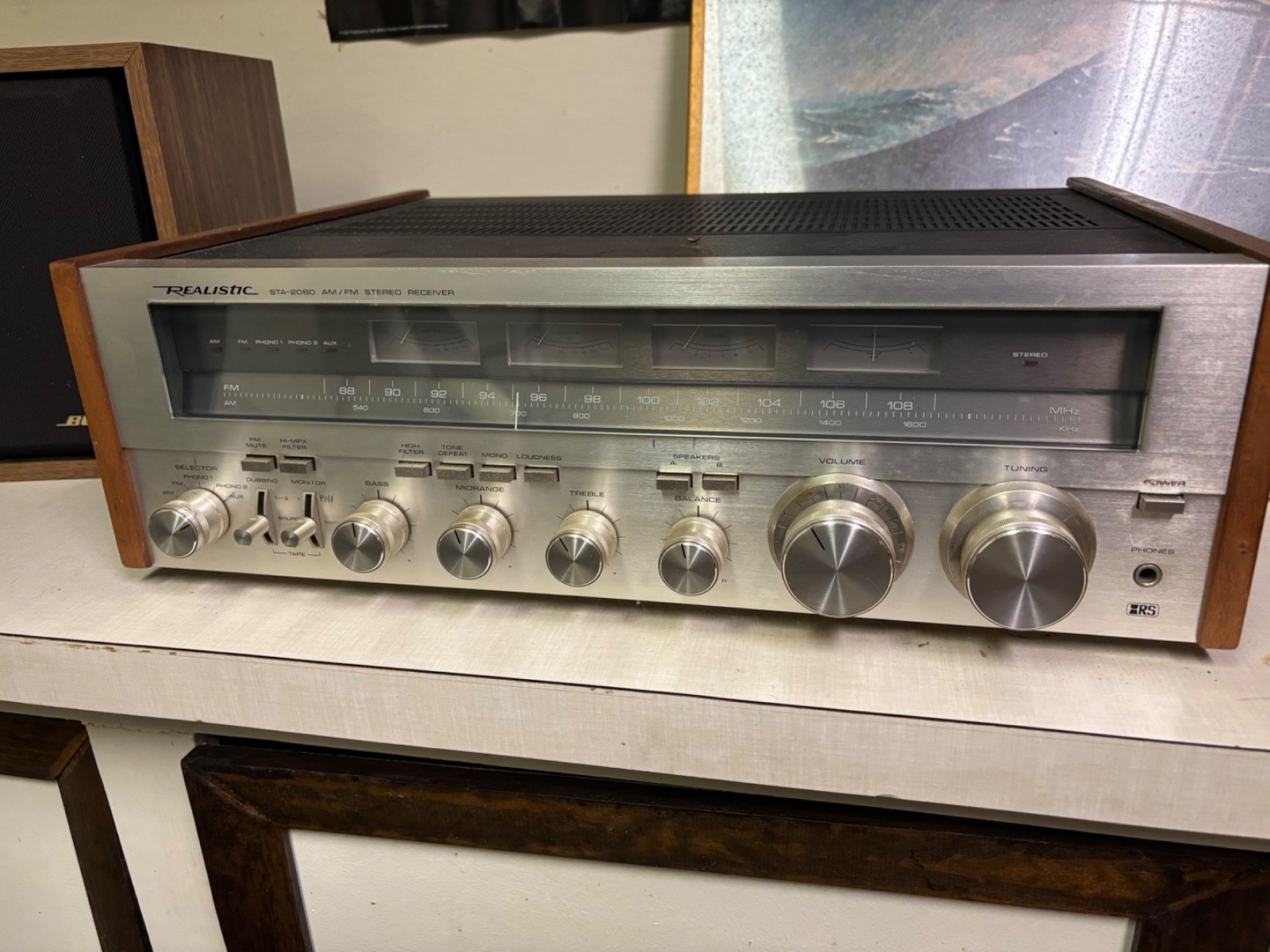
Unlike some of its contemporaries that emphasized flashy aesthetics or cutting-edge technology, the STA-2080 focused on functionality, durability, and value. Its design reflects the utilitarian styling of the late 1970s: a brushed aluminum faceplate, large rotary knobs, a prominent VU meter, and a straightforward layout that made it easy to use for listeners of all experience levels.
Technical Specifications
| Specification | Detail |
| Model | Realistic STA-2080 |
| Brand | Realistic (RadioShack) |
| Year Introduced | 1978 |
| Category | Stereo Receiver |
| Power Output | 80W per channel (RMS, 8Ω) |
| Total Harmonic Distortion | <0.5% (at full power) |
| Frequency Response | 20Hz – 20kHz (±1dB) |
| Input Sensitivity | 2.5mV (Phono), 150mV (Line) |
| Signal-to-Noise Ratio | >70dB (Phono), >80dB (Line) |
| Speaker Impedance | 8Ω minimum |
| Inputs | 2x Line, 1x Phono (MM), Tape In |
| Outputs | Tape Out, Preamp Out, Headphones |
| Tuner Bands | AM, FM |
| Tuner Sensitivity | FM: 1.8µV, AM: 30µV (typical) |
| Dimensions | 17" W × 6" H × 14" D |
| Weight | 22 lbs (10 kg) |
| Power Supply | 120V AC, 60Hz |
Sound Characteristics and Performance
The STA-2080 delivers a sound signature typical of late-1970s American solid-state design: clean, balanced, and moderately warm. While it doesn’t have the ultra-detailed, forward presentation of some Japanese receivers from the same period, it offers a smooth and forgiving tonal balance that works well with a variety of music genres.
Its 80WPC output provides ample headroom for most living room setups, and the amplifier section is known for being stable and reliable, even when driving moderately difficult speaker loads. The inclusion of a dual VU meter not only adds visual appeal but also helps users monitor output levels and ensure they’re not overdriving the system.
The phono preamp is designed for moving magnet (MM) cartridges and performs admirably for its time, with decent RIAA equalization and low noise. While audiophiles today might prefer an external phono stage, the built-in preamp makes the STA-2080 a convenient all-in-one solution for vinyl playback.
The FM tuner, while not competition-grade, offers solid reception for local stations and includes stereo separation indicators and tuning meters. It lacks the sensitivity of higher-end tuners but is more than adequate for casual listening.
Notable Features and Innovations
What made the STA-2080 stand out in the Realistic lineup were its feature-rich design and user-friendly layout:
- Dual VU Meters: A visual highlight, these meters provide real-time feedback on audio levels and add to the receiver’s retro charm.
- Tape Monitoring and Duplication: The receiver supports full tape loop functionality, allowing users to record from any source (including phono) to a connected cassette deck—a popular feature in the pre-digital era.
- Headphone Output: A convenient 1/4" jack on the front panel allows for private listening, a feature not always included on budget receivers of the time.
- Preamp Output and Power Amp Input: These jacks enable system expansion, such as adding an external power amplifier or integrating the STA-2080 into a larger setup.
- Loudness Compensation: A toggle switch boosts bass and treble at lower volumes to compensate for human hearing response, enhancing perceived fullness during quiet listening.
Common Issues and Maintenance
Like many vintage receivers from the late 1970s, the Realistic STA-2080 can suffer from age-related wear if not properly maintained. Common issues include:
- Capacitor Aging: Electrolytic capacitors in the power supply and audio path may dry out over time, leading to hum, reduced output, or channel imbalance. A recapping by a qualified technician can restore performance.
- Dusty Controls: Rotary knobs and potentiometers can accumulate dust and oxidation, causing scratchy sound or intermittent connections. Cleaning with contact cleaner often resolves this.
- Tuner Alignment Drift: The FM tuner may require realignment if reception has degraded. This is best handled by a technician with proper test equipment.
- Rubber Drive Belts (if paired with cassette deck): While the STA-2080 itself doesn’t have belts, it was often used with Realistic cassette decks that do—so users should check associated components.
Despite these potential issues, the STA-2080 is generally robust and repairable, with a modular design that makes servicing easier than many integrated receivers of the era.
Current Market Value and Collectibility
Today, the Realistic STA-2080 is not considered a rare or high-value collector’s item, but it holds nostalgic and practical appeal for vintage audio enthusiasts. Units in good working condition typically sell for $75 to $150, depending on cosmetics, functionality, and included accessories.
Its value lies more in usability than rarity. For someone building a period-correct 1970s setup or seeking an affordable vintage receiver with solid performance, the STA-2080 is a smart choice. It’s also popular among DIYers and modders who appreciate its straightforward circuitry and potential for upgrades.
Conclusion and Legacy
The Realistic STA-2080 may not have the prestige of a Marantz or the engineering acclaim of a Sansui, but it represents something equally important: accessible, reliable hi-fi for the average consumer. In an era when owning a stereo system was a milestone for many households, the STA-2080 helped bring high-quality sound within reach.
It stands as a testament to RadioShack’s role in democratizing electronics and fostering a generation of audio enthusiasts. While it may not dominate vintage audio forums, the STA-2080 remains a well-built, capable receiver that continues to deliver satisfying sound more than four decades after its release.
For those seeking a no-nonsense, powerful, and nostalgic addition to their vintage setup, the Realistic STA-2080 is a hidden gem worth rediscovering.
eBay Listings


As an eBay Partner, we earn from qualifying purchases. This helps support our independent vintage technology research.
Related Models
- Realistic STA-2250 (1975)
- Realistic STA-2290 (1977)
- Realistic STA-720 (1975)
- Realistic TR-169 (1975)
- Realistic STA-2120 (1975)
- Pioneer QX-949A (1978)
- Pioneer SX-2000 (1978)
- Pioneer SX-2500 (1978)
- Marantz SR-2000 (1999–2001)
- Onkyo TX-1500MKII (1975)