Realistic TR-169 (1988–1990)
It hums to life with a soft click, the LEDs blinking like fireflies—this is the sound of late-night mixtape nostalgia in a walnut-grained box.
Overview
The Realistic TR-169 isn’t a receiver, it’s not a turntable, and it sure as hell wasn’t meant to compete with Marantz on the hi-fi battlefield. No—this is a dedicated 8-track tape player, one of the last gasps of a format that refused to die quietly. Sold through Radio Shack under their house brand, the TR-169 hit shelves between 1988 and 1990, long after most manufacturers had abandoned 8-track for cassette and CD. At $49.95, it wasn’t trying to impress audiophiles; it was built for people who still had boxes of old tapes tucked in the garage, or maybe just liked the idea of pressing “forward” and hearing the clunk-thwack of the track changer every 15 minutes.
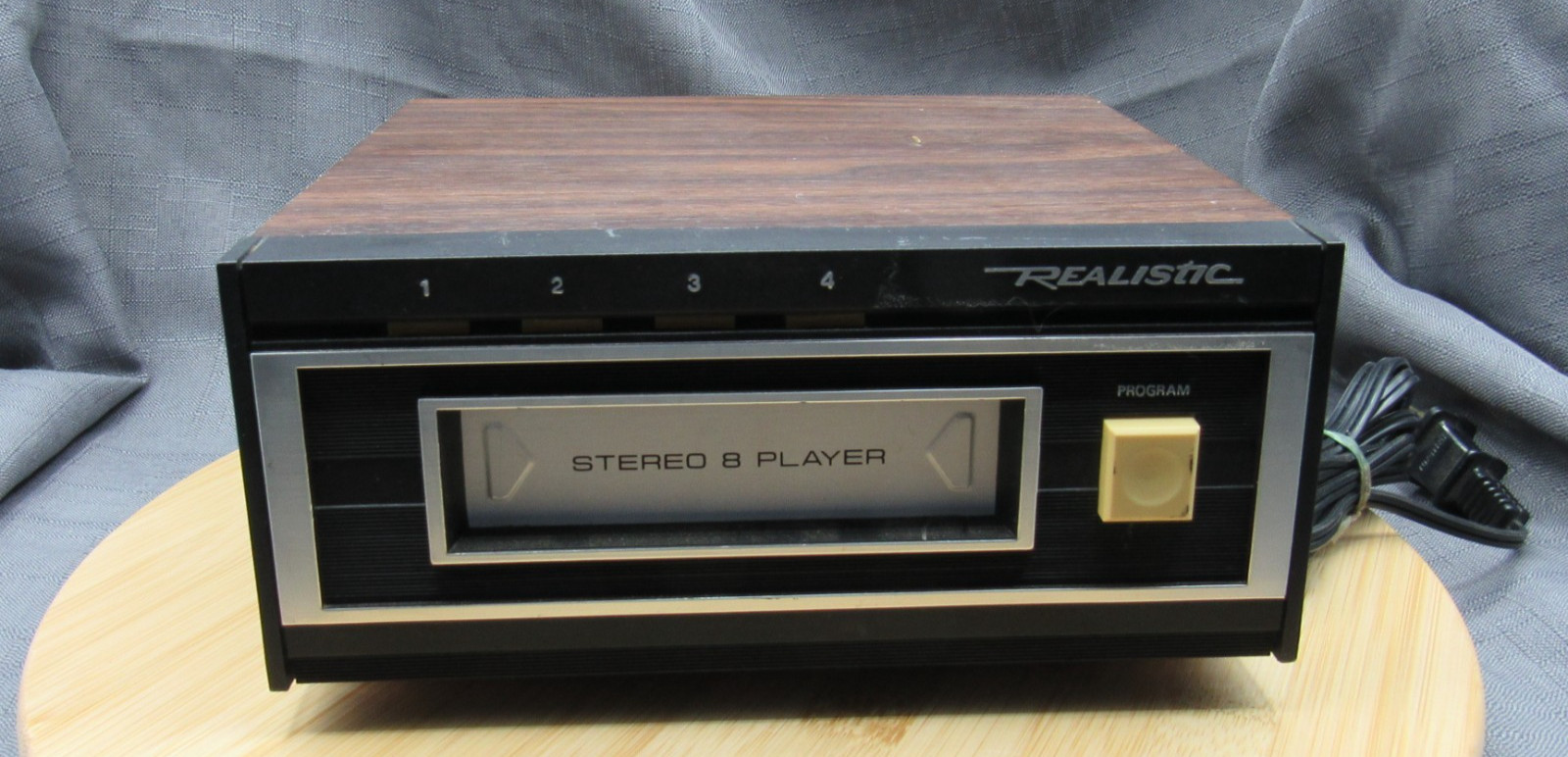
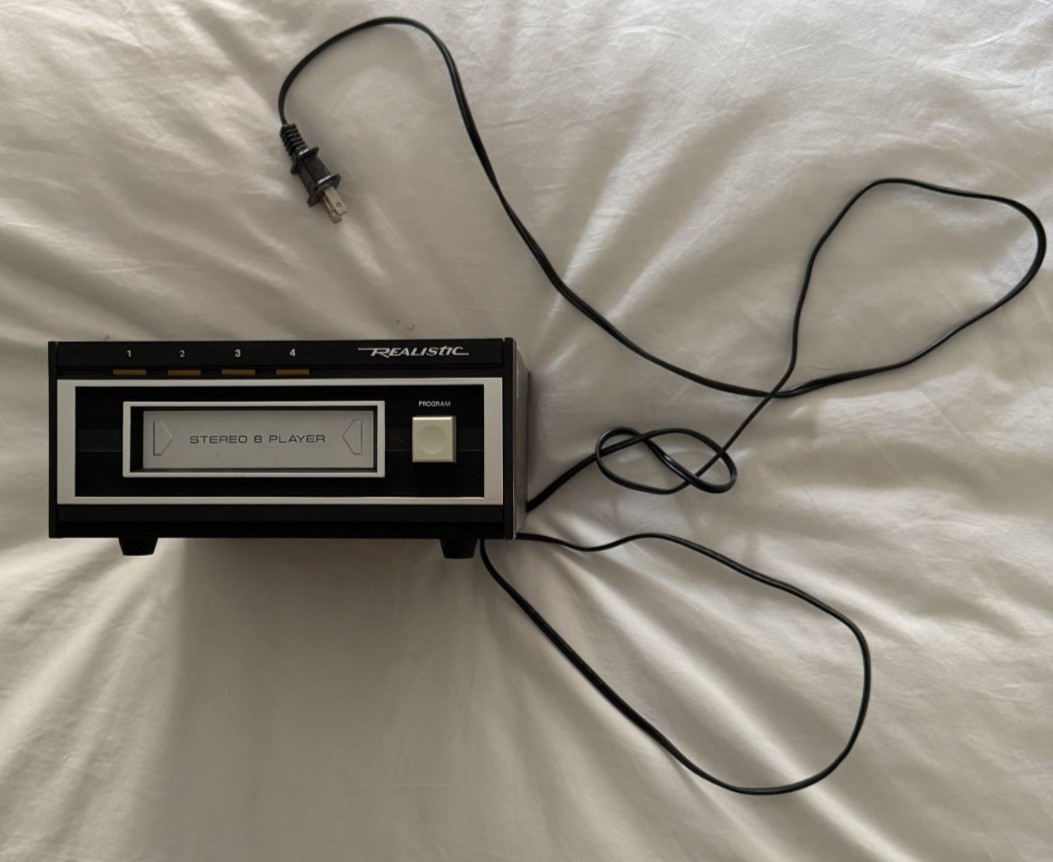
It’s easy to roll your eyes at 8-track in 1988, but Radio Shack knew their audience: hobbyists, car audio holdouts, and budget-minded tinkerers who wanted a no-fuss way to digitize or enjoy legacy tapes. The TR-169 delivered exactly that—no frills, no digital displays, just RCA jacks, a set of LED program indicators, and a rear-mounted AF level control that lets you fine-tune output before it hits your amp. It’s a tabletop unit with a low profile and a surprisingly solid wooden case wrapped in walnut-grained vinyl veneer. It looks like something your dad might’ve picked up on a whim after buying new speakers, then used exactly twice.
And yet, some people still swear by it. One owner called it “a great player,” praising its straightforward operation and solid sound. Another said they “could not be more pleased,” noting the unit arrived working perfectly and matching the seller’s description. That kind of satisfaction doesn’t come from specs—it comes from a machine doing exactly what it promises, without drama.
Specifications
| Manufacturer | Radio Shack (under the Realistic brand) |
| Product type | Stereo 8 Track Tape Player / Deck |
| Production years | 1988–1990 |
| Original price | $49.95 |
| Power consumption | 15 W |
| Dimensions (WHD) | 10 x 7 x 4 inch / 254 x 178 x 102 mm |
| Power type and voltage | AC, 120 Volt |
| Case material | Wooden case, walnut grained vinyl veneer |
| Shape | Tablemodel, low profile |
| Terminals | RCA terminals |
| Indicators | LED program indicators |
| Control | rear AF level control |
| Loudspeaker | For headphones or external amplifier. |
| Drive belt specifications (replacement part) | Width: 5mm, Thickness: 0.6mm |
Key Features
Simple, functional design
There’s no remote, no auto-reverse, no Dolby noise reduction—just a machine built to play 8-tracks. The front panel is clean: play, stop, eject, forward, reverse, and a row of four LED indicators showing which program you’re on. The rear AF level control is a thoughtful touch, letting users adjust line-level output to match downstream gear. RCA terminals handle both input and output, standard for the era but still perfectly usable today if you’re wiring it into a modern preamp or recording chain.
Build and materials
The wooden case gives it a heft and warmth that plastic units from the same period lack. Wrapped in walnut-grained vinyl veneer, it fits right in on a 1970s-era stereo console, even if it was made a decade later. Its low-profile tabletop shape makes it easy to tuck into a shelf or stack, though it’s not designed to be part of a matched component system. This was never about aesthetics—it was about utility.
Maintenance and repair
Like all belt-driven 8-track decks, the TR-169 lives and dies by its rubber drive belt. A replacement kit is available for $13.75, with a belt sized 5mm wide and 0.6mm thick—small, but critical. Over time, the belt stretches or cracks, leading to sluggish operation or complete failure. Related tools like a “Rubber Drive Cleaner / Restorer” and a “Belt Installation Tool” are sold separately, aimed at keeping these aging units alive. A schematic diagram exists, which is a small miracle for a budget Radio Shack deck, making repairs more accessible to tinkerers.
Known quirks and failures
Owners report a few recurring issues. The playback head can loosen from its mount, throwing off alignment and putting extra strain on the track changer mechanism. The fix? Carefully re-glue it at the original height—a finicky but doable job. The track indicator lamps are another weak point: the bulbs are held in place with glue, making replacement a delicate operation. And the contact plates on the track change wheel can get dirty, causing erratic program switching. Cleaning them with Deoxit and fine sandpaper usually brings things back to life. There’s also a reported tendency for tapes to “drag from 4 to 1”—a mechanical hiccup during program transitions that suggests wear in the changer mechanism.
Historical Context
The Realistic TR-169 arrived when 8-track was already obsolete. By 1988, CDs were gaining traction, cassettes ruled portability, and even VCRs were being used to record radio shows. Yet Radio Shack still saw a niche: budget-conscious buyers who wanted reliable playback without paying premium prices. While high-end brands like Pioneer, Marantz, and Sony had moved on, Radio Shack kept the flame alive for those who weren’t ready to let go. This wasn’t innovation—it was service. A last call for a format that had once been everywhere, from car dashboards to living room stereos.
Collectibility & Value
As of March 2026, a tested Realistic TR-169 was listed on eBay for $69.99 plus shipping—a modest premium over its original $49.95 price, but not by much. That suggests it’s valued more as a functional relic than a collectible trophy. There’s no cult following, no sky-high auction prices, just a steady trickle of sales to people who need a working 8-track player for digitization or nostalgia. The availability of replacement belts and cleaning tools helps keep units in rotation, but common mechanical issues mean many arrive non-functional. Buyers should test thoroughly or budget for a belt replacement and contact cleaning. For what it is—a no-frills, late-era 8-track deck—it delivers. Just don’t expect miracles.
eBay Listings


As an eBay Partner, we earn from qualifying purchases. This helps support our independent vintage technology research.
Related Models
- Realistic STA-2250 (1975)
- Realistic STA-2290 (1977)
- Realistic STA-720 (1975)
- Realistic STA-2080 (1978)
- Realistic STA-2120 (1975)
- Pioneer QX-949A (1978)
- Pioneer SX-2000 (1978)
- Pioneer SX-2500 (1978)
- Marantz SR-2000 (1999–2001)
- Onkyo TX-1500MKII (1975)