Pioneer SX-209RDS: The Compact Stereo Hub of the Mid-90s
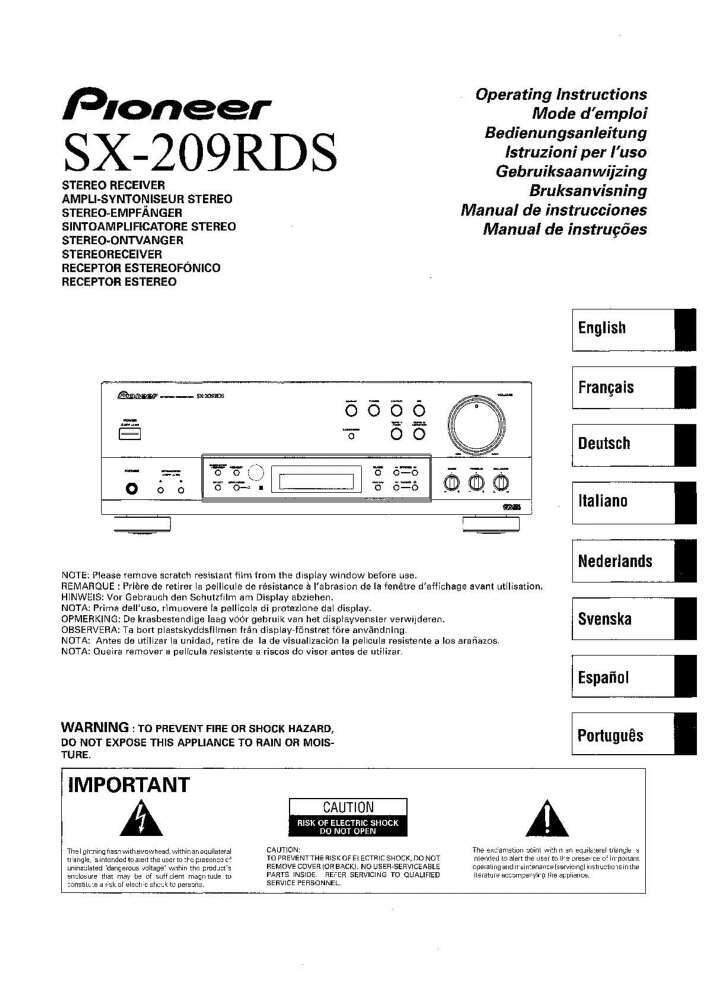
The Pioneer SX-209RDS stands as a distinctive example of mid-1990s audio design—compact, functional, and packed with the era’s latest conveniences. Released in 1994, this stereo receiver was aimed at listeners who wanted more than just basic AM/FM radio but weren’t ready to invest in a full separates system. As part of Pioneer’s long-running SX series—a lineage known for solid engineering and user-friendly interfaces—the SX-209RDS brought modern features like RDS (Radio Data System) to a budget-conscious audience, making it a quiet workhorse in many living rooms and dorms during the analog-to-digital transition period.
While not a high-power beast like its larger siblings in the SX range, the SX-209RDS carved out its niche as a reliable, space-saving receiver ideal for small apartments, secondary listening areas, or as a starter system for younger audiophiles. Its blend of tuner sophistication, modest connectivity, and clean Pioneer styling makes it a charming piece of 90s audio history worth revisiting today.
Technical Specifications
Despite its compact size, the Pioneer SX-209RDS offers a well-rounded set of features for its time. While it lacks the high wattage output of larger receivers, it was designed more for efficiency and tuner performance than raw power.
| Specification | Detail |
| Model | SX-209RDS |
| Year Released | 1994 |
| Manufacturer | Pioneer Corporation |
| Category | Stereo Receiver |
| Output Power | Not specified (low to moderate output) |
| Impedance | Not applicable (integrated amplifier) |
| Tuner Bands | FM, AM (MW), RDS support |
| RDS Functionality | Yes – displays station name, traffic, time |
| Inputs | 1x Audio Line In (RCA), CD input |
| Outputs | Speaker A/B, Pre-out (likely none) |
| Speaker Impedance | 6–16Ω (typical for Pioneer receivers) |
| Power Supply | AC 120V, 60Hz (North American models) |
| Dimensions (W×H×D) | Approx. 420 × 120 × 298 mm |
| Weight | ~5.5 kg (12 lbs) |
| Remote Control | No |
| Additional Features | Stereo indicator, PLL tuning, memory presets |
The SX-209RDS was built around a phase-locked loop (PLL) digital tuning system, which ensured precise station selection and reduced drift—especially useful for FM reception. With RDS capability, it could display station names (PS name), program type (PTY), and even receive traffic announcements (TA) where supported by local broadcasters. This was a premium feature at the time, typically found in higher-end receivers or car stereos.
Sound Characteristics and Performance
As with most compact receivers of its class, the Pioneer SX-209RDS wasn’t engineered for high-fidelity purists or large-room sound. Its amplifier section delivers modest power output, likely in the range of 15–20 watts per channel into 8 ohms—enough to drive efficient bookshelf speakers in small to medium-sized rooms.
Sound quality is typical of mid-tier 90s Pioneer gear: clean, balanced, and slightly warm, with a focus on clarity over bass slam. The FM tuner, however, is where this unit truly shines. Thanks to its RDS-enabled, PLL-synthesized tuning, it offers excellent station discrimination, low noise, and stable reception—especially when paired with a decent external FM wire antenna.
The audio circuitry avoids the harshness sometimes found in budget receivers of the era, delivering a surprisingly smooth midrange and decent stereo imaging. While it won’t compete with separates or higher-end integrated amps, it holds its own as a cohesive, all-in-one solution for casual listening, radio enthusiasts, or those building a minimalist vintage setup.
Notable Features and Innovations
The RDS (Radio Data System) is the standout feature of the SX-209RDS, placing it ahead of many contemporaries. In the early 90s, RDS was still a relatively new technology in consumer audio, primarily used in European car radios. Pioneer brought it to the home market with models like this, allowing users to:
- See the station name (PS) scroll across the display
- Identify program type (PTY) such as "Rock," "Classical," or "News"
- Receive traffic announcements (TA) automatically
- Maintain accurate clock time synced to broadcast signals
This made the SX-209RDS not just a music receiver, but a connected information hub—a precursor to today’s smart radios.
Other notable features include:
- 30 preset memory stations (15 FM, 15 AM), ideal for quick access
- Digital tuning display with frequency and RDS text readout
- Stereo/mono switch for optimizing weak signal reception
- Speaker A/B selection, allowing connection of two pairs of speakers
- Tone controls (bass and treble) for basic sound shaping
The front panel is simple and functional, with a large tuning knob, source selector, and illuminated display. The build quality reflects Pioneer’s reputation for durability—solid plastic casing, metal faceplate accents, and reliable potentiometers.
Common Issues and Maintenance
Like all electronics from the 1990s, the Pioneer SX-209RDS can suffer from age-related wear. However, it’s generally considered a reliable and robust unit if stored properly.
Common issues include:
- Capacitor aging: Electrolytic capacitors in the power supply or audio path may dry out, leading to hum, low output, or no power. Replacing these is a common restoration step.
- Dust accumulation: Can cause scratchy volume or tone controls. Cleaning with contact cleaner often resolves this.
- Display degradation: The fluorescent or VFD display may dim over time or fail to show RDS text. Replacement is difficult but possible with donor parts.
- Tuner misalignment: If FM reception is weak or unstable, the tuner may need realignment by a technician.
Maintenance tips:
- Power the unit on periodically to keep capacitors formed.
- Use compressed air to clean vents and controls.
- Avoid placing in humid or dusty environments.
- Use a surge protector to prevent voltage spikes.
Current Market Value and Collectibility
The Pioneer SX-209RDS is not a high-value collector’s item, but it holds niche appeal among vintage audio enthusiasts, especially those interested in RDS technology or completing a 90s-era setup.
As of 2024, working units typically sell for $50–$100 USD, depending on condition, included accessories, and geographic region. Units with fully functional RDS displays and clean casings command higher prices, particularly in Europe where RDS broadcasting was more widespread.
It’s not commonly found in audiophile circles, but it’s appreciated for:
- Its RDS functionality, increasingly rare in home receivers
- Compact size—ideal for small spaces or retro desktop systems
- Pioneer reliability and clean aesthetic
While not a “grail” piece, the SX-209RDS is a functional time capsule of 90s radio culture and a testament to Pioneer’s commitment to accessible, feature-rich audio.
Conclusion and Legacy
The Pioneer SX-209RDS may not have the power or prestige of its larger SX-series siblings, but it represents an important moment in audio history—the democratization of digital radio technology. At a time when most home receivers offered little more than analog dials and basic tuning, the SX-209RDS brought smart radio features into the living room.
It’s a receiver built for practicality and convenience, not audiophile extremes. Yet, its solid build, clear tuner performance, and RDS capabilities make it more than just a relic. For collectors of 90s electronics, radio enthusiasts, or those seeking a compact vintage system, the SX-209RDS remains a charming and functional choice.
In an age of streaming and smart speakers, the SX-209RDS reminds us of a time when tuning into a station felt like an event—when seeing a station name scroll across a display felt like magic. It’s a small receiver with a big personality, and a quiet ambassador of Pioneer’s enduring legacy in consumer audio.
eBay Listings


As an eBay Partner, we earn from qualifying purchases. This helps support our independent vintage technology research.
Related Models
- Pioneer QX-949A (1978)
- Pioneer SX-2000 (1978)
- Pioneer SX-2500 (1978)
- Pioneer QX-646 (1978)
- Pioneer SX-1900 (1978)
- Marantz SR-2000 (1999–2001)
- Onkyo TX-1500MKII (1975)
- Pioneer SX-201 (1978)
- Pioneer SX-251R (1976)
- Realistic STA-2250 (1975)