Pioneer SX-1700: The Crown Jewel of Pioneer’s Golden Era
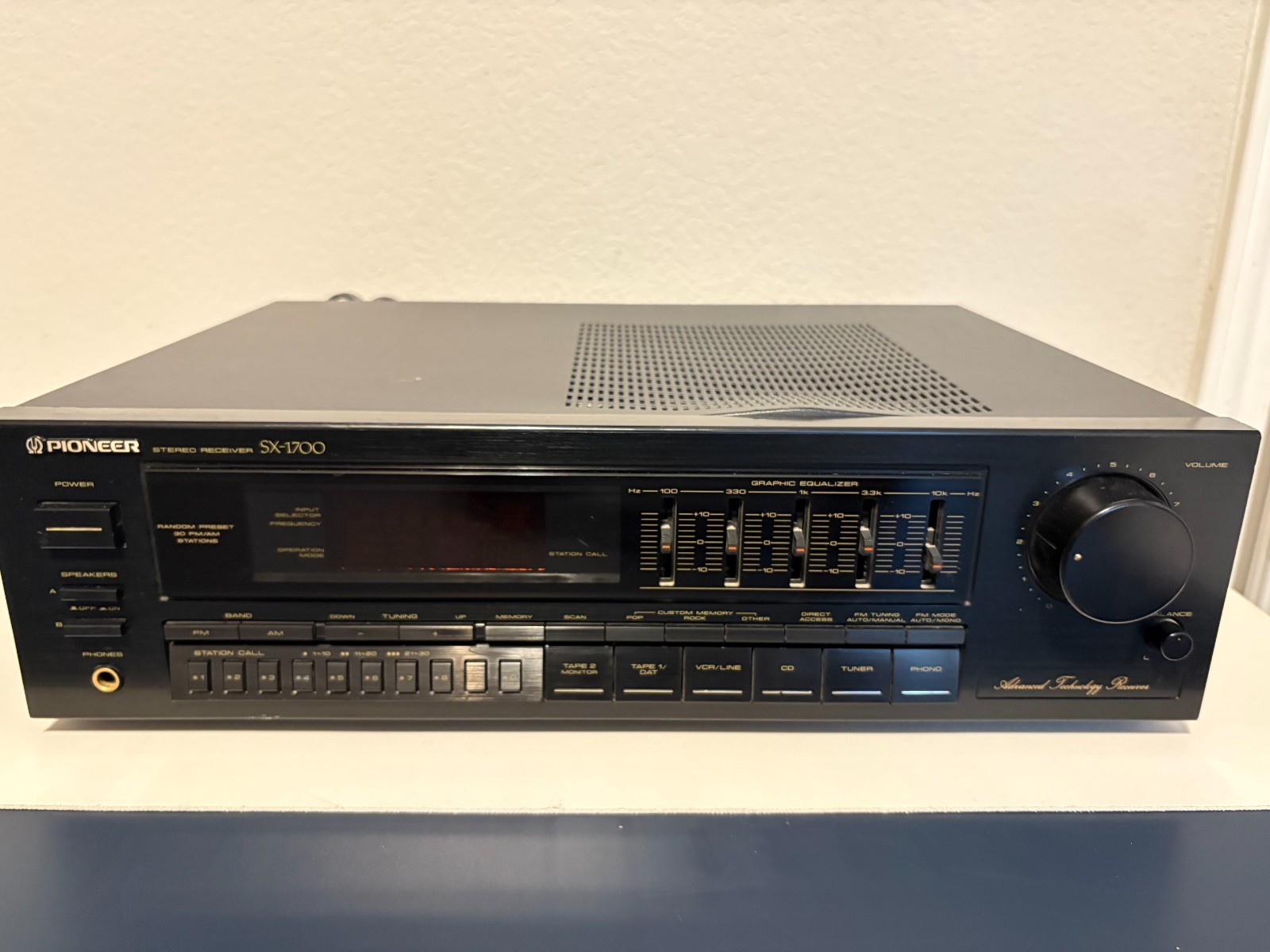
In the late 1970s, Pioneer was at the peak of its engineering prowess, producing some of the most powerful, luxurious, and sonically impressive receivers the audio world had ever seen. Among these elite models, the Pioneer SX-1700 stands as a towering achievement—a dual-monaural, 150-watt-per-channel stereo receiver that blended brute power with refined audio engineering. Released in 1977, the SX-1700 was not just another receiver; it was a statement piece, designed for the serious audiophile who demanded both performance and prestige.
Positioned near the top of Pioneer’s SX-series hierarchy, the SX-1700 shared design DNA with legendary models like the SX-1980 and SX-1250, but carved out its own identity with a balance of power, elegance, and technical sophistication. Though less famous than its slightly later sibling, the SX-1980, the SX-1700 remains a highly respected machine among vintage audio enthusiasts and a prized find for collectors.
Technical Specifications
The SX-1700 was engineered to deliver high power without sacrificing fidelity—a rare feat in an era when many manufacturers prioritized wattage over sound quality. Its dual-monaural architecture meant that the left and right audio channels were physically and electrically isolated, minimizing crosstalk and preserving stereo imaging. This design philosophy, borrowed from high-end separates, was a hallmark of Pioneer’s flagship receivers.
| Specification | Detail |
| Model | Pioneer SX-1700 |
| Year Introduced | 1977 |
| Category | Dual-Monaural Stereo Receiver |
| Continuous Power Output | 150 watts per channel (8Ω, RMS, both channels driven) |
| Total Harmonic Distortion | 0.05% (1kHz, 1/3 power) |
| Frequency Response | 20Hz – 20kHz (+0, -1dB) |
| Input Sensitivity | 2.5 mV (MM), 150 mV (Line) |
| Signal-to-Noise Ratio | 86 dB (MM), 100 dB (Line) |
| Speaker Impedance | 8Ω minimum |
| Tone Controls | Bass, Treble (±10dB at 100Hz/10kHz) |
| Inputs | Phono (MM), Tuner, Aux, Tape, CD (later models retrofitted) |
| Outputs | Tape Out, Preamp Out, Headphones |
| Dimensions | 485 mm (W) × 167 mm (H) × 445 mm (D) |
| Weight | 24.5 kg (54 lbs) |
| Power Supply | Dual toroidal transformers (estimated) |
One of the most impressive aspects of the SX-1700 is its massive power supply. Equipped with dual toroidal transformers (a design feature shared with the SX-1980), the receiver delivers stable, low-noise power to both the amplifier and tuner sections. This contributed to its ability to drive difficult speaker loads with authority and control.
Sound Characteristics and Performance
The Pioneer SX-1700 is known for a bold, dynamic, and highly detailed sound signature. Unlike some receivers of the era that leaned toward warmth or softness, the SX-1700 delivers a more neutral and transparent presentation, with excellent transient response and tight bass control.
- Bass: Deep, articulate, and powerful—thanks to its high current output and robust power supply, the SX-1700 can drive even inefficient speakers with confidence.
- Midrange: Clear and well-defined, with a slight forwardness that brings vocals and instruments to the forefront without sounding harsh.
- Treble: Smooth and extended, avoiding the grain or harshness sometimes found in solid-state gear from the 1970s.
- Soundstage: Wide and three-dimensional, a direct result of the dual-monaural design and excellent channel separation.
When paired with high-sensitivity speakers like vintage Klipsch, JBL, or Tannoy models, the SX-1700 truly shines, revealing its ability to handle complex musical passages with ease. It’s equally at home with rock, classical, or jazz, offering a balanced and engaging listening experience.
Notable Features and Innovations
The SX-1700 wasn’t just powerful—it was packed with thoughtful features that reflected Pioneer’s commitment to high-end audio:
- Dual-Monaural Design: The left and right channels are completely separated, from input to output, reducing interference and improving stereo imaging.
- High-Current Amplifier Circuitry: Designed to maintain stability even with low-impedance speakers, this was a significant advantage in an era when many receivers struggled with real-world speaker loads.
- Large VU Meters: Iconic blue-backlit VU meters not only look stunning but provide real-time feedback on output levels, a favorite among audiophiles and show-offs alike.
- Heavy-Duty Construction: With a thick steel chassis, gold-plated terminals, and high-quality potentiometers, the SX-1700 feels as solid as it sounds.
- Advanced Tuner Section: The built-in FM/AM tuner features digital tuning (on later versions) and excellent sensitivity, making it a true all-in-one solution for high-fidelity listening.
The front panel is both functional and elegant, with a brushed aluminum faceplate, large rotary knobs, and a clean, symmetrical layout. It’s a design that exudes confidence and craftsmanship—no plastic, no shortcuts.
Common Issues and Maintenance
Like all vintage electronics, the Pioneer SX-1700 requires attention to remain in top condition. While built to last, age can take its toll:
- Capacitor Aging: Electrolytic capacitors in the power supply and signal path may dry out over time, leading to hum, reduced power, or channel imbalance. A full recapping by a qualified technician is recommended for units that haven’t been serviced in decades.
- Tuner Mechanism: The tuning dial and associated gears can become stiff or noisy. Lubrication and cleaning are often needed.
- Input Selector Switches: These can develop crackling or intermittent connections. Contact cleaner (used carefully) can help, but worn switches may need replacement.
- Bias Drift: Over time, the output transistor bias can drift, affecting sound quality and potentially damaging speakers. Bias should be checked and adjusted during servicing.
Despite these potential issues, the SX-1700 is generally reliable when properly maintained. Its modular design makes repairs more accessible than in modern gear, and replacement parts—while not always easy to find—are available through specialty vendors and online communities.
Current Market Value and Collectibility
The Pioneer SX-1700 is a highly collectible piece of vintage audio history. While it doesn’t command the same astronomical prices as the SX-1980 (which can fetch $2,000+ in excellent condition), the SX-1700 typically sells for $800 to $1,400, depending on condition, service history, and whether it includes original packaging and documentation.
Fully restored units with fresh capacitors, clean controls, and working meters are especially desirable. Models with the sought-after blue VU meters and original remote control (if applicable) can command premium prices.
Collectors value the SX-1700 not only for its performance but also for its rarity and historical significance. It represents the pinnacle of Japanese receiver engineering in the 1970s—a time when companies like Pioneer, Sansui, and Marantz were locked in a golden race for audio supremacy.
Conclusion and Legacy
The Pioneer SX-1700 is more than just a vintage receiver—it’s a symbol of an era when high-fidelity audio was taken seriously, and engineering excellence was celebrated. With its dual-monaural design, massive power output, and luxurious build, it stands as one of the most impressive all-in-one amplifiers ever made.
While overshadowed in fame by the SX-1980, the SX-1700 offers nearly the same performance at a more accessible price point. For the audiophile who values both sound quality and vintage charm, it remains a compelling choice. Whether you're building a classic stereo system or restoring a piece of audio history, the SX-1700 delivers in every sense: power, precision, and presence.
If you’re lucky enough to find one in good condition—or better yet, have it restored—you’re not just owning a receiver. You’re owning a legend.
eBay Listings



As an eBay Partner, we earn from qualifying purchases. This helps support our independent vintage technology research.
Related Models
- Pioneer QX-949A (1978)
- Pioneer SX-2000 (1978)
- Pioneer SX-2500 (1978)
- Pioneer QX-646 (1978)
- Pioneer SX-1900 (1978)
- Marantz SR-2000 (1999–2001)
- Onkyo TX-1500MKII (1975)
- Pioneer SX-201 (1978)
- Pioneer SX-251R (1976)
- Realistic STA-2250 (1975)