Pioneer SX-1280: The Crown Jewel of the Golden Age of Hi-Fi
The Pioneer SX-1280, released in 1978, stands as one of the most legendary stereo receivers ever produced, representing the pinnacle of analog audio engineering during the late 1970s. Revered by audiophiles and collectors alike, the SX-1280 was not just a receiver—it was a statement. At a time when high-fidelity audio was transitioning from tube-based systems to solid-state dominance, Pioneer delivered a machine that combined brute power, meticulous engineering, and a sonic signature that remains unmatched by most modern equivalents.
Historical Context and Legacy
The late 1970s marked the height of the "receiver wars," with Japanese manufacturers like Pioneer, Sony, Yamaha, and Sansui competing to produce the most powerful, feature-rich, and sonically superior stereo receivers. Pioneer’s SX series was their flagship line, and the SX-1280 was the ultimate expression of that philosophy. It succeeded earlier powerhouses like the SX-1250 and SX-1980, offering refined performance and improved reliability.
Built in Japan during a golden era of manufacturing excellence, the SX-1280 was designed for serious listeners who demanded both high power and high fidelity. With its massive dual toroidal transformers, discrete amplifier stages, and robust build quality, it was engineered to drive even the most demanding speakers with authority and control.
Technical Specifications
| Specification | Detail |
| Power Output | 130W RMS per channel (8Ω, both channels driven) |
| Frequency Response | 20Hz – 20kHz (+0, -1dB) |
| Total Harmonic Distortion (THD) | 0.04% (1kHz, 100W into 8Ω) |
| Damping Factor | 60 (8Ω, 1kHz) |
| Signal-to-Noise Ratio | 86dB (MM, IHF-A weighted) |
| Input Sensitivity | 2.5mV (MM), 150mV (line) |
| Phono Equalization | RIAA |
| Tuning Range | FM: 87.5–108 MHz, AM: 530–1710 kHz |
| Tuner Sensitivity (FM) | 1.8 µV (for 26dB SNR) |
| Speaker Impedance | 4–16Ω |
| Dimensions | 485mm (W) × 167mm (H) × 405mm (D) |
| Weight | 22.7 kg (50 lbs) |
| Construction | Dual toroidal transformers, discrete transistors, direct-coupled amplification |
The SX-1280’s use of dual toroidal transformers was a major engineering feat, minimizing electromagnetic interference and providing stable, clean power delivery. Unlike many receivers of the era that used IC-based amplifiers, the SX-1280 employed fully discrete circuitry, meaning each amplification stage was built from individual transistors—resulting in superior linearity and dynamic control.
Sound Quality Characteristics
The sonic signature of the Pioneer SX-1280 is often described as authoritative, dynamic, and richly detailed. It delivers a powerful, controlled bass response that few modern receivers can match, thanks to its high damping factor and massive power supply. The midrange is smooth and natural, ideal for vocals and acoustic instruments, while the treble remains extended without becoming harsh or fatiguing.
One of the most praised aspects of the SX-1280 is its soundstage imaging. It creates a wide, three-dimensional sound field that places instruments precisely in space, making it a favorite for critical listening. Whether playing vinyl through its high-quality phono stage or FM broadcasts via its sensitive tuner, the SX-1280 renders music with a lifelike presence that modern digital gear often struggles to replicate.
Many users report that the SX-1280 has a slightly warm tonal balance, which adds musicality without sacrificing clarity. This warmth, combined with its dynamic punch, makes it especially well-suited for rock, jazz, and classical genres.
Notable Features and Innovations
The SX-1280 was packed with features that were cutting-edge for its time:
- Direct-Coupled Amplification: Eliminated coupling capacitors in the signal path, reducing phase shift and improving transient response.
- Dual Toroidal Transformers: Provided clean, isolated power for the left and right channels, reducing crosstalk and improving channel separation.
- High-Current Output Stages: Enabled the receiver to handle difficult speaker loads with ease.
- Precision Tuner Section: Featured a high-sensitivity FM tuner with excellent selectivity and stereo separation.
- Heavy-Duty Construction: Massive heatsinks, thick aluminum front panel, and gold-plated speaker terminals reflected Pioneer’s commitment to durability.
- Muting Relay System: Protected speakers during power-up and shutdown.
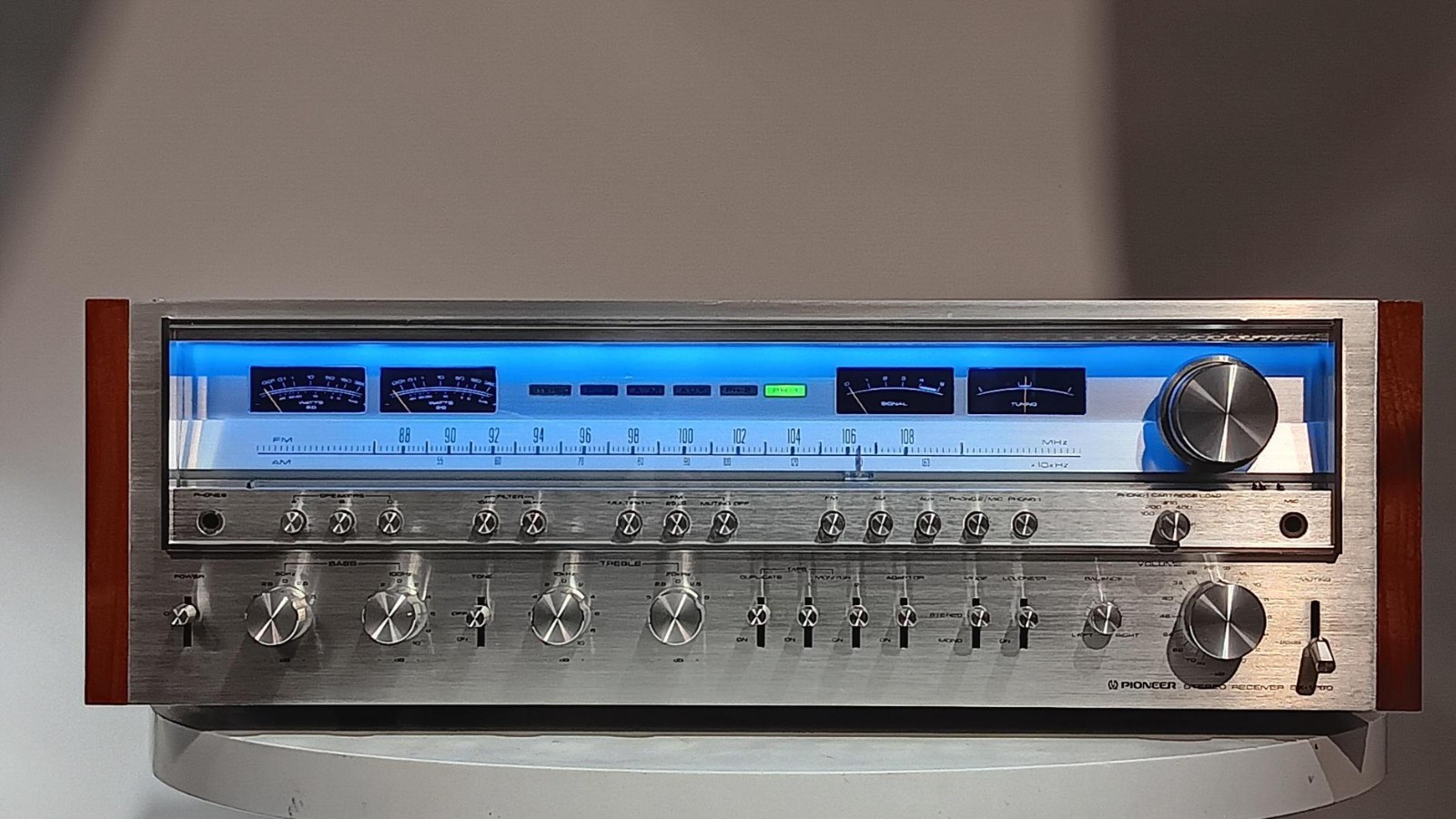
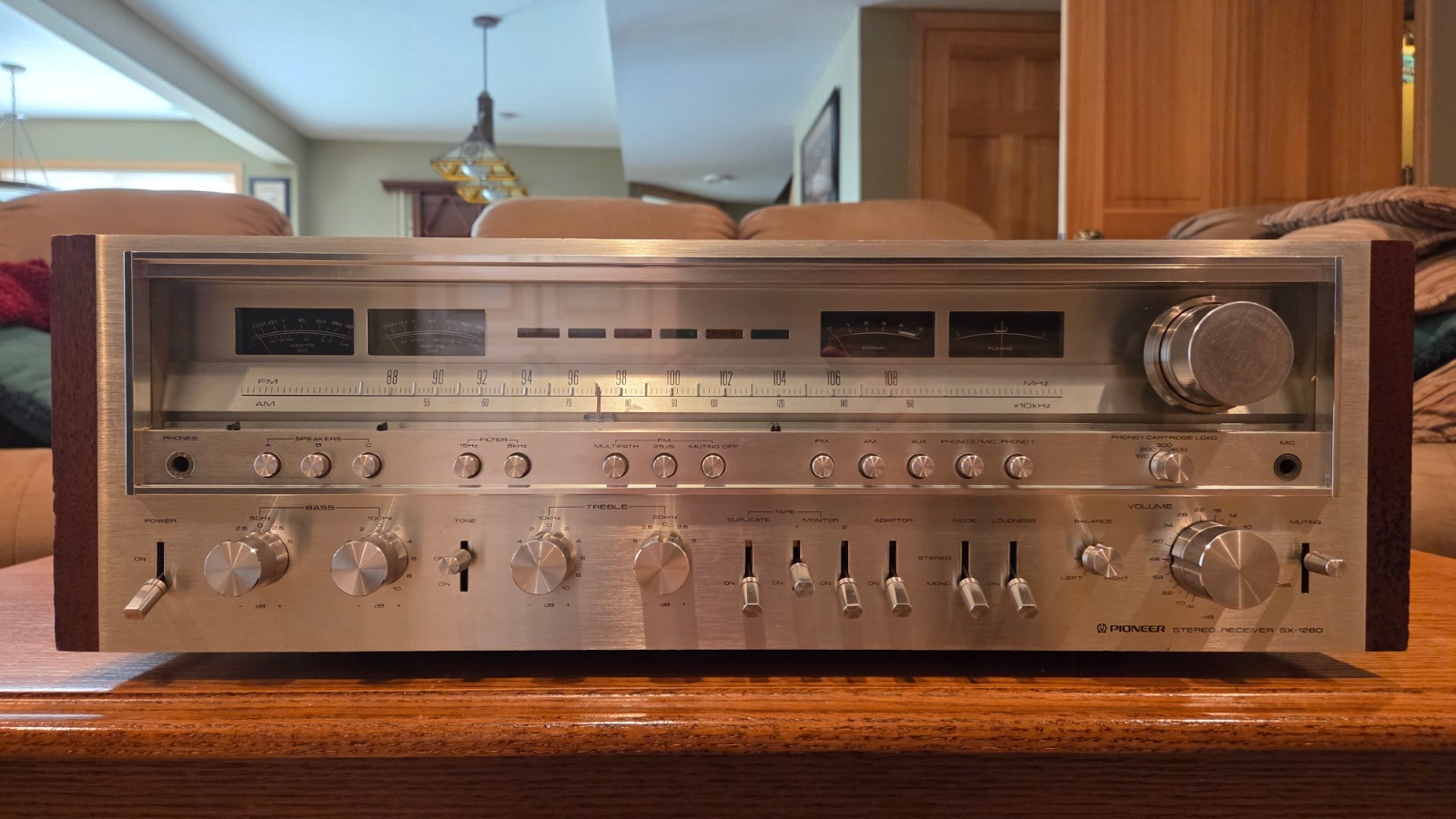
The front panel design, with its large VU meters, rotary controls, and blue-backlit display, is iconic—both functional and aesthetically striking.
Market Value and Collectibility
Today, the Pioneer SX-1280 is highly collectible and sought after by vintage audio enthusiasts. In working condition, prices typically range from $600 to $1,200, depending on cosmetic condition, functionality, and provenance. Units with original packaging, manuals, or low usage can command even higher prices, especially in Japan and Europe where vintage audio culture remains strong.
Its collectibility stems from several factors:
- Rarity: While not extremely rare, well-maintained examples are increasingly hard to find.
- Build Quality: Represented the peak of Japanese manufacturing in the late 1970s.
- Performance: Still competes with modern amplifiers in real-world listening.
- Cultural Status: Frequently cited in audiophile forums and vintage gear guides as a "holy grail" receiver.
Common Issues and Maintenance
Despite its robust construction, the SX-1280 is now over 45 years old, and several maintenance concerns should be addressed:
- Capacitor Aging: Electrolytic capacitors in the power supply and signal path degrade over time. A full recapping is often recommended for long-term reliability.
- Tuner Degradation: The FM tuner may suffer from weak reception or noisy operation due to aging varactor diodes or dirty tuning capacitors.
- Relay Failure: The speaker protection relays can stick or fail, leading to no sound or distorted output.
- Potentiometer Noise: The volume and balance controls may develop crackling due to worn carbon tracks; cleaning or replacement is advised.
- Bias Drift: Output transistor bias may need adjustment to ensure optimal performance and prevent overheating.
Regular maintenance—such as cleaning controls, checking solder joints, and verifying proper bias settings—can extend the life of an SX-1280 indefinitely. Many technicians specialize in restoring vintage Pioneer gear, and replacement parts are still available through niche suppliers.
Comparison to Similar Models
| Model | Power (RMS) | Key Differences |
| Pioneer SX-1980 | 180W per channel | Higher power, slightly later model (1979), even more collectible |
| Yamaha CR-1 | 100W per channel | Simpler design, less powerful, but highly regarded for musicality |
| Sansui AU-D101 | 130W per channel | Similar power, tube-like warmth, excellent tuner |
| Sony STR-V777ES | 150W per channel | IC-based amps, less refined sound, heavier use of op-amps |
| Kenwood KR-8100 | 120W per channel | Excellent build, but less powerful and less rare |
While the SX-1980 is often considered the king of Pioneer receivers, the SX-1280 offers nearly identical sonic performance at a slightly lower price point. It lacks the SX-1980’s higher wattage and dual VU meters per channel, but for most listeners, the difference is marginal.
Final Verdict
The Pioneer SX-1280 is more than just a vintage receiver—it’s a masterpiece of analog engineering. With its powerful, clean sound, bulletproof construction, and timeless design, it remains a top-tier choice for audiophiles who value authenticity and performance. Whether you're building a classic hi-fi system or restoring a piece of audio history, the SX-1280 delivers an experience that few modern components can match.
For those lucky enough to own one in good condition, it’s not just equipment—it’s a legacy. And for those seeking one, patience and care in restoration will be richly rewarded with decades of musical enjoyment.
eBay Listings


As an eBay Partner, we earn from qualifying purchases. This helps support our independent vintage technology research.
Related Models
- Pioneer QX-949A (1978)
- Pioneer SX-2000 (1978)
- Pioneer SX-2500 (1978)
- Pioneer QX-646 (1978)
- Pioneer SX-1900 (1978)
- Marantz SR-2000 (1999–2001)
- Onkyo TX-1500MKII (1975)
- Pioneer SX-201 (1978)
- Pioneer SX-251R (1976)
- Realistic STA-2250 (1975)