Pioneer SX-1050: The Pinnacle of Late-1970s High-Fidelity Power
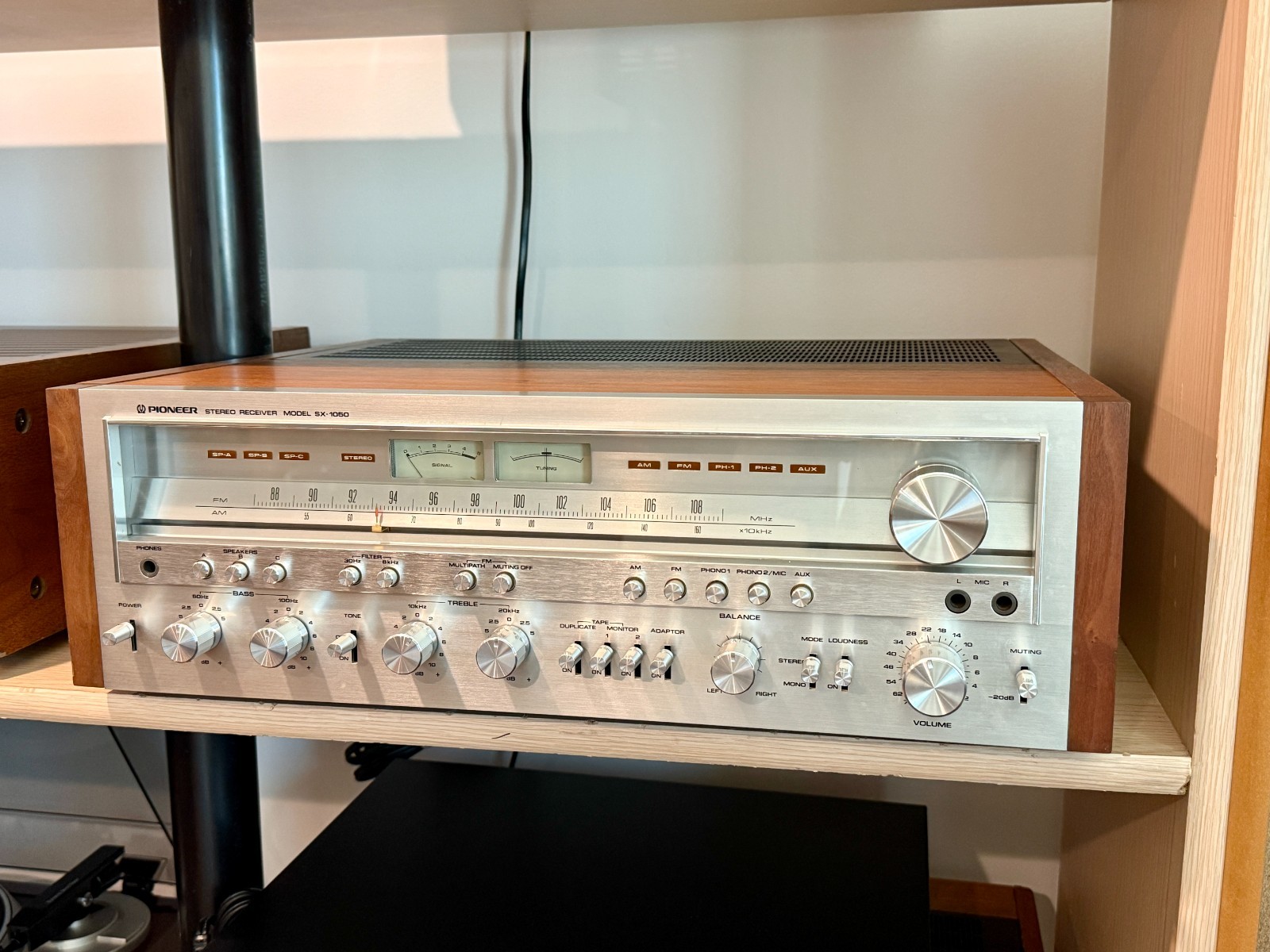
The Pioneer SX-1050, released in 1978, stands as one of the most revered stereo receivers in the golden era of analog audio. Representing the zenith of Pioneer’s engineering prowess during the late 1970s, the SX-1050 was designed not just to deliver power, but to do so with precision, musicality, and a build quality that has allowed many units to remain fully functional—and highly sought after—over four decades later. As part of Pioneer’s elite “SX” series, the SX-1050 was positioned as a flagship model, combining robust amplification, advanced tuning circuitry, and a luxurious aesthetic that graced the shelves of serious audiophiles and music lovers alike.
Historical Context: The Rise of the High-Power Receiver
The late 1970s marked a turning point in home audio. As stereo systems became mainstream, manufacturers competed fiercely to offer higher power ratings, improved signal-to-noise ratios, and more sophisticated features. Pioneer, already a dominant force in the receiver market, responded with the SX series—models that emphasized not just wattage, but sonic integrity and engineering excellence.
The SX-1050 arrived at a time when solid-state amplifiers were overtaking tube designs, and consumers demanded clean, dynamic sound capable of driving increasingly efficient loudspeakers. With 130 watts per channel into 8 ohms (both channels driven), the SX-1050 was among the most powerful receivers of its era. Unlike many competitors who advertised inflated "peak power" numbers, Pioneer stood behind its conservative, accurate RMS ratings—a hallmark of the brand’s commitment to transparency and performance.
Technical Specifications
| Specification | Detail |
| Power Output | 130W RMS per channel (8Ω, both channels driven) |
| Frequency Response | 20Hz – 20kHz (±0.5dB) |
| Total Harmonic Distortion | 0.04% (1kHz, 8Ω) |
| Damping Factor | >200 (1kHz, 8Ω) |
| Input Sensitivity (MM) | 2.5mV |
| Input Sensitivity (Line) | 150mV |
| Signal-to-Noise Ratio | 86dB (MM), 106dB (line) |
| Phono Equalization | RIAA |
| Tuning Range (FM) | 87.5 – 108 MHz |
| Tuning Range (AM) | 530 – 1710 kHz |
| Speaker Impedance | 4–16Ω |
| Dimensions (W×H×D) | 480 × 167 × 425 mm |
| Weight | 21.8 kg (48 lbs) |
| Power Supply | Dual-mono toroidal-style transformer setup |
| Amplifier Type | Fully discrete, no ICs in signal path |
Sound Quality: Power with Finesse
The SX-1050 is often praised for its balanced, dynamic, and highly detailed sound signature. Unlike some high-powered receivers of the era that leaned toward clinical or harsh tonality, the SX-1050 delivers a warm yet precise presentation. Its dual-mono power supply—featuring separate rectifiers and filtering for left and right channels—ensures exceptional channel separation and dynamic headroom, even with demanding speaker loads.
Bass response is tight and authoritative, capable of driving inefficient floor-standing speakers like the AR-3a or JBL L100 with ease. The midrange is clear and natural, making vocals and acoustic instruments sound lifelike. High frequencies are extended but never sibilant, thanks to low distortion and excellent circuit layout.
The phono stage, designed for moving magnet (MM) cartridges, is particularly impressive for its time. With low noise and accurate RIAA equalization, it can extract excellent detail from vinyl records—especially when paired with a high-quality turntable like the Technics SL-1200 or Dual 1219.
Notable Features and Innovations
The SX-1050 was packed with features that set it apart from its contemporaries:
- Discrete Amplifier Design: No integrated circuits in the audio path, ensuring pure analog signal reproduction.
- Dual-Mono Power Supply: A rare feature in receivers, this design minimizes crosstalk and improves stability.
- High-Current Output Stage: Capable of driving low-impedance speakers without strain.
- Precision FM Tuner: Features a digital frequency counter (on later production runs) and excellent selectivity, making it a favorite among FM DXers.
- Loudness Control with Variable Compensation: Allows users to adjust bass and treble lift at low volumes based on listening preference.
- Tape Monitor Function: Enables seamless switching between tape loops and direct source input.
- Heavy-Duty Construction: Weighing in at nearly 22 kg, the SX-1050 is built like a tank, with a rigid chassis, high-quality potentiometers, and gold-plated speaker terminals.
Market Value and Collectibility
Today, the Pioneer SX-1050 is considered a highly collectible vintage receiver, especially in working condition with clean cosmetics. Units that have been properly maintained or professionally restored can command $400 to $800 USD, depending on region, condition, and included accessories (such as original remote controls or manuals).
Models with the digital frequency display (introduced in later 1979 production) are slightly more desirable due to their modernized appearance and improved tuning precision. Collectors and audiophiles value the SX-1050 not only for its sound but also as a symbol of late-1970s Japanese audio engineering excellence.
It often trades hands on platforms like eBay, Audiogon, and specialized vintage audio forums. Fully refurbished units with new capacitors and cleaned controls can exceed $900, particularly if paired with matching components from the SX series.
Common Issues and Maintenance
Despite its robust build, the SX-1050 is not immune to age-related issues:
- Capacitor Aging: The electrolytic capacitors in the power supply and signal path degrade over time, leading to hum, reduced performance, or channel imbalance. A full recapping by a qualified technician is recommended for units that haven’t been serviced in decades.
- Oxidized Controls: The volume and selector potentiometers can develop crackling or channel dropouts. Cleaning with contact cleaner (e.g., DeoxIT) may help, but replacement with modern equivalents is often necessary.
- Bias Drift: The output transistor bias can drift, causing distortion or overheating. This should be checked and adjusted during servicing.
- Tuner Alignment: The FM section may require realignment to restore optimal sensitivity and stereo separation.
- Rubber Components: Any rubber parts (e.g., in remote controls or internal dampers) may have perished and should be replaced if needed.
Regular use and proper ventilation are essential—never stack equipment on top of the SX-1050, as it requires ample airflow to dissipate heat from its massive heat sinks.
Comparison to Similar Models
| Model | Power (RMS) | Key Differences |
| Pioneer SX-1250 (1979) | 160W PC | Higher power, larger chassis, more advanced tuner, slightly later model; considered the ultimate SX receiver. |
| Pioneer SX-950 (1977) | 100W PC | Slightly less power, simpler power supply, but still excellent sound; more affordable alternative. |
| Sansui AU-9900 (1978) | 130W PC | Similar power, renowned for lush midrange; different sonic character (more "romantic" vs. SX-1050’s neutrality). |
| Yamaha CR-1 (1978) | 110W PC | Premium build, tube-like warmth, but less powerful and rarer. |
| Kenwood KR-8000D (1979) | 120W PC | Competitive feature set, but less robust power supply and lower damping factor. |
The SX-1050 strikes a near-perfect balance between raw power, fidelity, and build quality, making it a favorite among those who want a single-component solution without sacrificing performance.
Final Thoughts
The Pioneer SX-1050 is more than just a vintage receiver—it’s a testament to an era when audio equipment was built to last, perform, and inspire. Its combination of muscular output, refined sound, and bulletproof construction has earned it a permanent place in the pantheon of classic audio gear.
Whether you're building a retro setup, diving into vinyl for the first time, or seeking a reliable powerhouse for your speakers, the SX-1050 remains a compelling choice. With proper care and maintenance, it can continue delivering exceptional sound for decades to come—proving that true high fidelity never goes out of style.
eBay Listings


As an eBay Partner, we earn from qualifying purchases. This helps support our independent vintage technology research.
Related Models
- Pioneer QX-949A (1978)
- Pioneer SX-2000 (1978)
- Pioneer SX-2500 (1978)
- Pioneer QX-646 (1978)
- Pioneer SX-1900 (1978)
- Marantz SR-2000 (1999–2001)
- Onkyo TX-1500MKII (1975)
- Pioneer SX-201 (1978)
- Pioneer SX-251R (1976)
- Realistic STA-2250 (1975)