Pioneer SX-1000T (1967–1970)
When Pioneer staked its claim in American living rooms with a receiver that mixed tubes, transistors, and brute-force engineering.
Overview
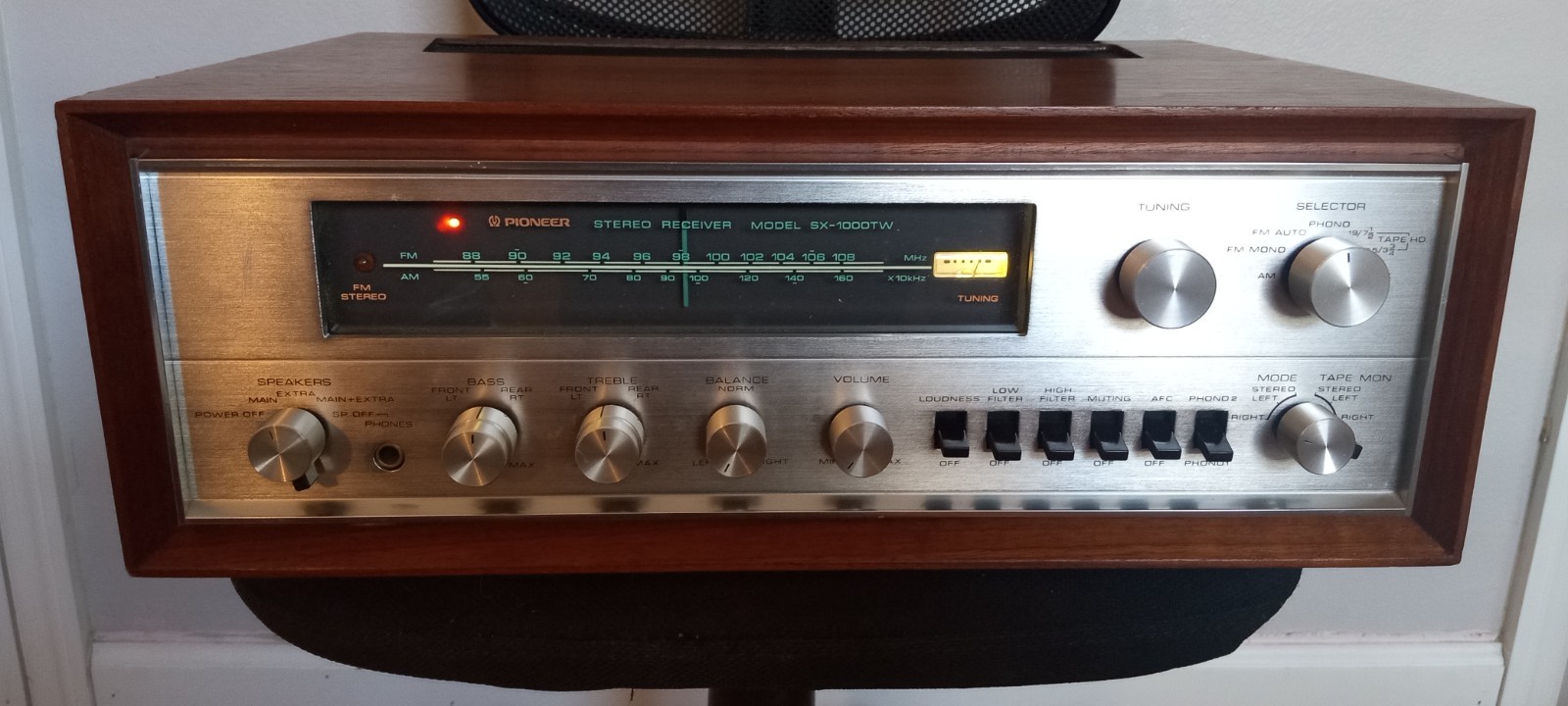
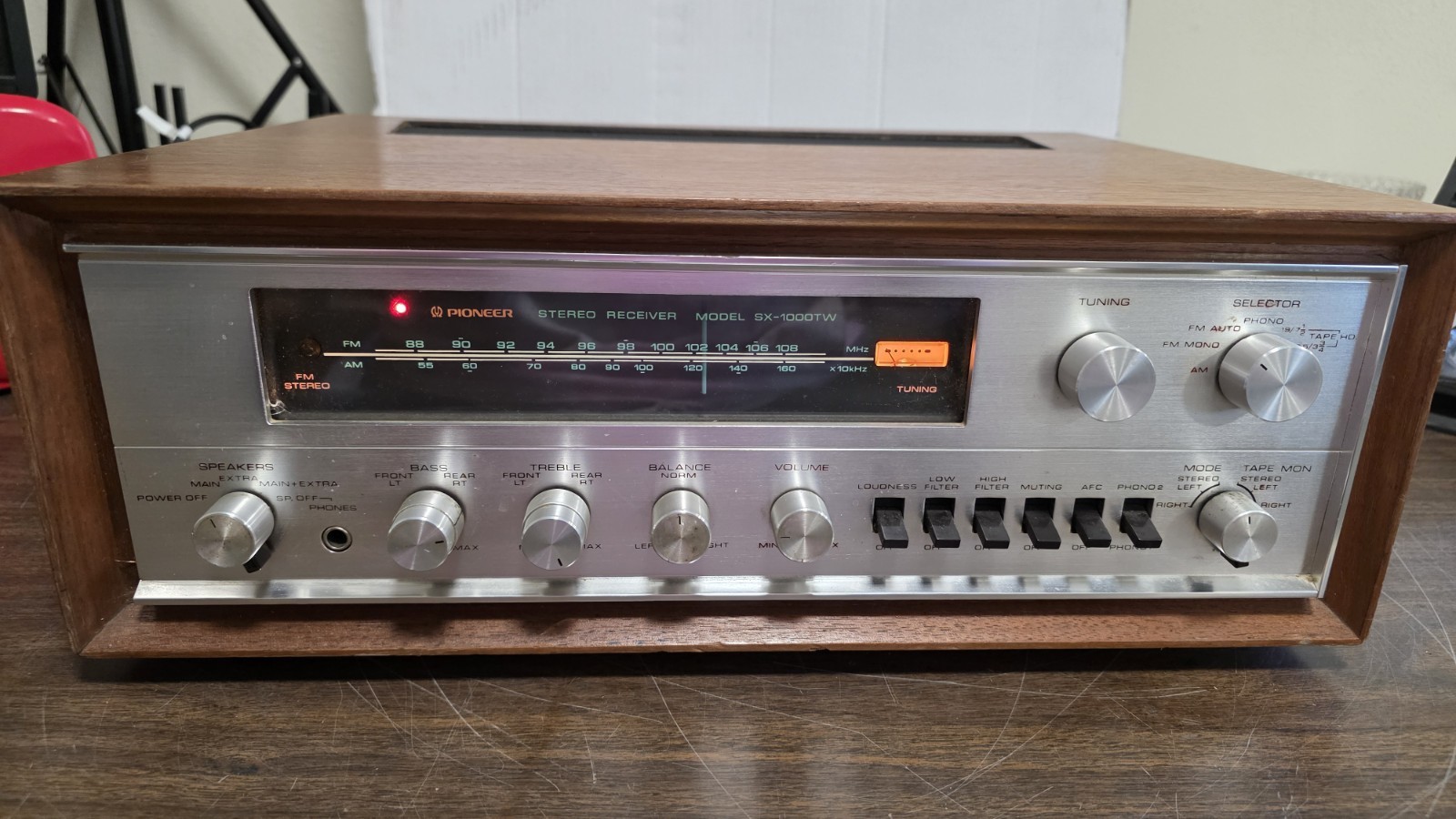
The Pioneer SX-1000T wasn’t just another receiver from the late 1960s—it was a statement. At a time when high-fidelity gear was rapidly shifting from tubes to solid-state, Pioneer threw a curveball: a hybrid design that embraced both worlds. The SX-1000 series came in multiple flavors, but the original SX-1000TA started it all, combining a tube-based tuner section—complete with Nuvistors, those compact, high-performance mini-tubes—with a solid-state amplifier using rugged TO-3 output transistors. It was a bold fusion of old and new, aimed squarely at audiophiles who wanted warmth without sacrificing reliability.
This wasn’t a budget play. The SX-1000 series was built like a tank, with a wide, imposing chassis (especially the SX-1000T and TW models at 17-11/16" wide), serious weight (up to 29.1 lbs), and a feature set that punched above its price point. It helped Pioneer crack the U.S. market by offering performance that rivaled more expensive European brands, all while maintaining Japanese build discipline. Whether you grabbed the tube-hybrid TA, the all-solid-state TW, or the slightly down-specced TD (also sold under the Allied brand as the 395), you were getting a piece of Pioneer’s first major push into high-end receivers.
Specifications
| Manufacturer | Pioneer |
| Model | SX-1000T |
| Production Years | 1967–1970 |
| Power Output (SX-1000T/TW) | 60 watts (IHF) |
| Power Output (SX-1000TD) | 50 watts RMS per channel at 8 ohms |
| Power Output (SX-1000TA) | 40 watts RMS per channel into 8 ohms |
| Dimensions (SX-1000T/TW) | 17-11/16" W x 5-1/4" H x 13-3/4" D |
| Dimensions (SX-1000TD) | 15 15/16" W x 5 3/8" H x 13 3/4" D |
| Weight (SX-1000T/TW) | 29.1 lbs (13.2 kg) |
| Weight (SX-1000TD) | 23 lbs. / 10.6 kg |
| FM Frequency Range | 87-108 MHz |
| FM IHF Usable Sensitivity | 1.7 uV |
| FM Image Rejection | 76 dB (at 98 MHz) |
| FM Signal-to-Noise Ratio | 65 dB (IHF) |
| FM Capture Ratio | 1 dB (at 98 MHz) |
| FM Antenna Input | 300 ohms (balanced) |
| AM Frequency Range | 525-1605 kHz |
| AM IHF Usable Sensitivity | 20 uV |
| AM Image Rejection | 60 dB (at 1000 kHz) |
| AM Antenna | Built-in Ferrite loopstick |
| Channel Separation | 37 dB (at 1 kHz) |
| Frequency Response (SX-1000TD) | +/-1 dB, 20 Hz to 50 kHz |
| Frequency Response (SX-1000T) | 20Hz to 20kHz |
| Total Harmonic Distortion | Less than 0.5% (at 1 kHz rated output) |
| Power Bandwidth (SX-1000TD) | 15 Hz to 50 kHz (AUX) |
| Hum & Noise (SX-1000TD) | TAPE HEAD: >75 dB, MAG: >80 dB, AUX: >90 dB |
| Input Sensitivity (SX-1000TD) | PHONO (MAG): 2.4 mV / 50 kOhms; PHONO (CER): 51 mV / 90 kOhms; TAPE HEAD: 1.5 mV / 120 kOhms; TAPE MON/AUX: 200 mV / 100 kOhms |
| Input Sensitivity (SX-1000T) | PHONO: 2.5mV; AUX: 150mV |
| Signal to Noise Ratio (SX-1000T) | PHONO: 60dB; AUX: 80dB |
| Damping Factor | 25 (8 ohms, 1 kHz) |
| Speaker Impedance | 4 to 16 ohms |
| Outputs | Stereo headphones jack, simultaneous tape recording jacks (with TAPE MONITOR switch), DIN tape jack |
| Equalization | PHONO: RIAA; TAPE: NAB |
| Tone Controls | BASS: +12/-14 dB at 50 Hz; TREBLE: +10/-11.5 dB at 10 kHz |
| Filters | LOW: -6 dB at 50 Hz; HIGH: -10 dB at 10 kHz |
| Loudness Contour | Switchable, +12 dB at 50 Hz, +6.5 dB at 10 kHz (at -40 dB volume) |
| Power Consumption | 200 watts (Max) |
| Fuse Rating (SX-1000TW) | 3A |
| Semiconductors (SX-1000T) | 28 transistors, 14 diodes |
| Semiconductors (SX-1000TD) | Tuner: 1 FET, 4 ICs, 12 transistors, 16 diodes. Audio: 27 transistors, 13 diodes. |
Key Features
Hybrid and Solid-State Variants
The SX-1000 series wasn’t a one-size-fits-all design. The SX-1000TA was the pioneer—literally—featuring vacuum tubes in the tuner section, including Nuvistors, which offered low noise and high gain in a compact form. This gave the tuner a smooth, rich character that many owners still praise. Meanwhile, the amplifier section used solid-state TO-3 output transistors, a sign of Pioneer’s forward-looking engineering. Later models, like the SX-1000TW and SX-1000TD, dropped the tubes entirely in favor of all-silicon transistor circuitry, making them more reliable and easier to maintain.
FM Tuner and Multiplex Section
The FM front end in the solid-state models used a FET and a 4-gang variable air capacitor, a high-quality approach that ensured stable tracking and excellent sensitivity. The IF amplifier relied on four ICs, which was advanced for the time. The multiplex section used a time-switching type demodulator for stereo decoding, with automatic mono/stereo selection—a convenience feature that prevented noisy stereo reception when signals were weak.
Proprietary Speaker Connections
One quirk that still trips up collectors: the SX-1000 series used proprietary speaker plugs on the back panel. These aren’t standard binding posts or banana jacks, so finding or fabricating adapters is often necessary. It’s a small pain point, but one that reminds you this was a system designed to be used with matching Pioneer components.
Historical Context
The SX-1000TA debuted around 1967 or 1968, marking one of Pioneer’s first serious entries into the high-fidelity receiver market. It was followed by the all-solid-state SX-1000TW and SX-1000TD models, which broadened the series’ appeal. The SX-1000TD was even rebadged and sold in the U.S. by Allied as the 395, a testament to its value proposition. This series played a crucial role in establishing Pioneer’s reputation in North America, offering high performance at competitive prices and laying the groundwork for the brand’s future success in receivers.
Collectibility & Value
All SX-1000 variants are sought after by collectors and vintage audio enthusiasts. Their mix of advanced engineering, solid build, and historical significance makes them desirable. In excellent working condition, prices typically range from ~$150 to over $500, depending on model and completeness. The hybrid SX-1000TA tends to command more interest due to its unique tube/solid-state design, but working examples are harder to find.
Common issues include missing speaker plug adapters, crackling pots and switches, aging electrolytic capacitors (which should be replaced during restoration), failed output transistors (especially in the TA model), and leaky germanium diodes on the MPX board in TA units. Fortunately, service manuals and restoration guides are available online, making repairs feasible for the dedicated hobbyist.
eBay Listings


As an eBay Partner, we earn from qualifying purchases. This helps support our independent vintage technology research.
Related Models
- Pioneer QX-949A (1978)
- Pioneer SX-2000 (1978)
- Pioneer SX-2500 (1978)
- Pioneer QX-646 (1978)
- Pioneer SX-1900 (1978)
- Marantz SR-2000 (1999–2001)
- Onkyo TX-1500MKII (1975)
- Pioneer SX-201 (1978)
- Pioneer SX-251R (1976)
- Realistic STA-2250 (1975)