Pioneer CT-F9191 (1975–1977)
At 35 pounds, it doesn’t just sit on the rack—it claims it.
Overview
The Pioneer CT-F9191 isn’t a subtle machine. Weighing in at over 35 pounds, it’s a statement in walnut and brushed steel, built like a vault door and engineered like a broadcast console. Introduced in 1975 and produced through at least 1977, this stereo cassette tape deck was positioned as the flagship of Pioneer’s cassette lineup—a title it earns not through marketing fluff, but sheer mechanical density. It was designed for users who didn’t just record tapes—they archived them, duplicated them, and expected them to sound like the master.
Despite its age, the CT-F9191 still turns up in discussions among analog diehards, often in the context of repair or restoration. Its reputation rests on two pillars: exceptional build quality and a tendency, after decades of dormancy, to need a full mechanical refresh. The 3-motor, 3-head configuration was top-tier for its day, and the full-logic solenoid transport promised reliability through precision actuation. It wasn’t just another cassette deck—it was a workstation.
Specifications
| Manufacturer | Pioneer |
| Product type | Cassette deck |
| Frequency Response | 20Hz-20kHz (±3dB) with Fe-Cr tape |
| Wow & Flutter | 0.04% (WRMS) |
| Signal-to-Noise Ratio | 70dB (Fe-Cr, Dolby NR on) |
| Total Harmonic Distortion | 1.5% (1kHz, 0dB) |
| Inputs | MIC x 2, LINE x 2 |
| Outputs | LINE x 2, HEADPHONES x 1 |
| Motors | 1 x FG servo DC motor (capstan), 2 x DC motors (reel) |
| Heads | 1 x record/playback head (hard permalloy), 1 x erase head (2-gap ferrite) |
| Fast Forward/Rewind Time | Approx. 80 sec. with C-60 cassette |
| Semiconductors | 46 transistors, 2 FETs, 32 diodes, 2 LEDs, 1 IC |
| Power Requirements | 120V, 60Hz (U.S.A. and Canadian models) |
| Power Consumption | 28W |
| Dimensions (W x H x D) | 19-7/16" x 6-3/8" x 14-3/16" |
| Weight | 35 lbs. 4 oz. (16.0 kg) |
Key Features
3-Motor, 3-Head Configuration
Three motors mean dedicated drive for the capstan and each reel, eliminating the need for belts or clutches to switch directions. The capstan is driven by an FG servo DC motor, which uses feedback to maintain precise tape speed—critical for low wow and flutter. Paired with separate record/playback and erase heads, this setup allows for true simultaneous monitoring during recording and cleaner erasure without crosstalk. Hard permalloy for the record/playback head suggests an emphasis on high-frequency response and durability, while the 2-gap ferrite erase head likely targets both tracks independently for thorough signal removal.
Full-Logic Solenoid Transport Control
Unlike simpler cassette decks that rely on mechanical linkages or user-manipulated levers, the CT-F9191 uses solenoids governed by logic circuits to engage play, record, rewind, and fast-forward. Once a function is pressed, the mechanism locks in until stopped or another command is issued. This reduces wear and prevents partial engagement, a common failure point in lesser decks. It’s not silent—there’s a satisfying clunk when the tape head lowers—but it’s deliberate, not finicky.
Double Dolby Noise Reduction System
The Double Dolby noise reduction system was supported, giving users flexibility depending on tape type and recording level. With Dolby NR engaged, the signal-to-noise ratio hits 70dB—a strong figure for a cassette deck of this era. The system is integrated into the direct-coupled, 3-stage, negative feedback equalizer amplifier, which helps maintain consistent frequency response across tape formulations.
Memory Rewind with Automatic Play
A niche but appreciated feature: after rewinding a tape, the deck can be set to automatically drop into play mode the moment rewind completes. This wasn’t just convenience—it was workflow. For users duplicating tapes or reviewing recordings, it eliminated the need to manually start playback after rewinding to the beginning. The memory function likely relies on a mechanical latch or early digital logic to hold the command state through the transport cycle.
Peak Reading Meters with Two-Step LED Indicators
The dual VU meters are more than decorative. They’re peak-reading, meaning they respond quickly to transient signals, helping prevent overmodulation during recording. The two-step LED indicators add a visual cue—likely green for nominal level and red for clipping—giving users a clear margin for safe recording levels. Given the 1.5% THD at 0dB, staying within that sweet spot was essential for clean results.
Wood Case
The cabinet is clad in real wood, consistent with high-end audio gear of the mid-1970s. It’s not just aesthetic—the mass and rigidity help isolate the transport from external vibration. Combined with the 35-pound weight, the case contributes to a stable platform for tape-to-head contact. There’s no mention of internal damping materials, but the sheer heft suggests Pioneer prioritized mechanical stability over acoustic decoupling.
Collectibility & Value
That positions it as a serious investment at the time, not an impulse buy. Today, working units are rare; many arrive non-functional, with dried belts, seized motors, or degraded capacitors. Restoration services exist, with one listing a professional refurbishment for $249. Common issues include slow playback speed—and complete failure after long storage. Enthusiasts who’ve revived these decks report excellent sound quality, but the consensus is clear: buying one “as-is” means budgeting for a full service.
eBay Listings
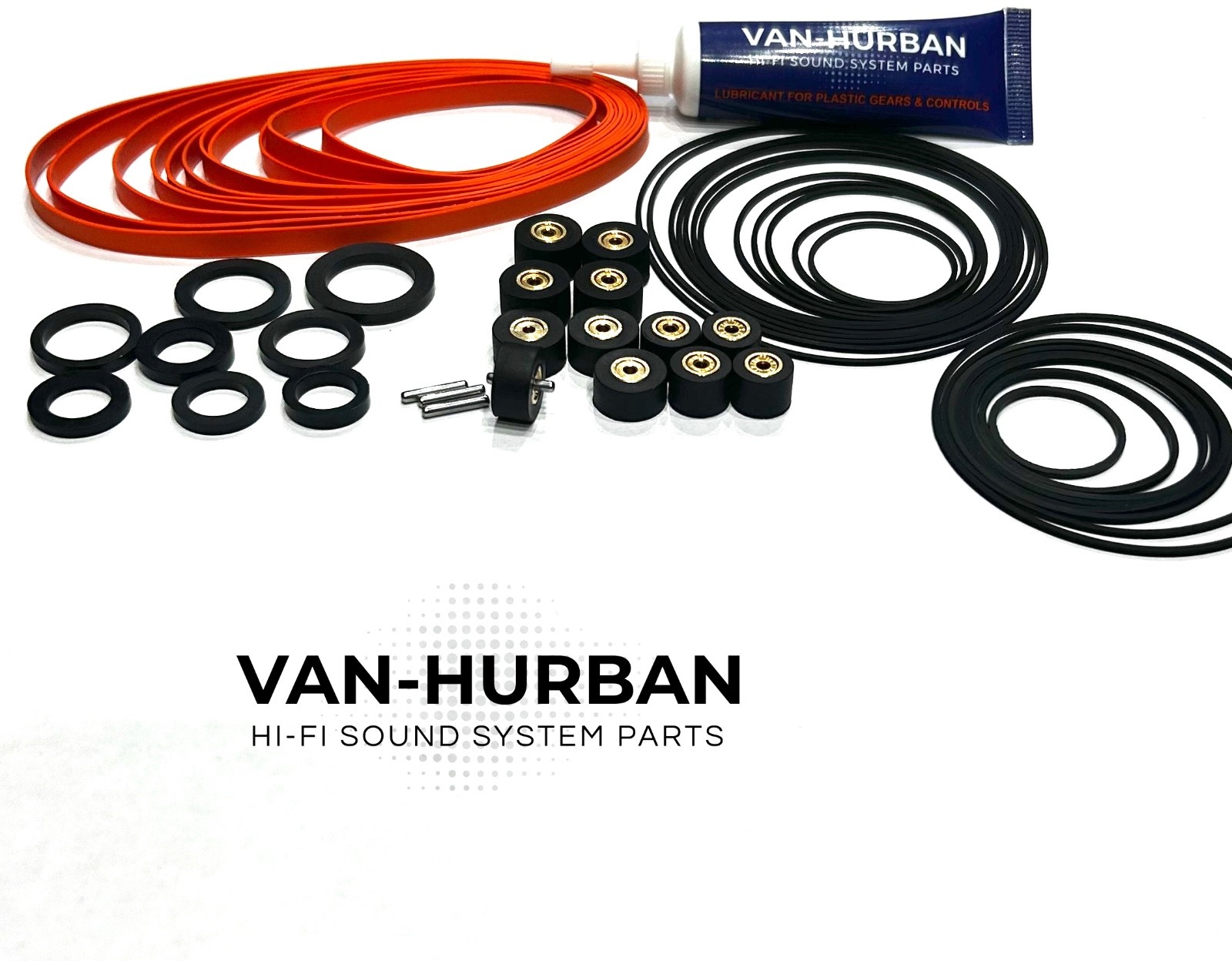
As an eBay Partner, we earn from qualifying purchases. This helps support our independent vintage technology research.