Nakamichi CR-1: The Cassette Recorder That Changed High-Fidelity Forever
In the late 1970s, when most audiophiles still viewed the compact cassette as a convenient but sonically compromised format—suited more for car stereos and portable players than serious listening—Nakamichi stunned the audio world with the release of the CR-1 in 1978. More than just a cassette deck, the CR-1 was a bold declaration that analog tape fidelity could rival open-reel recorders, even within the compact cassette shell. With its precision engineering, innovative three-head design, and obsessive attention to mechanical accuracy, the CR-1 set a new benchmark for cassette reproduction and established Nakamichi as a leader in high-end tape technology.
A New Era in Cassette Fidelity
Prior to the CR-1, most high-quality cassette decks used a two-head system: one combined record/playback head and a separate erase head. While capable of decent performance, these decks struggled with alignment inconsistencies, especially in playback, due to the mechanical compromise of a shared head. Nakamichi’s engineers took a radical approach: they borrowed a page from professional open-reel recorder design and implemented a three-head system in a consumer cassette deck for the first time. The CR-1 featured separate record, playback, and erase heads, each optimized for its specific function. This allowed for precise head alignment and minimized signal degradation, resulting in unprecedented clarity, dynamic range, and frequency response.
The CR-1 was not merely an engineering exercise—it was a statement. At a time when the audiophile community was skeptical of cassette as a high-fidelity medium, Nakamichi proved that with the right mechanics, electronics, and tape formulation, the format could deliver performance that approached the best reel-to-reel systems.
Technical Specifications
| Specification | Detail |
| Year Introduced | 1978 |
| Format | Compact Cassette |
| Head Configuration | 3-head (separate record, playback, erase) |
| Tape Speed | 1⅞ ips (4.76 cm/s) |
| Frequency Response | 20Hz – 20kHz (with metal tape) |
| Wow and Flutter | < 0.055% (weighted) |
| Signal-to-Noise Ratio | Up to 72 dB (with metal tape, dbx) |
| Dynamic Range | ~70 dB (with metal tape) |
| Azimuth Adjustment | Manual, front-panel knob |
| Recording Modes | Type I (Ferric), Type IV (Metal) |
| Noise Reduction | dbx Type I (switchable) |
| Output Level | 0.85 V (1 mW) |
| Inputs | Line-level RCA (dual mono) |
| Outputs | Line-level RCA (dual mono) |
| Dimensions | 445 mm × 146 mm × 368 mm (W×H×D) |
| Weight | 13.6 kg (30 lbs) |
| Power Requirement | 120V / 60Hz or 220–240V / 50Hz |
Sound Characteristics and Performance
The CR-1 was engineered for transparency and neutrality. Its three-head design allowed for optimal head gap tuning: the playback head was narrow for high-frequency extension, while the record head was optimized for saturation characteristics. This separation meant that recordings could be made with maximum fidelity, and playback could be fine-tuned independently—especially critical for azimuth alignment.
With metal tape (a relatively new format at the time) and dbx noise reduction, the CR-1 achieved a dynamic range and signal-to-noise ratio that far exceeded any other cassette deck on the market. The use of dbx, while controversial among purists due to its compression/expansion process, allowed the CR-1 to eliminate tape hiss entirely and deliver a startlingly quiet background, revealing micro-details in recordings.
Listeners reported a soundstage that was wide, deep, and remarkably stable. The CR-1 excelled at reproducing acoustic instruments and vocals with natural timbre and excellent transient response. Bass was tight and well-controlled, while highs were extended without harshness—especially when azimuth was properly adjusted.
Notable Features and Innovations
- Three-Head Design: The most revolutionary feature, allowing independent optimization of record and playback functions.
- Front-Panel Azimuth Control: A rare and valuable feature that let users adjust the playback head’s alignment to match the recording, compensating for misalignment in other decks or tapes recorded on poorly aligned machines.
- dbx Noise Reduction Integration: One of the first consumer decks to offer dbx as a built-in option, dramatically improving signal-to-noise performance.
- Metal Tape Compatibility: Designed to take full advantage of the newly emerging Type IV metal tapes, which offered superior high-frequency response and dynamic range.
- Heavy-Duty Chassis and Transport: Built like a precision instrument, with a rigid steel frame, direct-drive capstan, and rubber pinch roller for stable tape speed and minimal wow/flutter.
- Dual VU Meters: Large, illuminated VU meters provided accurate level monitoring during recording, a feature typically found only on professional gear.
Common Issues and Maintenance
As with any vintage tape deck, the CR-1 requires careful maintenance to perform at its best. Common issues include:
- Worn pinch rollers: These can harden or become glazed over time, leading to speed instability. Replacement with modern silicone rollers is recommended.
- Deteriorated belts: Though the capstan is direct-drive, some internal mechanisms use rubber belts that may need replacement.
- Dirty or worn heads: The playback and record heads should be cleaned regularly with isopropyl alcohol and demagnetized periodically.
- Capacitor aging: The analog circuitry relies on electrolytic capacitors that may dry out over decades. A full recap by a qualified technician is advisable for long-term reliability.
- Azimuth knob stiffness: The front-panel azimuth control can become stiff or noisy; cleaning or replacement of the potentiometer may be needed.
Given its complexity and value, the CR-1 should be serviced by a technician experienced with high-end tape decks. Proper calibration—including azimuth, bias, and level alignment—is essential for optimal performance.
Current Market Value and Collectibility
Today, the Nakamichi CR-1 is a sought-after collector’s item. As the model that launched Nakamichi’s reputation for cassette excellence, it holds a legendary status among analog audio enthusiasts. Units in good working condition typically sell for $800 to $1,500, with fully restored, mint-condition decks commanding even higher prices.
Its rarity—fewer units were produced compared to later models like the Dragon—adds to its desirability. While later Nakamichi decks offered auto-azimuth and digital displays, the CR-1 is prized for its pioneering design, mechanical purity, and historical significance. It represents the moment when cassette fidelity came of age.
Collectors value not only its performance but also its role in audio history. The CR-1 directly influenced the design of the CR-2, CR-3, and ultimately the legendary Nakamichi Dragon, which automated azimuth correction. But the CR-1 was the first—a true milestone.
Conclusion: A Legacy of Innovation
The Nakamichi CR-1 was more than a cassette deck; it was a paradigm shift. By applying professional-grade engineering to a consumer format, Nakamichi challenged the status quo and proved that the compact cassette could be a serious medium for high-fidelity audio. Its three-head design, azimuth adjustability, and support for metal tape and dbx noise reduction set a new standard that competitors scrambled to match.
For vintage audio enthusiasts, the CR-1 is a must-own piece of history—a beautifully engineered machine that delivers a listening experience still impressive by today’s standards. It stands as a testament to a time when innovation, craftsmanship, and a passion for sound converged to create something truly extraordinary.
If you ever get the chance to hear a well-maintained CR-1 playing a metal tape recorded with dbx, don’t pass it up. You’re not just hearing a cassette—you’re hearing the birth of analog tape perfection.
eBay Listings
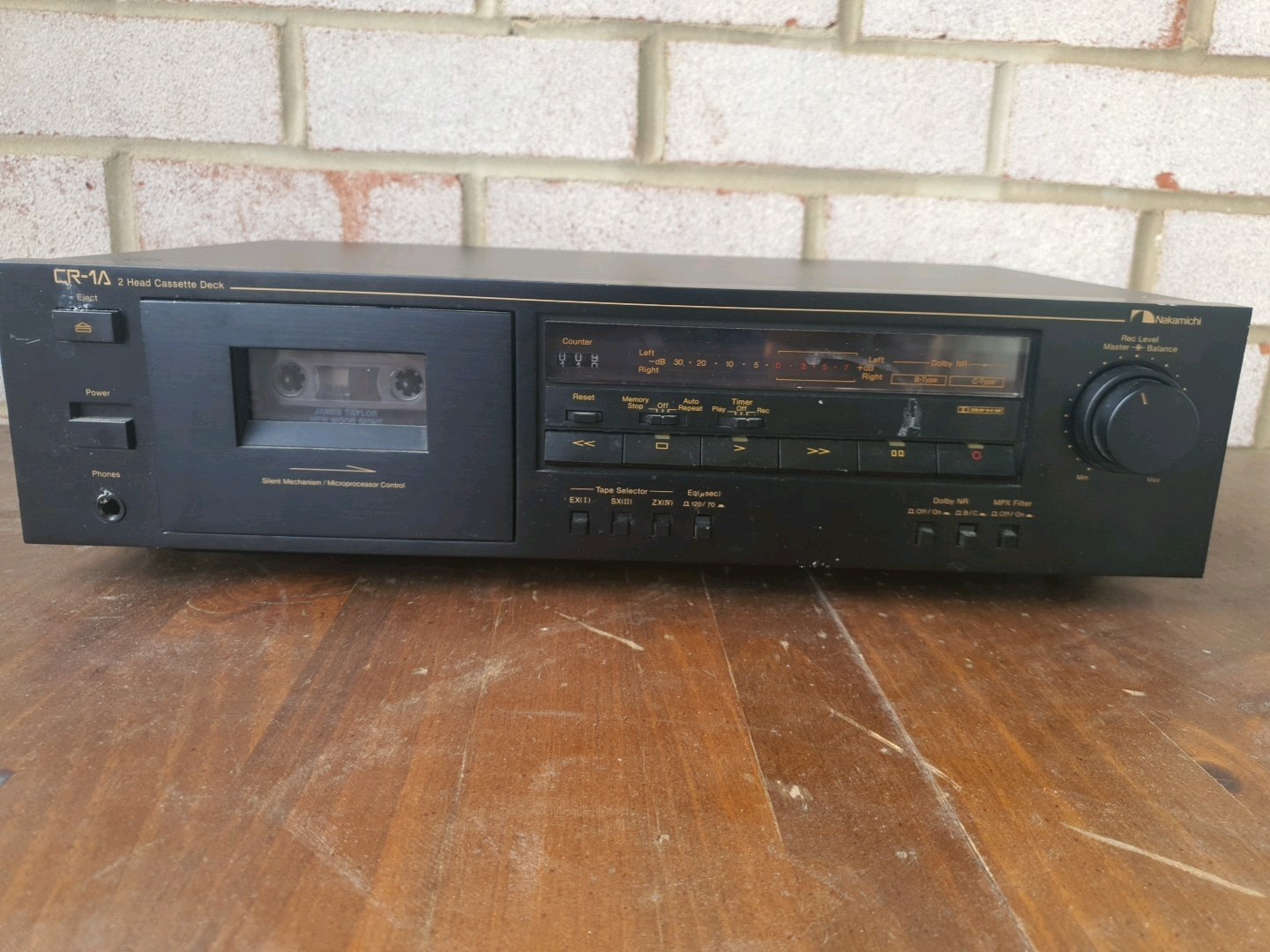
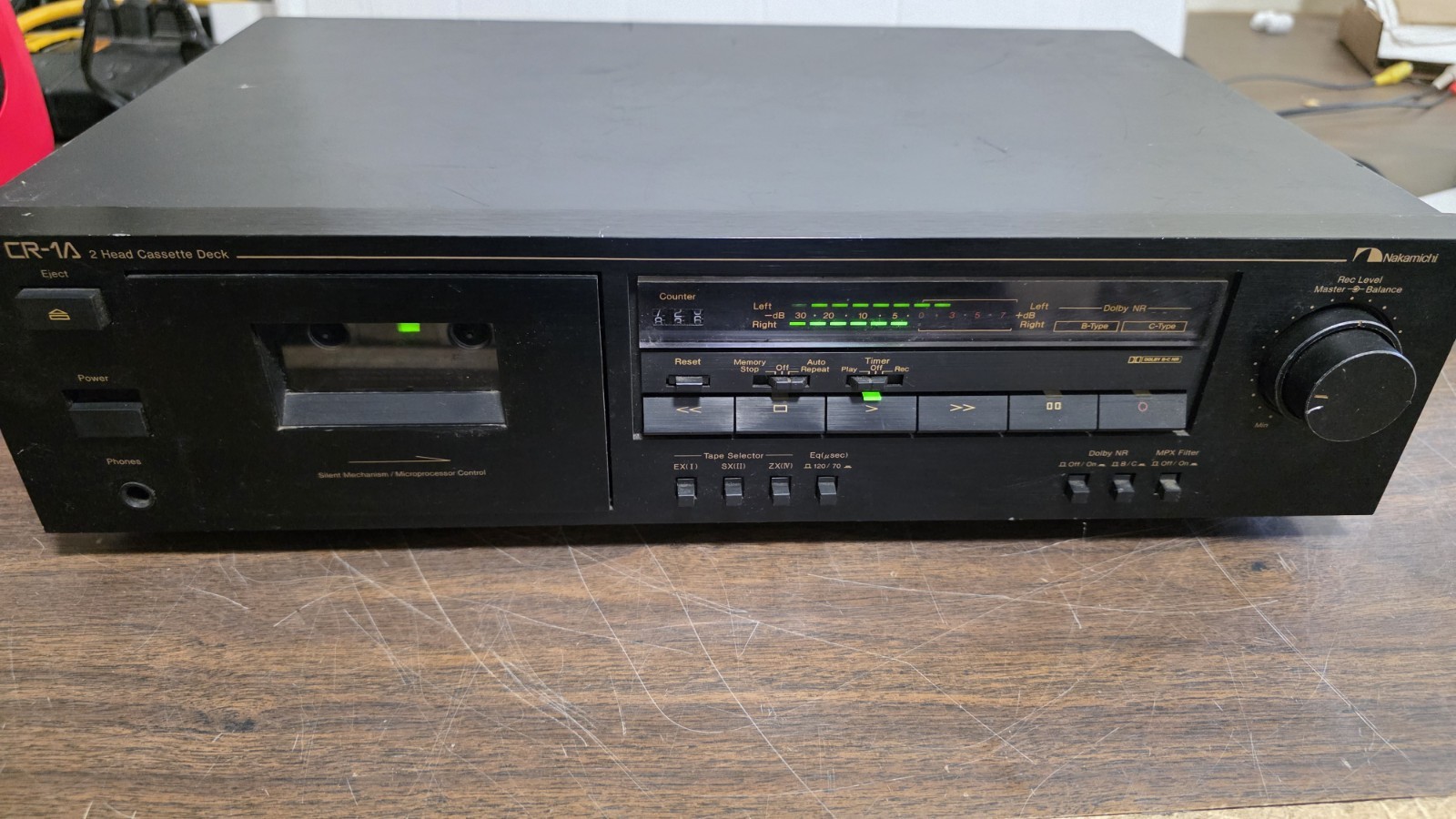

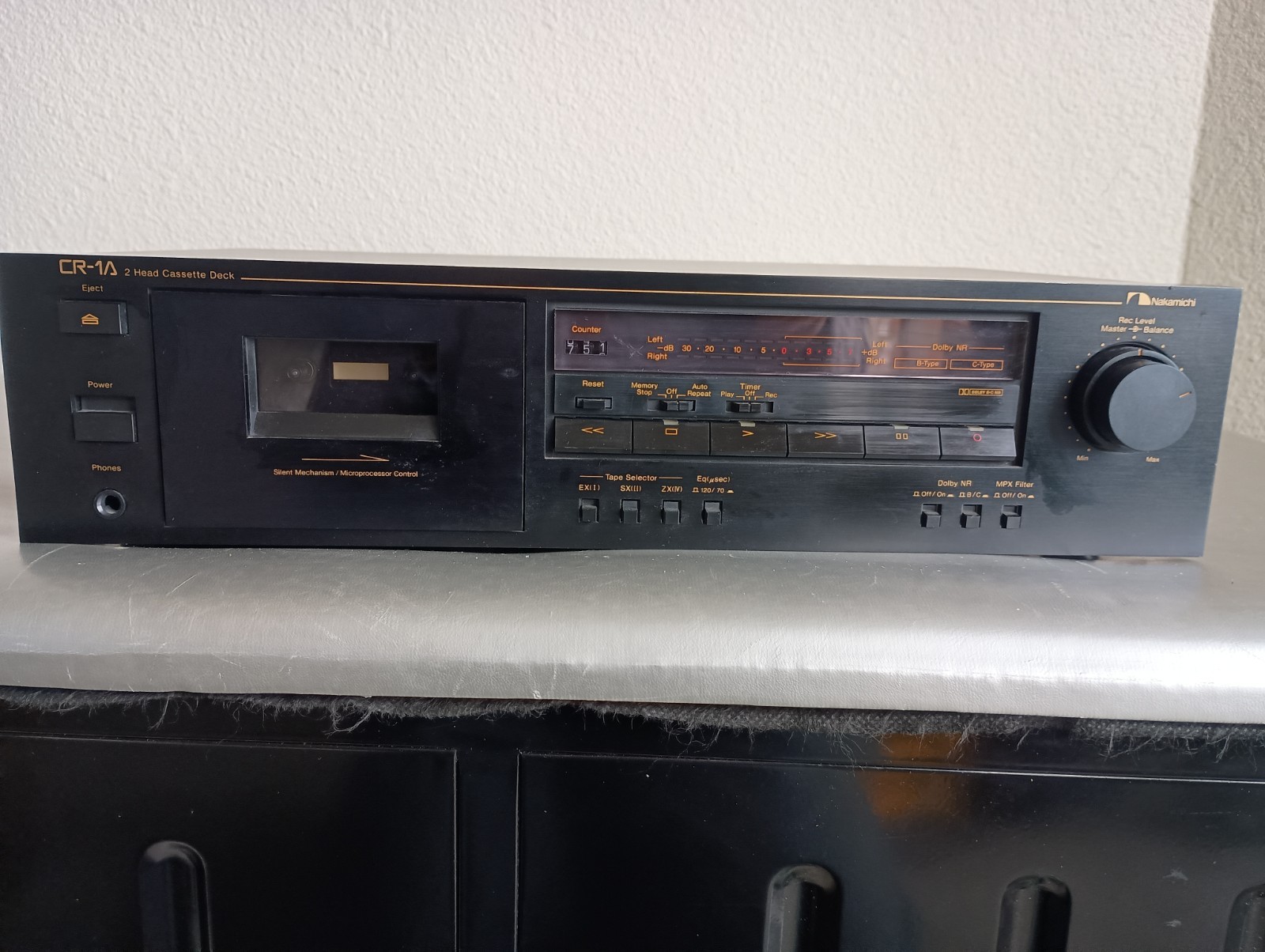
As an eBay Partner, we earn from qualifying purchases. This helps support our independent vintage technology research.
Related Models
- Nakamichi 1000ZXL (1985)
- Nakamichi BX-150 (1983)
- Nakamichi CR-4 (1969)
- Nakamichi 1000-II (1974)
- Nakamichi 1000ZXL-LIMITED (1985)
- Sony TC-2050SD (1978)
- Aiwa AD-F990 (1993)
- Kenwood KX-3060 (1982)
- Sony TC-2130A (1974)
- Sony TC-2220 (1972)