Nakamichi 480: The Precision Pioneer of Cassette Fidelity
In the mid-1970s, as the compact cassette format began its transformation from a dictation tool to a serious medium for high-fidelity audio, few companies embraced the challenge with the technical rigor and sonic ambition of Nakamichi. Among the standout models from this golden era of tape engineering was the Nakamichi 480, a high-performance cassette deck introduced in 1975 that helped establish the Japanese manufacturer as a leader in precision audio reproduction. Though less celebrated than the later, legendary Nakamichi Dragon, the 480 was a critical stepping stone in the company’s journey toward audio perfection—offering audiophiles a taste of what was possible when engineering excellence met musical passion.
A Glimpse into the Cassette Revolution
The early 1970s saw cassette decks evolve from portable, low-fidelity devices into components worthy of inclusion in high-end stereo systems. While brands like Sony and TEAC made strides in quality, it was Nakamichi that consistently pushed the envelope in transport design, head alignment, and frequency response. The Nakamichi 480 arrived at a pivotal moment—when the industry was beginning to recognize the potential of the cassette format for true high-fidelity playback and recording.
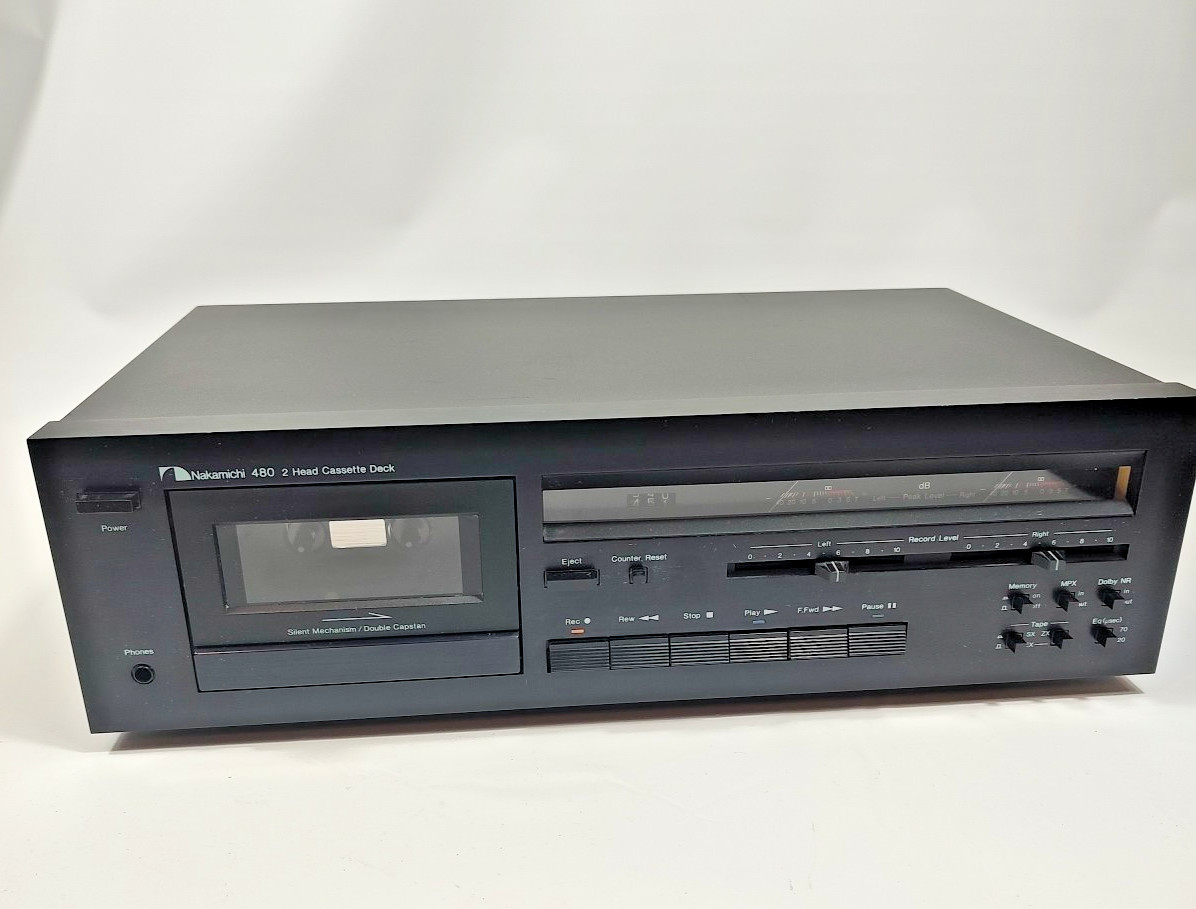
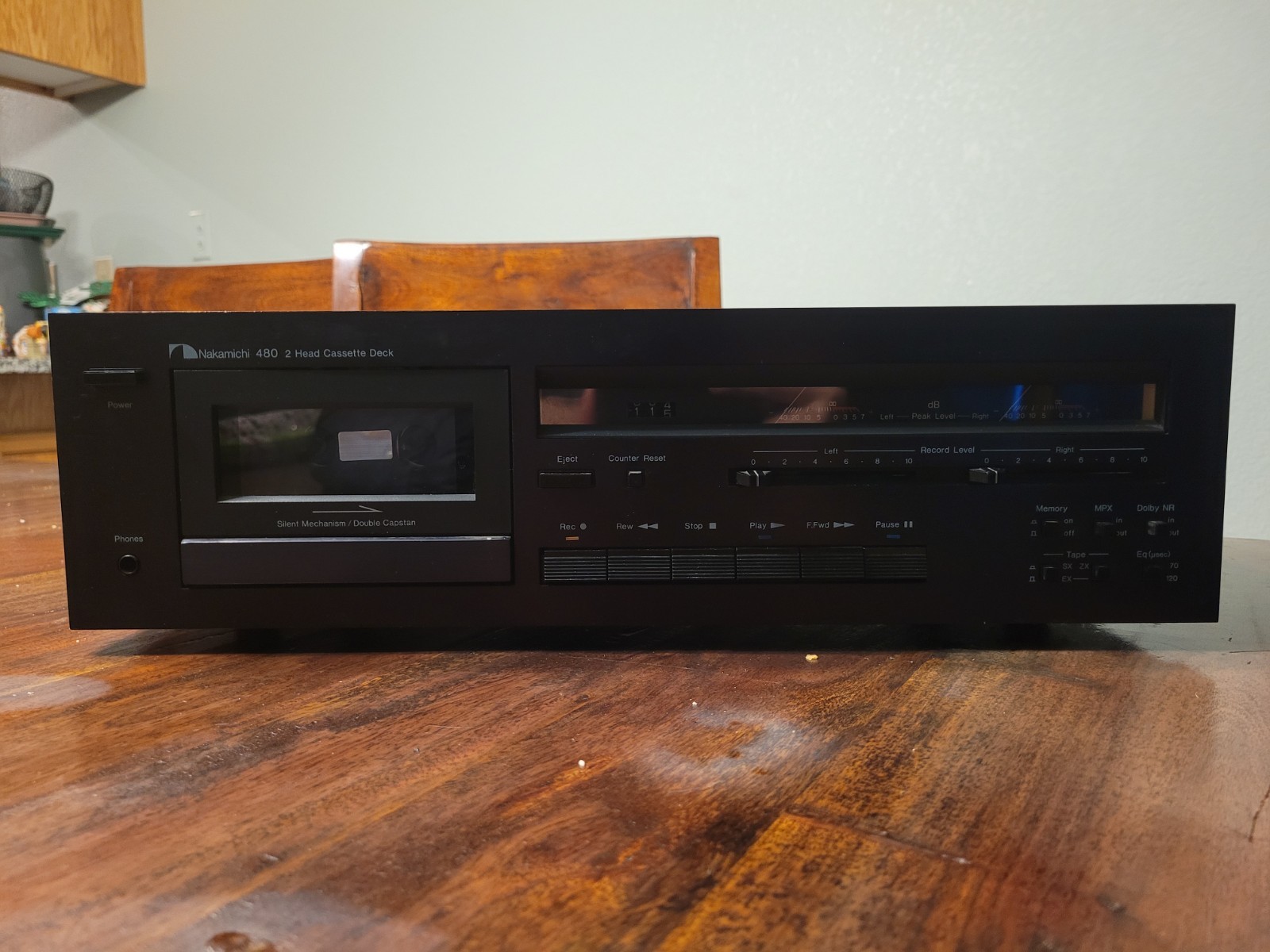
Positioned just below the flagship Nakamichi 580, the 480 was engineered for serious listeners who demanded accuracy, reliability, and exceptional build quality. It featured a full three-head configuration—separate record, playback, and erase heads—allowing for real-time monitoring during recording and superior head optimization. This was a rarity in consumer decks at the time and a hallmark of professional tape machines.
Technical Specifications
| Feature | Specification |
| Model | Nakamichi 480 |
| Year Introduced | 1975 |
| Type | 3-Head Stereo Cassette Deck |
| Tape Speed | 1⅞ ips (4.76 cm/s) |
| Heads | Three separate heads (Record, Playback, Erase) |
| Head Material | Permalloy |
| Frequency Response | 30 Hz – 18 kHz (with CrO₂ tape) |
| Wow and Flutter | < 0.075% (WRMS) |
| Signal-to-Noise Ratio | 66 dB (Dolby B) |
| Total Harmonic Distortion | < 1.5% |
| Azimuth Adjustment | Manual, front-panel |
| Tape Types Supported | Type I (Ferric), Type II (Chrome) |
| Dolby Noise Reduction | Dolby B |
| Output Level | 0.85 V (for 0 dB) |
| Input Level | 60 mV (for 0 dB) |
| Dimensions | 440 mm × 145 mm × 335 mm |
| Weight | 12.5 kg (27.5 lbs) |
| Power Consumption | 22 W |
Sound Characteristics and Performance
The Nakamichi 480 was engineered for clarity, neutrality, and dynamic precision. Its three-head design allowed for independent optimization of each head, resulting in excellent channel separation and minimal crosstalk. The frequency response extended well beyond what most consumer decks of the era could achieve, particularly when using chrome dioxide (Type II) tapes, which were still relatively new at the time.
Listeners praised the 480 for its tight bass response, detailed midrange, and airy, extended highs—a rare combination in cassette decks of the 1970s. The use of Dolby B noise reduction helped suppress tape hiss without introducing the "pumping" artifacts that plagued lesser implementations. When properly calibrated, the 480 could produce recordings and playback that approached the quality of open-reel tape—a remarkable achievement for a compact cassette machine.
The deck’s manual azimuth control was a standout feature, allowing users to fine-tune head alignment for optimal high-frequency response. This was particularly useful when playing tapes recorded on other machines, which often suffered from slight azimuth misalignment.
Notable Features and Innovations
The Nakamichi 480 was packed with features that set it apart from its contemporaries:
- Three-Head Configuration: Enabled real-time monitoring and superior fidelity.
- Dual Capstan Drive System: Ensured stable tape speed and minimized wow and flutter.
- Precision Mechanical Transport: Built with heavy-duty components and dampened chassis to reduce vibration.
- Front-Panel Azimuth Adjustment: A rare feature that gave users control over high-frequency response.
- Tape Selector and Bias Control: Allowed optimization for both ferric and chrome tapes, improving recording accuracy.
- Large, Legible VU Meters: Provided accurate level monitoring during recording.
The build quality was exceptional—thick steel chassis, machined aluminum faceplate, and high-quality potentiometers and switches. Every aspect of the 480 reflected Nakamichi’s commitment to engineering excellence.
Common Issues and Maintenance
Like all vintage tape decks, the Nakamichi 480 requires careful maintenance to perform at its best. Over time, several components are prone to wear or degradation:
- Pinch Roller Hardening: The rubber pinch roller can harden and crack, leading to speed instability. Replacement or rejuvenation with rubber renewal agents is often necessary.
- Capstan Wear: The capstan shaft may develop flat spots or corrosion, affecting tape speed consistency.
- Head Alignment: Misalignment—especially azimuth—can dull high frequencies. Periodic calibration with alignment tapes is recommended.
- Deteriorating Belts and Dampers: Internal rubber belts and dampers may degrade, affecting transport mechanics.
- Dirty or Worn Heads: Tape heads should be cleaned regularly with isopropyl alcohol and demagnetized periodically.
Due to its complex transport and high precision, the 480 benefits from servicing by a technician experienced with vintage Nakamichi equipment. Finding replacement parts can be challenging, but the dedicated vintage audio community has kept many of these decks alive through refurbishment and parts harvesting.
Current Market Value and Collectibility
While not as widely sought after as the Nakamichi Dragon or even the 580, the 480 has developed a loyal following among cassette enthusiasts and vintage audio collectors. Its historical significance as a precursor to Nakamichi’s later triumphs, combined with its excellent sound and build quality, makes it a desirable piece for those exploring the evolution of high-end cassette technology.
In today’s market (as of 2024), a fully functional and well-maintained Nakamichi 480 typically sells for $400–$700, depending on condition, included accessories, and provenance. Units with original manuals, calibration tapes, or rare finishes may command higher prices. Refurbished models with new belts, cleaned heads, and aligned transports are particularly valuable.
Though overshadowed by later Nakamichi models, the 480 is increasingly recognized as a pioneer in the pursuit of cassette perfection—a machine that helped prove the format could deliver audiophile-grade sound.
Conclusion and Legacy
The Nakamichi 480 stands as a testament to a time when engineers believed that no format was too limited to be improved upon. In an era when many still dismissed cassettes as inferior, Nakamichi saw potential—and the 480 was one of the first clear declarations of that vision.
It may not have the automatic azimuth correction of the Dragon or the sleek aesthetics of later models, but the 480 laid the groundwork for Nakamichi’s reputation as the undisputed master of cassette fidelity. For collectors, restorers, and analog enthusiasts, the 480 is more than just a vintage deck—it’s a milestone in the history of high-fidelity audio.
If you’re lucky enough to find one in good condition, or are willing to invest in its restoration, the Nakamichi 480 offers a rare opportunity to experience the birth of cassette excellence—one perfectly aligned head at a time.
eBay Listings


As an eBay Partner, we earn from qualifying purchases. This helps support our independent vintage technology research.
Related Models
- Nakamichi 1000ZXL (1985)
- Nakamichi BX-150 (1983)
- Nakamichi CR-4 (1969)
- Nakamichi 1000-II (1974)
- Nakamichi 1000ZXL-LIMITED (1985)
- Sony TC-2050SD (1978)
- Aiwa AD-F990 (1993)
- Kenwood KX-3060 (1982)
- Sony TC-2130A (1974)
- Sony TC-2220 (1972)