McIntosh ML-2C (1971–1985)
Heavy, complex, and demanding — but when properly tuned, these walnut monoliths deliver a soundstage so rich and full it feels like stepping into the recording studio.
Overview
If you’ve ever lugged a 144-pound speaker across a room and thought, “Yes, this is exactly what my living room needs,” then the McIntosh ML-2C might just be your kind of crazy. Introduced in 1971 as the successor to the ML-1C, this floor-standing beast wasn’t built for convenience — it was built for presence. At nearly 30 inches wide and draped in dark walnut veneer, the ML-2C doesn’t blend into the background; it *is* the background. And when it fires up with a matching McIntosh tube amp, it doesn’t just play music — it throws a party for your eardrums, with bass that punches deep and highs that shimmer without sharpness.
Each speaker houses six drivers in a 5-way configuration: dual 12" woofers for low-end authority, an 8" lower-midrange to anchor the vocals, two 1-1/2" soft dome midranges for texture, and a single 2-1/4" tweeter to handle the top end. That’s a lot of moving parts, and McIntosh didn’t skimp on crossover engineering — splitting the signal at 250 Hz, 1.5kHz, 3kHz, and 7kHz to keep everything in its lane. With 8-ohm impedance and 89dB sensitivity, the ML-2C isn’t especially efficient, but it can handle up to 200 watts, so it wants — and deserves — serious amplification.
Originally priced at $899 each ($1,800 for a matched pair in 1971), these were flagship-tier speakers in their day, positioned just below the even more ambitious ML-4C. They weren’t just bigger siblings to earlier models — they were a statement. McIntosh was known for amplifiers, sure, but the ML-2C proved they could build speakers with the same obsessive engineering, even if the market wasn’t always convinced. Some contemporary voices questioned whether McIntosh speakers could truly compete with dedicated high-end brands, but owners often report a sound that’s lush, warm, and deeply enveloping — especially when driven by period-correct gear.
Specifications
| Type | 5-way floor system |
| Drivers | two 12" woofers, one 8" lower-mid, two 1-1/2" soft dome midranges, one 2-1/4" tweeter |
| Crossover frequencies | 250 Hz, 1.5kHz, 3kHz, 7kHz |
| Impedance | 8 ohms |
| Sensitivity | 89dB @1w/1m |
| Power handling | 200 watts |
| Weight | 144 lb |
| Dimensions | 29"H x 28-3/8"W x 21-3/8"D |
Key Features
Walnut Armor and the Slatted Grille
The ML-2C doesn’t hide its mass — it celebrates it. The cabinet is wrapped in a rich dark walnut veneer, with solid walnut grille frames that hold vertical plastic slats finished in walnut laminate. Behind them, black grille cloth stretches taut. It’s a look that screams early '70s high fidelity: serious, a little formal, and unmistakably premium. The grilles are substantial — not flimsy add-ons — and removing them reveals a surprisingly industrial driver array beneath. But most owners leave them on; the aesthetic is part of the package, and the slats help diffuse the visual density of all those cones.
Equalization: Not Optional, Just Essential
Here’s the thing about the ML-2C — it wasn’t designed to go it alone. McIntosh engineered these speakers to be used with external equalizers like the MQ-101, MQ-102, or the more advanced MQ-104 “Custom Environmental Network.” These weren’t tone controls; they were precision tools meant to flatten the frequency response based on room acoustics. Without one, the ML-2C can sound uneven — boomy in some rooms, thin in others. But with proper EQ, owners report a dramatic transformation: a smooth, balanced, and incredibly detailed presentation. Modern users confirm that room correction — whether analog or digital — still makes a huge difference. The takeaway? If you’re buying a pair, budget for an equalizer, or plan to integrate one into your setup. It’s not an accessory; it’s part of the design.
Historical Context
The ML-2C arrived in 1971 as the direct successor to the ML-1C, expanding its predecessor’s multi-driver philosophy into a six-driver, 5-way configuration. Where the ML-1C was a 4-way system, the ML-2C pushed further into complexity, aiming for broader dynamic range and deeper bass extension. It was also positioned as the smaller brother to the ML-4C — a slightly more compact alternative in McIntosh’s high-end speaker lineup. This was a time when high-fidelity systems were becoming increasingly modular, and McIntosh leaned into that trend, offering speakers, amps, and equalizers as a matched ecosystem. The ML-2C wasn’t just a speaker; it was a node in a larger audio philosophy.
Collectibility & Value
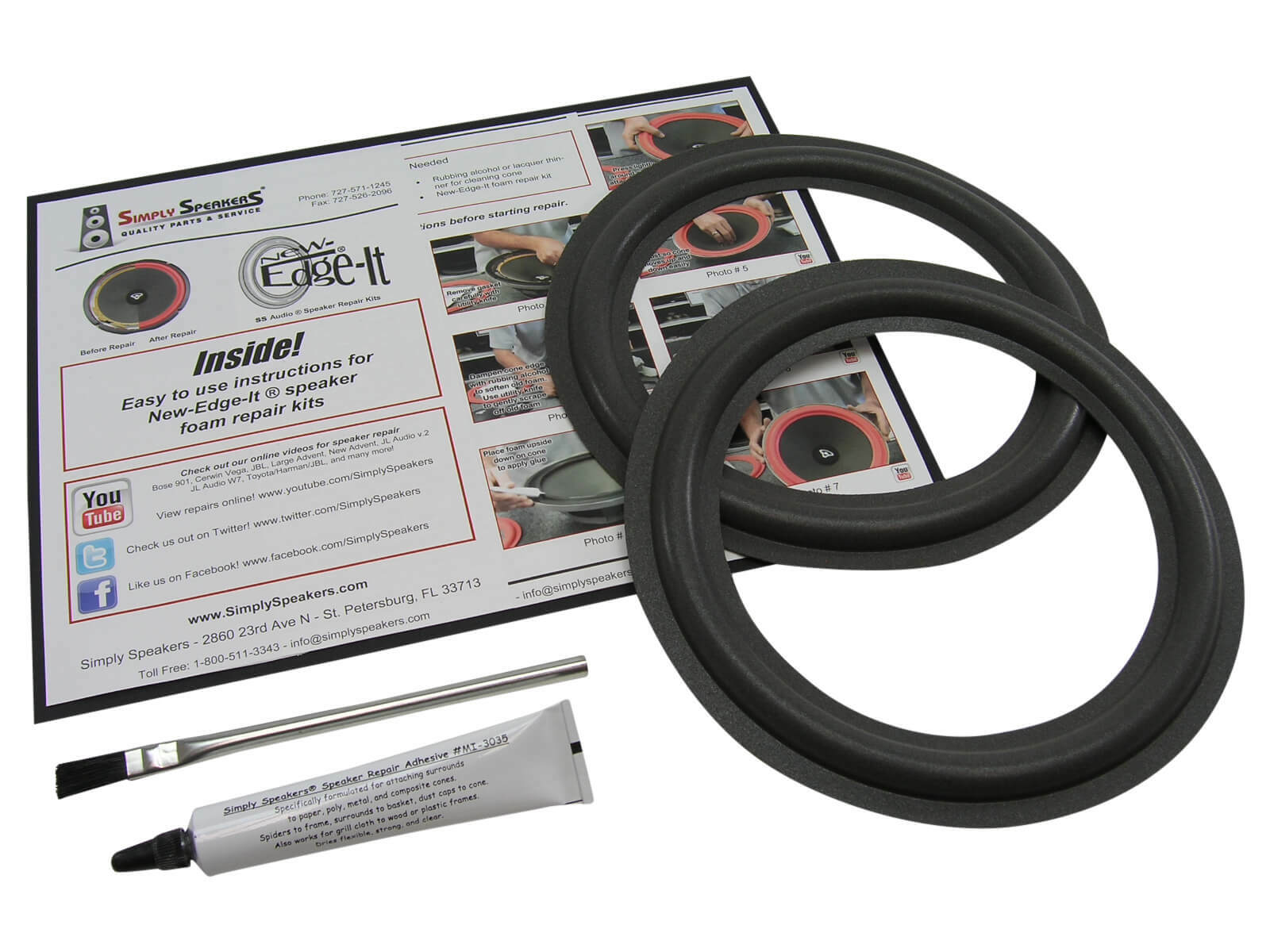
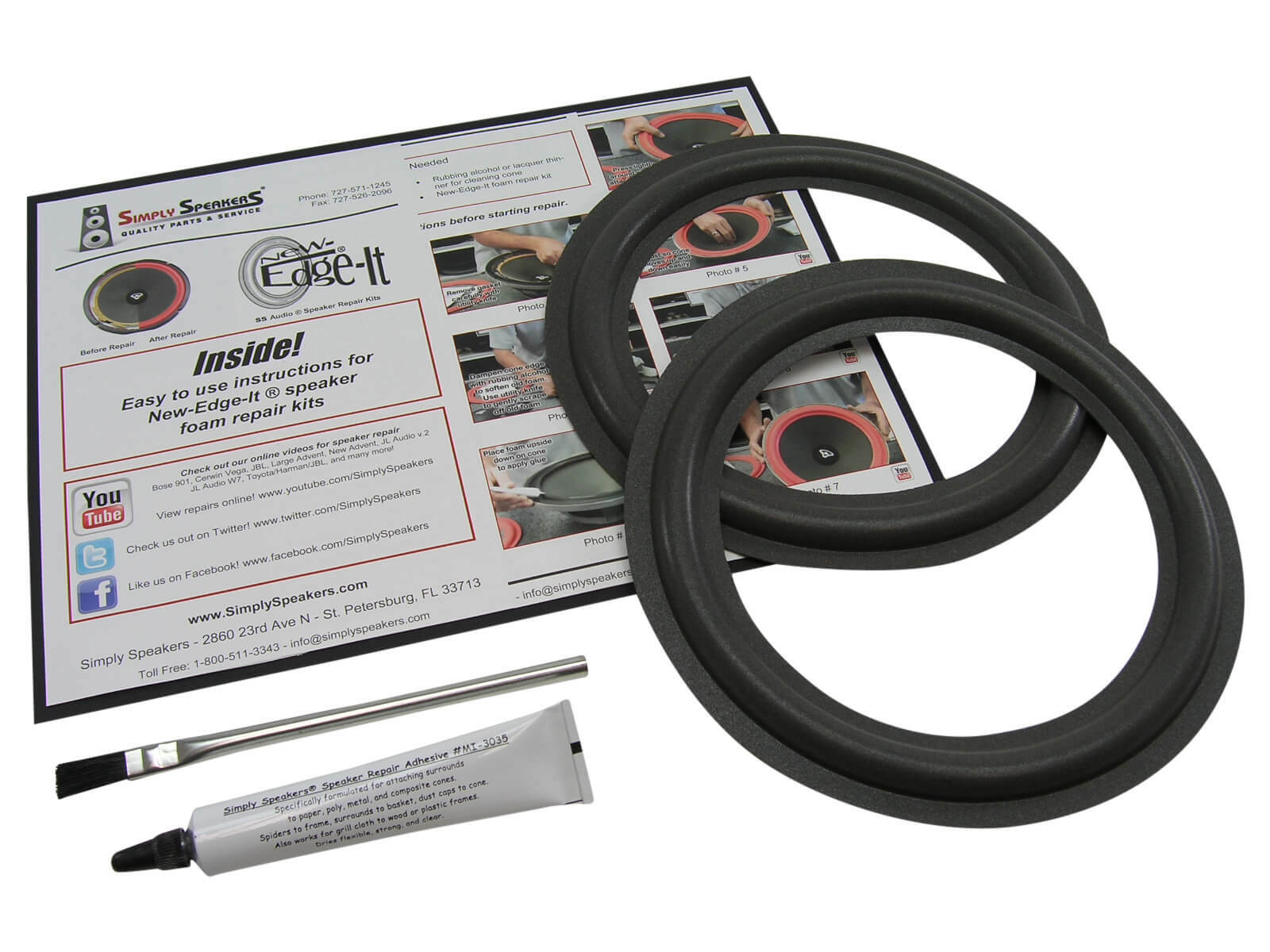
Today, the ML-2C is a project as much as a product. At 144 pounds apiece and nearly 50 years old, these speakers have seen some rooms — and some wear. The most common failure point is foam degradation: the surrounds on the 12" woofers and the 8" mid-bass driver tend to dry out, crack, and collapse over time. The fix? Refoaming. Fortunately, refit kits are available from specialty vendors, and the process, while labor-intensive, is well-documented among vintage audio enthusiasts. It’s not a cheap or quick job, but it’s often necessary for any pair that hasn’t been meticulously stored.
Just as critical as the drivers is the equalizer. Many sources stress that the MQ-101, MQ-102, or MQ-104 isn’t optional if you want the sound McIntosh intended. Finding a working unit can be a challenge — and adds significantly to the cost. One historical listing from Holt Hill Audio shows a pair of ML-2Cs with an MQ-104 equalizer priced at $2,499, though no date is given. Current market value varies widely based on condition, originality, and whether the EQ is included. Unrestored pairs show up regularly, but fully serviced sets with matching electronics are rare and command a premium.
eBay Listings


As an eBay Partner, we earn from qualifying purchases. This helps support our independent vintage technology research.
Related Models
- McIntosh mr75 (1971-1977)
- McIntosh ml-1 (1969-1975)
- McIntosh mr7083 (1993-1995)
- McIntosh mr74 (1972-1977)
- McIntosh mr78 (1972-1977)
- Sony ps-5550 (1978-1980)
- Sony ps-lx5r (1983-1985)
- Sony ss-7220a (1970s)
- Sony ss-97 (Late 1970s (approximately 1977-1979))
- Sony ss-999 (Late 1970s (approximately 1977-1979))