McIntosh C36 (1992–1994)
A no-compromise solid-state preamp from McIntosh’s golden era of integration, where surgical precision met industrial elegance
Overview
Turn it on and the faceplate glows like a control panel from a 1990s sci-fi command center—soft amber backlighting, crisp lettering, and those iconic blue power meters creeping up as the circuitry wakes. The C36 isn’t loud or flashy, but it commands attention through sheer presence: a 17.5-inch-wide slab of brushed aluminum, heavy enough to anchor any rack, with a layout so intuitive you’ll forget you’re using a preamp with 10 inputs and a full phono stage. This was McIntosh’s answer to the high-end audiophile’s growing demand for a single-box solution that didn’t sacrifice performance for convenience. It’s not a minimalist’s dream, but for those who want everything—balanced XLR, moving magnet and moving coil phono, remote-controlled tone controls, and that legendary build quality—the C36 delivers without flinching.
Positioned between the remote-less C34V and the more advanced C38, the C36 was the sweet spot in McIntosh’s early-’90s preamplifier lineup: the first in the series to offer full remote functionality across all features, including source selection, volume, balance, and tone. It wasn’t the flagship, but it was the most complete package for the serious listener who didn’t want to step up to the dual-chassis C100. The sound? Clean, neutral, and impeccably detailed—typical of McIntosh’s solid-state design philosophy. There’s no romantic tube glow here, no softening of edges; instead, you get transparency that borders on clinical, with a black background so deep it makes lesser preamps sound veiled. Bass is tight and articulate, mids are uncolored, and highs extend with ease, never straying into brightness. It doesn’t “wow” you with drama—it reveals what’s on the recording, warts and all.
Specifications
| Manufacturer | McIntosh Laboratory, Inc. |
| Production Years | 1992–1994 |
| Original Price | $1,700 |
| Frequency Response | 20Hz to 20kHz (+0, -0.5dB) |
| Total Harmonic Distortion (THD) | 0.002% (20Hz–20kHz) |
| Maximum Voltage Output | 8V |
| Rated Output | 2.5V at main and switched outputs |
| Input Sensitivity | 0.25V (high-level), 2.5mV (phono) |
| Input Impedance | 22kΩ (high-level), 47kΩ (phono) |
| Phono Equalization | RIAA (switchable for MM/MC) |
| Signal-to-Noise Ratio | 105dB (A-weighted, high-level), 90dB (phono) |
| Inputs | 7 line-level (RCA), 1 MM phono, 1 MC phono, 2 balanced (XLR) |
| Outputs | Main (RCA and XLR), 2 switched (RCA), tape out (RCA) |
| Tone Controls | Bass ±12dB, Treble ±12dB (remotely adjustable) |
| Power Supply | AC 100V/120V/220V/240V 50/60Hz, 28W |
| Weight | 22 lbs (10 kg) |
| Dimensions (W×H×D) | 17.5" × 6.5" × 18.75" (44.5 × 16.5 × 47.6 cm) |
| Faceplate Width | 17.5" (late model), 16.1875" (early model) |
| Remote Control | Included (system-wide functions) |
Key Features
The Evolution of the McIntosh Control Center
The C36 wasn’t just another preamp—it was a statement about how high-end audio should be integrated. By 1992, McIntosh had already established its reputation for bulletproof amplifiers and tuners, but the C36 brought that same engineering rigor to the preamp stage with a level of completeness rarely seen at the time. The inclusion of both moving magnet and moving coil phono inputs on the same chassis was a big deal—most competitors forced you to choose or add an external stage. Here, a simple toggle switch on the rear panel lets you switch between MM and MC, with internal gain adjustments handled automatically. The phono stage itself is quiet, with a signal-to-noise ratio that keeps surface noise in check even on older vinyl. And because it’s McIntosh, the circuitry is fully discrete, with no op-amps in the signal path—just precision transistors and hand-selected components laid out for minimal crosstalk and maximum stability.
Industrial Design with a Purpose
Look at the front panel and you’ll see the DNA of McIntosh’s design language: symmetrical layout, recessed VU meters, and that signature blue glow. But the C36 also introduced subtle refinements. Early units shipped with the narrower 16-3/16” faceplate to match older components like the MC7270, but midway through production, McIntosh standardized on the wider 17.5” chassis to align with newer models. If you’re matching a vintage system, this detail matters—some owners actively seek the narrow version for aesthetic consistency. The buttons are tactile and clicky, the volume knob is perfectly damped, and the remote (a full-function unit with backlighting) controls everything from tone to input selection. Even the rear panel is thoughtfully laid out, with gold-plated RCA and XLR connectors, clearly labeled jumpers for configuration, and enough spacing to accommodate thick cables without strain.
Build Quality That Ages Gracefully
Open the chassis and you’re greeted with a sea of neatly routed wires, oversized transformers, and circuit boards that look like they were built to survive an earthquake. The power supply is over-specified, with filtering that ensures clean voltage even under dynamic load. Service technicians note that the most common failure points are not the core circuitry but the smaller, wear-prone parts: the rotary encoder for volume control can develop crackles over decades of use, and the front-panel lighting—while iconic—relies on incandescent bulbs that burn out and are tricky to replace without disassembly. Still, the overall reliability is exceptional. Unlike some ’90s gear that used surface-mount components prone to cold solder joints, the C36 uses through-hole construction almost exclusively, making repairs more accessible. And because McIntosh still supports legacy products with schematics and parts, finding replacements isn’t a scavenger hunt.
Historical Context
The early 1990s were a transitional period for high-end audio. Digital was on the rise—CDs had largely replaced LPs as the primary format—but serious listeners still valued analog sources, especially vinyl. The C36 arrived at a moment when manufacturers were trying to reconcile these worlds: how do you build a preamp that honors the warmth of analog while embracing the precision of digital? McIntosh’s answer was to build a no-compromise hub. While brands like Mark Levinson and Krell were pushing minimalist, ultra-high-end separates, McIntosh doubled down on integration. The C36 shared design elements with the C38 and C40 but carved its own niche as the most practical high-end preamp for real-world use. It competed with the likes of the Accuphase C-200, the Audio Research LS5, and the Meridian 557, but stood apart with its unmatched input flexibility and build quality. It wasn’t trying to be exotic—it was trying to be essential.
Collectibility & Value
Today, the C36 trades between $1,500 and $2,800, depending on condition, originality, and whether it’s the narrow or wide version. Units with working meters and full remote functionality command premiums, especially if they’ve been serviced. The narrow-width models are rarer and sought after by purists restoring period-correct systems, often fetching 10–15% more than their wider counterparts. Common failures include dim or dead front-panel lighting (due to failed bulbs or power supply issues), crackling in the volume control (cleaning or replacement of the encoder helps), and occasional relay chatter in the input selector—though this is less common than in other brands’ gear from the era. A full recap isn’t usually necessary unless the unit has been stored poorly, but owners report that replacing the electrolytic capacitors in the power supply can restore optimal performance and extend life by decades. When buying, check that all inputs switch cleanly, the meters respond correctly, and the phono stage doesn’t hum—signs of a healthy unit. Avoid units with cloudy faceplates or bent front-panel metal, as replacements are nearly impossible to source.
eBay Listings
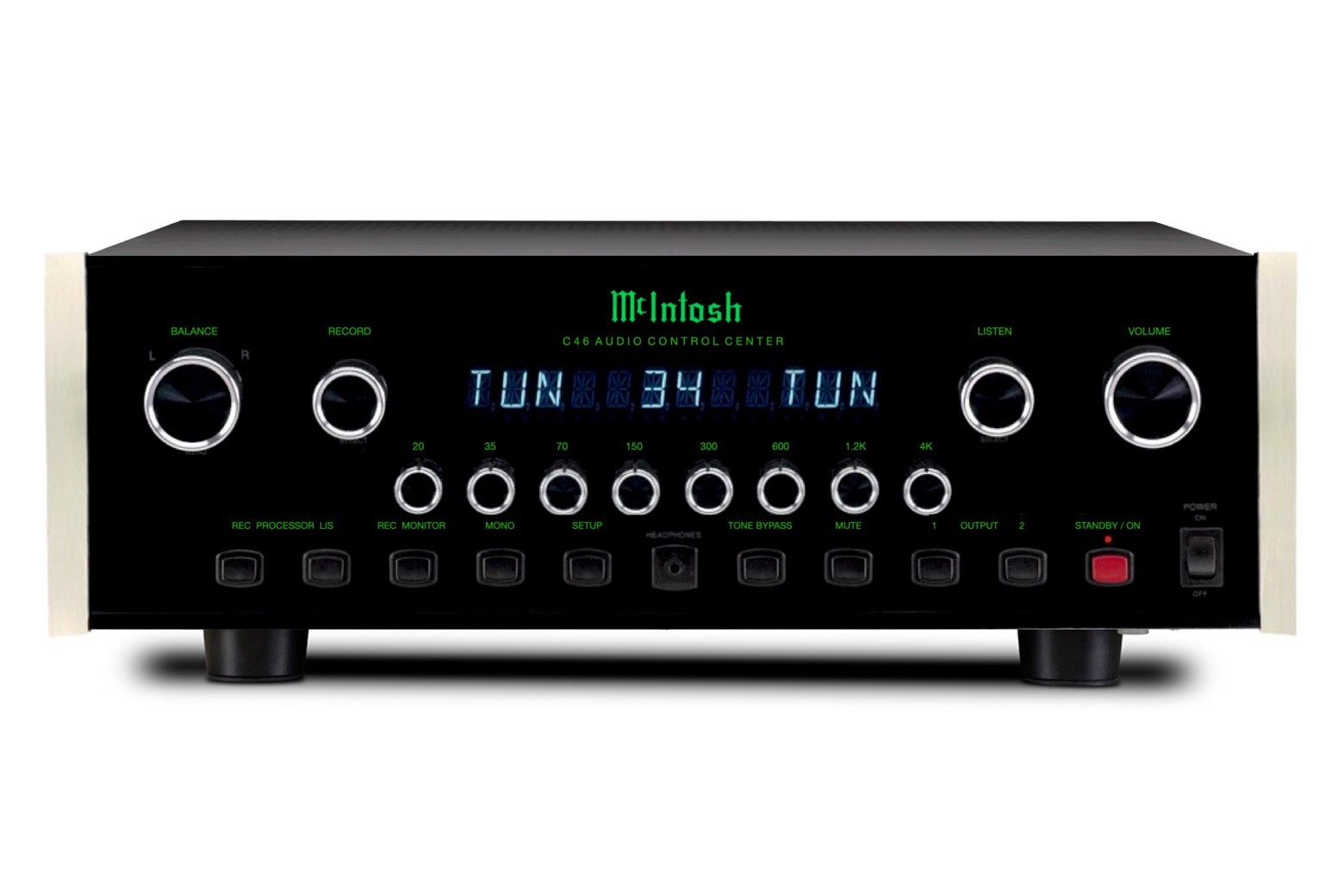

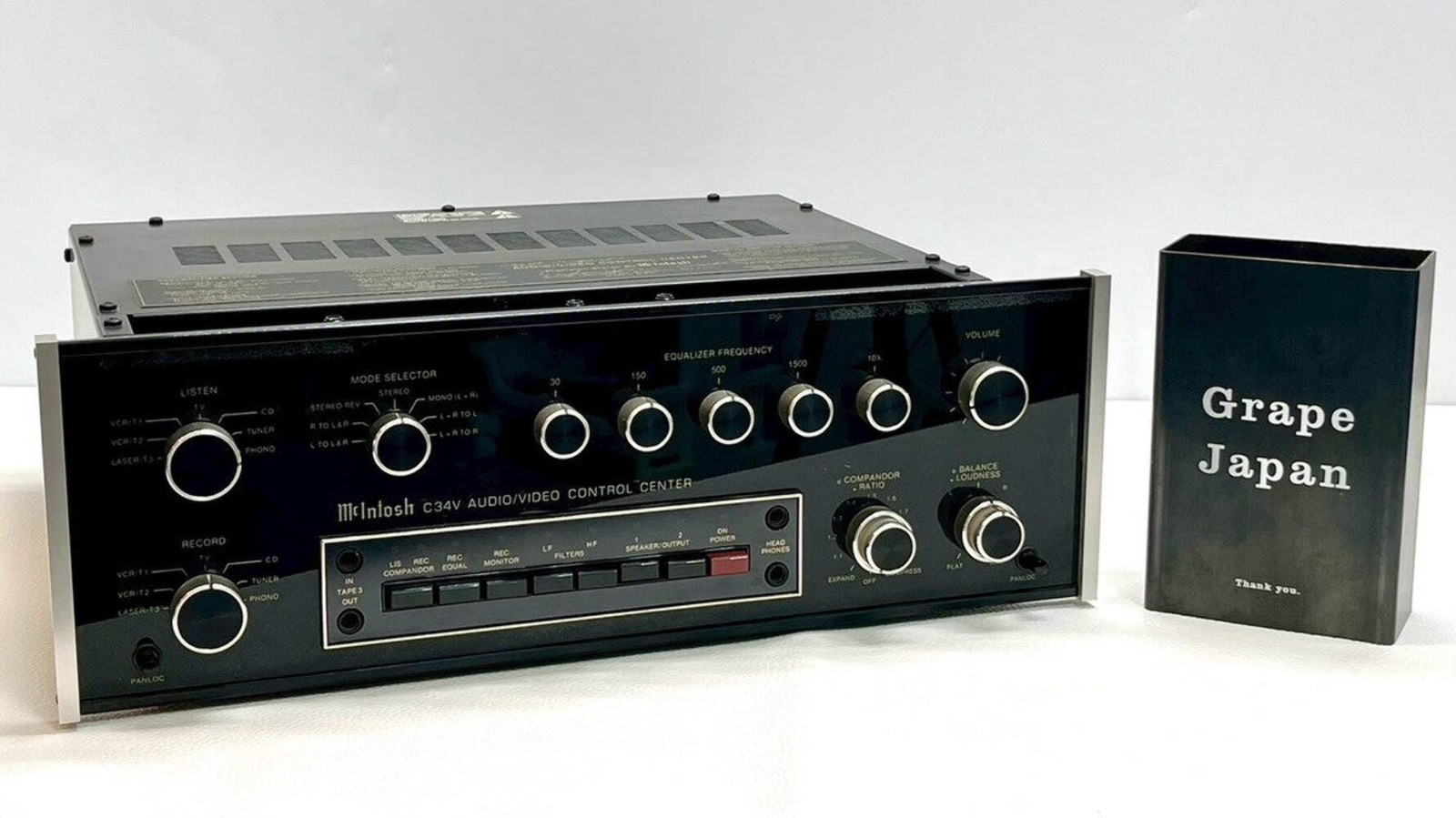

As an eBay Partner, we earn from qualifying purchases. This helps support our independent vintage technology research.
Related Models
- McIntosh C47 (2020-present)
- McIntosh C712 (1998-2002)
- McIntosh MAC4200 (1995-1999)
- McIntosh MC2002 (1993-1999)
- McIntosh MC2250 (1977-1980)
- Akai AM-2850 (1975)
- Akai AP-206 (1975)
- Nakamichi BX-1 (1985)
- Acoustic Research research-ar-17 (1978)
- Acoustic Research AR-19 (1994)