Marantz SR4300 (2002)
At 12.5kg, this is the receiver that carried Marantz's musical reputation into the multi-channel era without abandoning the house sound.
Overview
The Marantz SR4300 arrived in November 2002, when home theater was becoming the living room standard and purists worried the brand's two-channel soul would get lost in the rush to decode everything. It didn't. This is a 6.1-channel A/V receiver that feels like a Marantz first and a surround processor second. It weighs 12.5kg and measures 440mm across, which is real heft for a mid-tier surround receiver of its era. That weight goes into a power supply that doesn't flinch when all six channels are working.
The headline power number depends on who you ask. The Japanese documentation rates the output at 95 watts per channel into 6 ohms (20Hz - 20kHz) across all six channels - front, center, surround, and surround back alike. Marketing materials in other regions simplified this to "80 watts per channel," a more conservative figure that undersells the amplifier section on paper. The JEITA maximum practical power figure reaches 125 watts per channel into 6 ohms, so the power supply has headroom. The high-current amplifier sections were shared across the SR7300, SR6300, SR5300, and SR4300, and Widescreen Review noted these sections "deliver greater power output capability under demanding operational conditions with all channels driven."
Power consumption is rated at 315 watts under the Electrical Appliances and Materials Safety Act, with a 1.6-watt standby draw. The front panel is clean and purposeful, with screw-type speaker terminals across all channels rather than the spring clips found on cheaper contemporaries. It was priced at ¥45,000 at release in Japan, which made it the accessible way into multi-channel Marantz ownership rather than a flagship.
Key Features
Six Channels of Discrete Amplification
Every one of the six channels gets its own discrete power amplifier - no shared output stages, no IC power packs. That architecture is what gives the SR4300 its credibility with two-channel purists who might otherwise dismiss it as a home-theater box. The amplifier section is rated for a playback frequency reaching 100 kHz. That looks excessive for audible content until you remember SACD was the format Marantz was preparing for. The wide bandwidth isn't about hearing ultrasonics. It preserves phase and transient behavior in the audible range, and it makes the receiver SACD/DVD-A ready out of the box.
96kHz/24-Bit D/A Conversion on All Channels
Digital conversion is handled by 96kHz/24-bit D/A converters. Surround back and center channels get the same conversion quality as the mains. On a multichannel SACD mix, the rear channels carry ambience and hall sound, and they get the same resolution as the front soundstage.
Dolby Digital EX, Pro Logic II, DTS-ES, and SRS Circle Surround II
The decoder section supports the full surround alphabet of its day: Dolby Digital EX, Dolby Pro Logic II, DTS-ES in both Discrete 6.1 and Matrix 6.1 flavors, DTS Neo:6, and SRS Circle Surround II. The Circle Surround II implementation is particularly interesting — it can upconvert monaural sources to 6.1 channels, and TruSurround delivers a surround presentation through just two speakers when you don't have a full setup wired. Multi-channel stereo (6 ch) mode plays the same source through all channels for parties or background listening, and HT-EQ (home theater equalizer) tames overly bright film soundtracks for more natural dialogue reproduction. For a receiver at this price point in 2002, that's a remarkably complete decoding package.
6.1-Channel Pre-Outs and Direct Input
Owners report the front left and right channels are accessible via pre-out, and the SR4300 includes a full 6.1-channel pre-out route as well as a 6.1-channel direct input. The direct input accommodates external digital decoders or future multi-channel formats that the internal processing might not handle. You can feed it decoded audio from an outboard processor and use the SR4300 purely for its six channels of amplification. That keeps the receiver useful when a new surround format appears.
Video Switching and Connectivity
On the video side, the SR4300 handles composite and S-Video only — component video switching hadn't trickled down to this tier yet. There are four composite video inputs and two composite outputs, plus two S-Video inputs and one S-Video output, with a monitor output in each format. Audio connectivity is more generous: seven analog stereo inputs, one 6.1-channel multi-channel input, two optical digital inputs, and two coaxial digital inputs. On the output side you get four analog stereo outputs, the 6.1-channel pre-out, one optical digital output, and one coaxial digital output. There's also a headphone jack and RC-5 remote control in/out for system integration with other Marantz components. Notably, there is no phono input — a sign of the times, as turntables were firmly out of fashion in 2002 — so vinyl enthusiasts will need an external phono stage.
Historical Context
The SR4300 was part of a group that Widescreen Review identified as sharing high-current amplifier sections. The SR7300, SR6300, SR5300, and SR4300 all used the same amplifier architecture, with the differences coming in processing, power, and connectivity. Released in November 2002 at ¥45,000, it was the entry point into that family.
Forum discussions from the period show buyers comparing the SR4300 against Yamaha and Denon alternatives. One StereoNET poster offered the opinion that "there is a brand sound and I prefer Marantz ahead of Denon and over Yamaha. Marantz are a brand said to be more musical." The same discussion noted that "cheap AVRs often have a long list of features and functions but come with lower power." Buyers also puzzled over the model hierarchy, asking "what are the main differences between the 4300 and the 4400?" and whether the SR4300 was essentially the same as the SR4400.
Owners consistently described the sound as "warm, musical sound quality, particularly in 2-channel stereo," which is exactly what you'd hope from a Marantz of this era. It wasn't the last word in home theater processing, but it was a receiver that made music listening a pleasure rather than an afterthought.
Collectibility & Value
The SR4300 sits in an odd spot in the vintage market. It's old enough to be interesting but not old enough to be scarce, and it lacks the visual appeal of the silver-faced 1970s receivers that drive Marantz collectibility. It is still a fully functional 6.1-channel receiver with discrete amplification, 96kHz/24-bit conversion, and SACD support that can be had for very little money. It makes a capable second-system or starter home-theater amp.
Current asking prices reflect a used workhorse rather than a collector's item. A Russian classified listing asked 9,900 rubles (delivery only), with the unit noted as in good condition and including the remote. Other listings describe units as "fully working" or "tested very good condition." Package deals have appeared with speaker bundles - one listing paired the SR4300 with Mission 734 fronts, Mission rears, and a Mordaunt-Short center at $900 Singapore dollars, another at $800 negotiable - but these are package prices, not receiver-only values.
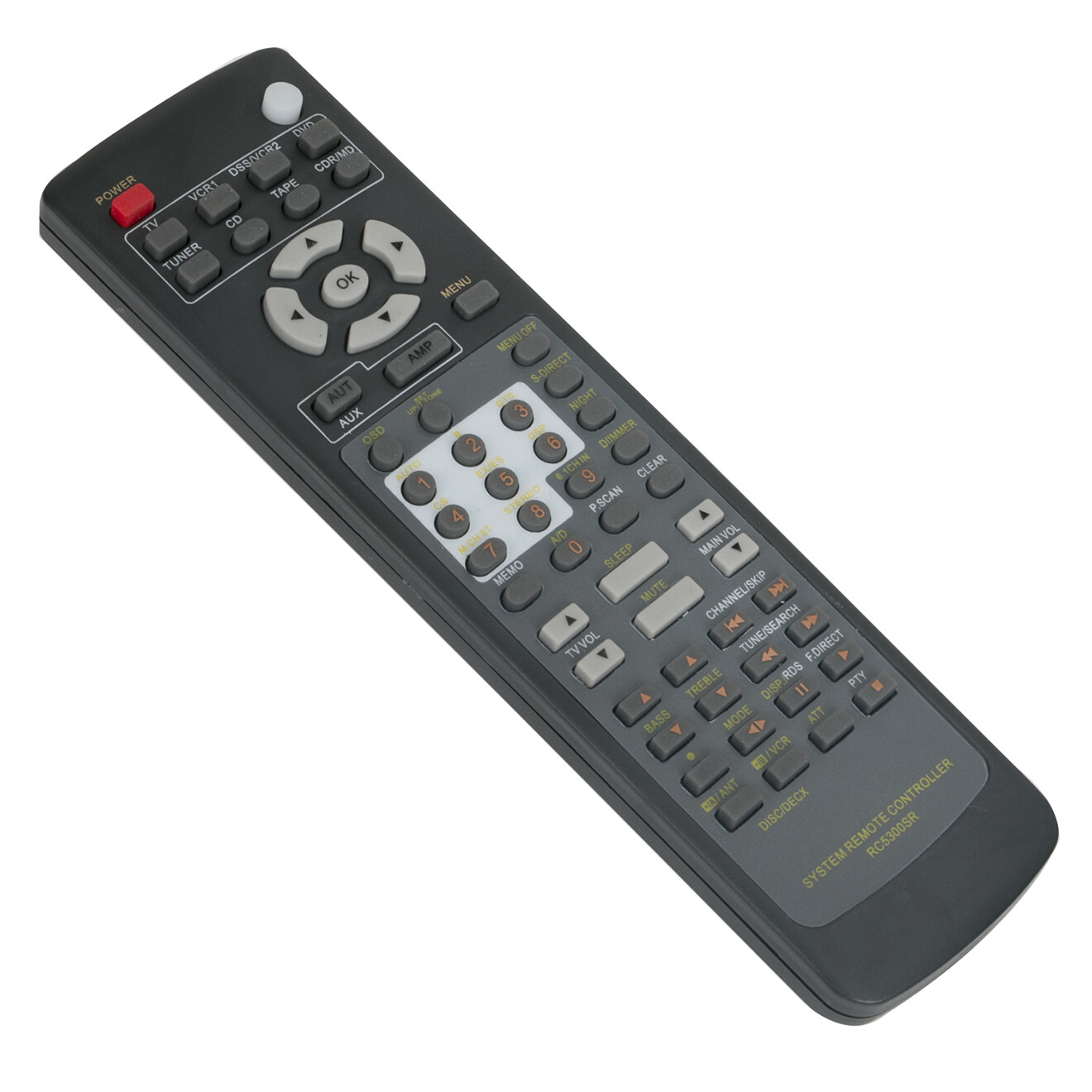
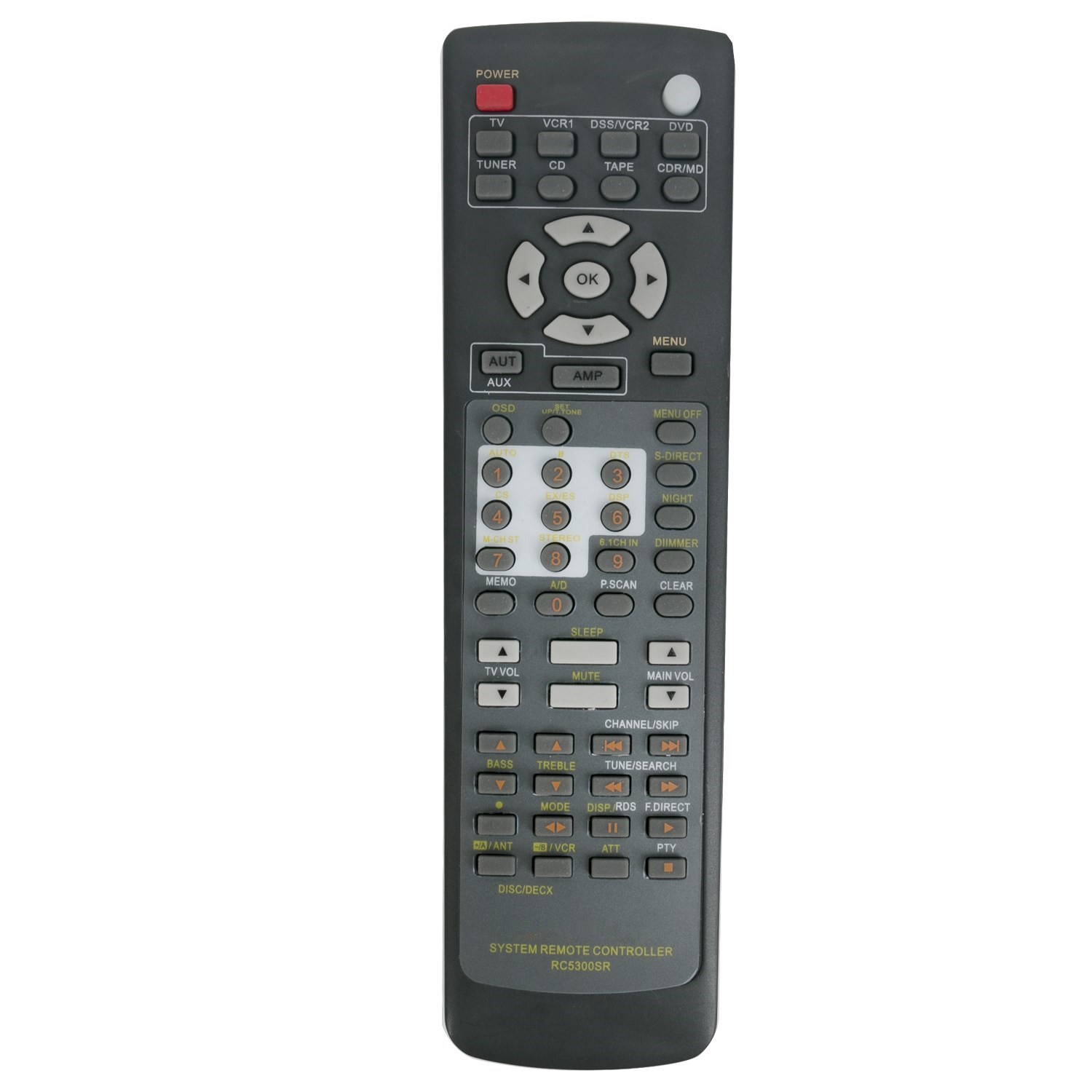
There are known issues. The most commonly cited fault is an "Error Pow5v" condition that appears across many Marantz SR-4300 units. At least one owner reported a serious problem with DC offset on the surround left channel, measuring 44V at the output and frying a rear speaker. If you're buying used, test all six channels with cheap speakers before connecting anything valuable. Some units also ship with broken remote controls, and the system remote is the primary way to access many functions. The FM tuner has drawn criticism for sensitivity - one owner noted "all sounds very nice, though I find the FM tuner is not particularly sensitive."
For buyers who don't need HDMI or modern streaming features, the SR4300 offers real value. Budget for a check of the output stages and a possible recap if the unit has been sitting unused. The amplifier architecture is sound, but the decades-old electrolytic capacitors will eventually need attention.
As an eBay Partner, we earn from qualifying purchases. This helps support our independent vintage technology research.
eBay Listings


As an eBay Partner, we earn from qualifying purchases. This helps support our independent vintage technology research.
Related Models
- Marantz 2226 (1974-1976)
- Marantz 2226B (1979-1980)
- Marantz 2235 (1974-1977)
- Marantz 2238B (1978-1980)
- Marantz 2250B (1978-1980)
- Marantz 2252 (1974-1977)
- Marantz 2252B (1978-1980)
- Marantz 2265 (1974-1977)
- Realistic STA-47 (1975–1976)
- Teac A-3300 (1972)